


Instagram profiles have always carried a quiet constraint: your grid told the story in the order you posted it. Now, that order is becoming optional.
Instagram is finally letting users rearrange their profile grid however they want. The change means posts no longer have to sit in reverse chronological order, and users can reorder them without deleting, reposting, or relying only on pinned posts to control what people see first.
The most important detail may be the lack of artificial scarcity. The report notes that there are no limits on how many times users can reorder posts. In other words, the grid is no longer a fixed archive. It is becoming an editable surface.
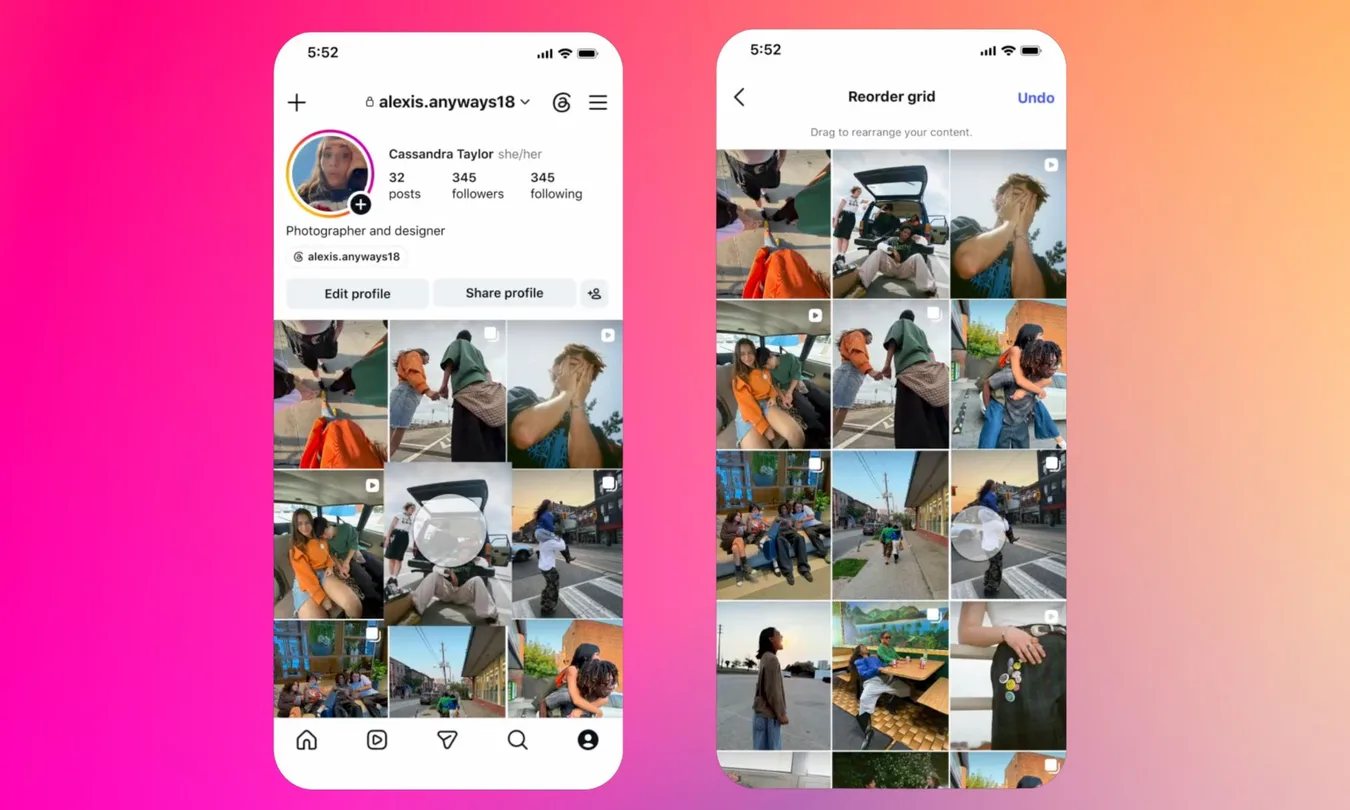
From posting history to curated identity
For years, the Instagram grid was a kind of accidental autobiography. You could delete old posts. You could archive them. More recently, you could pin a few posts to the top. But the overall structure still reflected time: newest first, older content pushed down as new posts arrived.
This update changes that basic logic. If users can move any profile post around, the grid becomes closer to a portfolio, a moodboard, or a storefront. A creator can lead with their strongest work, not their latest upload. A musician can place tour content beside a release announcement. A small business can put bestsellers, reviews, and founder content in a more deliberate sequence.
That matters because the profile grid is often the second stop after discovery. Someone sees a Reel, a comment, a tag, or a Story, then taps through to decide whether the account is worth following, buying from, or remembering. The first nine or twelve tiles do a lot of work. Until now, Instagram made that work harder by tying presentation to posting chronology.
The grid becomes a conversion surface
This is a small product change with very practical consequences. The profile is not just a place where content lives after it has performed in the feed. It is where interest gets judged.
For creators, this gives older evergreen posts a second role. A strong tutorial, visual series, brand collaboration, or launch post can stay visible without being pinned or reposted. For public figures, it makes the grid easier to align with a current campaign, season, or press cycle. For anyone who uses Instagram as a visual CV, the ability to reorder posts makes the profile feel less like a feed dump and more like a controlled first impression.
The unlimited reordering detail is key. If Instagram had allowed only a one-time cleanup or a limited number of swaps, this would feel like profile maintenance. With no apparent cap on how often the order can change, the grid can be adjusted around launches, drops, events, collaborations, and cultural moments.
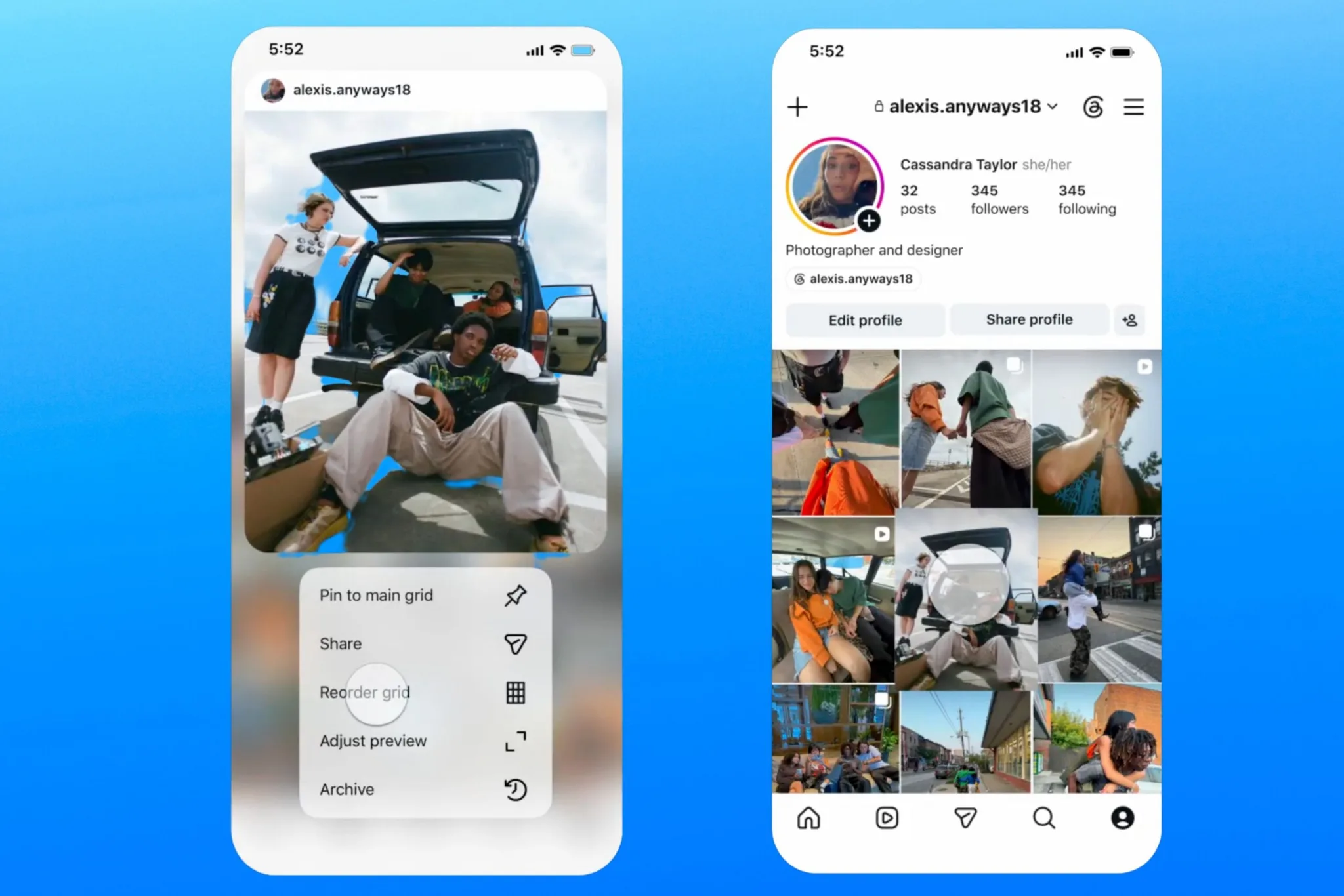
What brands should do with the extra control
Brands should resist the temptation to treat this as a design-only feature. A prettier grid is nice. A clearer grid is more useful.
The best use case is sequencing. Put the product people are currently searching for near the top. Keep the proof close to the promise: UGC next to campaign creative, reviews near product demos, founder explainers beside new launches. If a brand is running paid media that drives people to its profile, the grid can now be arranged to answer the questions that click is likely to create.
This also gives social teams a cleaner way to support multiple priorities without constantly reposting. A retailer can organize seasonal products. A hospitality brand can surface rooms, food, location, and guest experience in a more intentional order. A B2B brand can keep event footage, thought leadership, and case studies visible together, instead of letting one new post disrupt the whole presentation.
The operational shift is simple: the profile grid should be reviewed like a landing page. Not every day, and not for aesthetic perfection, but whenever the audience’s reason for visiting changes.
Instagram is giving users more authorship
The timing also fits a broader Instagram pattern. The platform has spent years optimizing distribution through Reels, recommendations, and algorithmic discovery. But discovery creates a different problem: people arrive at profiles from more scattered entry points. A profile has to make sense quickly, even if the visitor has only seen one piece of content.
Grid rearrangement gives users more control over that moment. It does not change how content is discovered in the feed, and it does not guarantee more reach. But it changes what happens after attention lands on the account.
For Instagram, that is valuable. The more useful profiles become, the more the app can support creators, commerce, local businesses, and personal brands without introducing a whole new format. The strategic consequence is clear: on Instagram, the profile is no longer just where your posts end up. It is where your account has to make its case.