


Facebook is making verification feel less like a status symbol, and more like a basic trust layer.
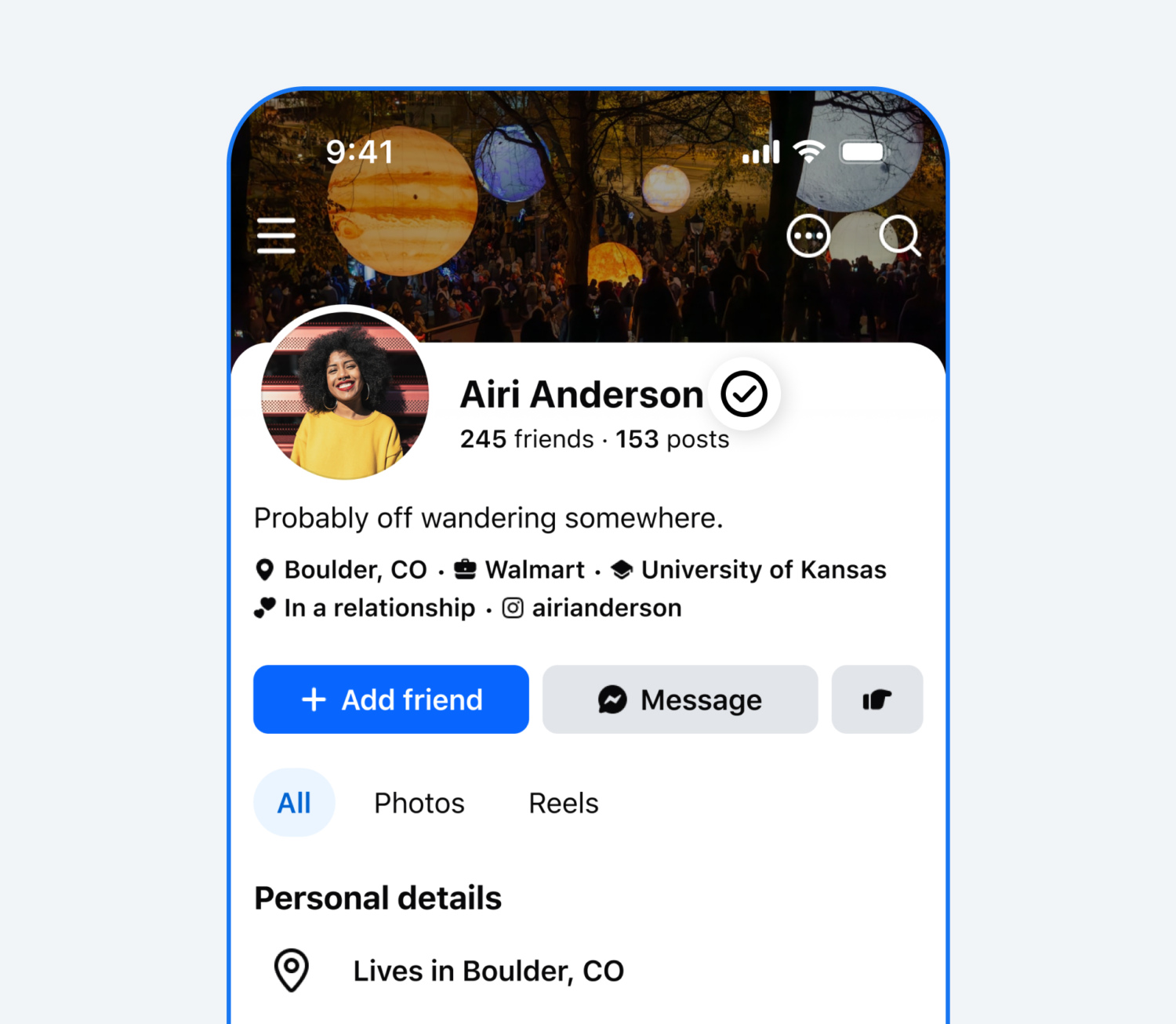
Meta is launching Facebook Verified, a new badge for Facebook profiles that confirms there is a real person behind an account. The badge is free. It is attached to a profile, not presented as a creator perk or a celebrity marker. And Meta is positioning it around authenticity: a visible signal that the person you are seeing, messaging, or interacting with is not just another anonymous account-shaped object in the feed.
That framing matters. Facebook verification has historically carried a kind of public-figure energy. The blue badge meant recognition, importance, risk of impersonation, or some mix of all three. Facebook Verified pushes the concept toward something more ordinary, and potentially more useful: proof that a profile belongs to a real human.
The announcement is specific in its promise. The product is called Facebook Verified. It is a badge. It is free. It verifies that there is a real person behind a Facebook profile. It was announced by Meta through its Newsroom, under Facebook, as a product update rather than a paid subscription pitch.
That is the interesting part. Meta is not asking every user to become a public personality. It is quietly saying that being real online now needs a product surface.
A badge for the everyday trust problem
The obvious read is that Facebook wants to reduce confusion around fake profiles, impersonation, and low-trust interactions. But the bigger shift is behavioral. A visible verification badge changes how people scan profiles before they reply, accept a request, join a conversation, or believe what they are seeing.
On Facebook, that can touch almost every social surface: comments, groups, Marketplace-style exchanges, friend requests, community discussions, and Messenger-adjacent interactions. The badge does not have to solve every trust problem to become useful. It just has to become one of the small checks people start looking for.
That is also why the word “free” is doing real work here. If identity verification is only available through a paid product, it becomes a premium signal. If it is free, it can become a platform norm. The badge stops saying “this person is notable” and starts saying “this person has cleared a basic authenticity check.”
Meta has been building more visible account-level guardrails across its apps, from Facebook identity signals to Threads joining its parental supervision stack. These are different products, but they point to the same product instinct: make trust and safety more legible inside the interface, not hidden away in policy pages.
Verification is becoming infrastructure
For brands, creators, and community managers, the immediate implication is simple: verified profiles could become a stronger participation signal. Not because every verified person is trustworthy by default, but because unverified identity may start to feel more noticeable in spaces where credibility matters.
That could make a difference in Facebook Groups, where admins already spend energy managing spam, fake accounts, and bad-faith participation. It could also matter for creators and local businesses that rely on personal profiles as part of their social graph. If audiences begin treating the badge as a low-friction trust cue, the absence of one may start to carry meaning too.
The risk, of course, is that users misunderstand what the badge guarantees. “Real person” does not mean accurate information, good behavior, or safe intent. Meta will have to keep that distinction clear, because verification works best when it is understood as identity proof, not character proof.
Still, Facebook Verified is a notable reset. The badge is no longer just a marker for people worth recognizing. It is becoming a tool for making ordinary accounts easier to believe, and that moves identity from reputation into platform infrastructure.