


Google’s AI music ambitions are starting to look less like a prompt box and more like a production room.
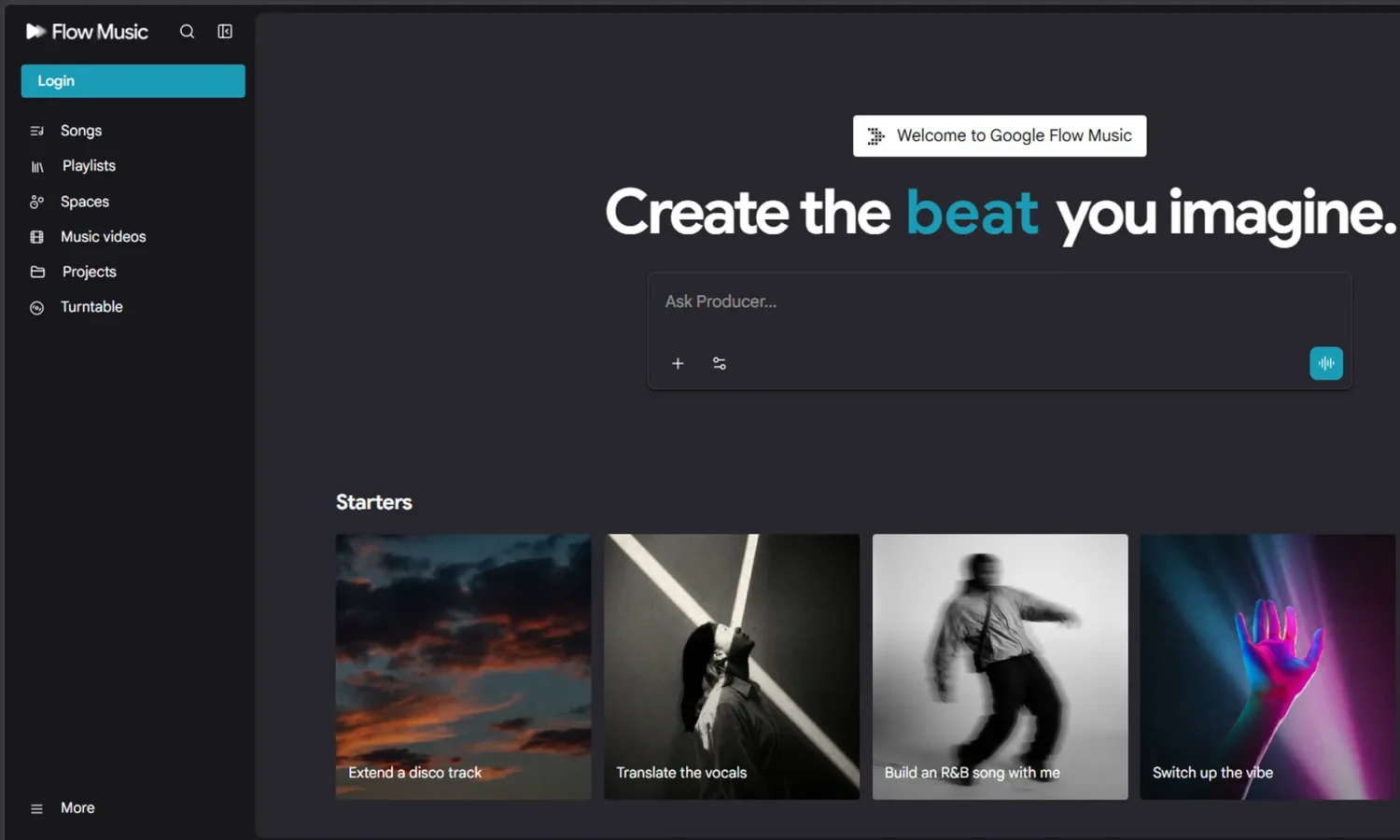
A new update to Flow Music Spaces adds a much wider set of creative tools inside the same collaborative workspace. The update brings AI-powered song editing, stem splitting, image generation, lyrics, and video creation into Flow Music Spaces, turning what could have been a simple place to generate tracks into something closer to an all-in-one AI studio.
Spaces, our vibe coding tool for building any custom instrument or music app, just got a massive upgrade. 🚀
You can now do it all right inside Spaces:
🎵 Generate & edit songs (cover, replace, extend)
🎛️ Split stems
🖼️ Generate images
✍️ Generate lyrics
🎥 Generate videos— Google Flow Music (@googleflowmusic) July 24, 2026
That is the important part. Google is not just adding another model output. It is adding more of the messy middle: editing, separating, packaging, and collaborating around a creative idea.
Flow Music Spaces gets more than a music generator
Flow Music Spaces already sat inside Google’s broader Flow universe, where Google has been positioning AI as a creative workspace rather than a standalone toy. This update pushes that idea further by giving users more ways to work on a song after the first AI-generated idea appears.
The AI-powered song editing feature is the most obvious move. It gives creators a way to adjust the track instead of accepting the first version as final. Stem splitting adds another layer by separating parts of a song, such as vocals or instrumentals, so they can be edited, remixed, or rebuilt with more control.
Then Google widens the output beyond sound. Image generation lets users create visuals around the music. Lyrics bring the songwriting layer into the same space. Video creation means a track can start turning into a shareable piece of content without leaving the workspace.
Individually, these tools are familiar. Together, they change the shape of the workflow. A creator can move from idea to song, from song to visual identity, and from visual identity to video without stitching together five separate apps.
The real shift is workflow control
This is where the update becomes more interesting for creators, marketers, and anyone watching the AI tool race. The next phase is not only about who has the best generation model. It is about who owns the workspace where the idea becomes usable.
Music is a perfect test case because it is rarely finished at generation. A track needs editing. It may need separated stems. It may need lyrics, artwork, a teaser video, or several versions for different channels. By putting those steps inside Music Spaces, Google is trying to keep the creative loop in one place.
That matters because AI tools have often been judged by the wow moment: type something, get something. But professional and semi-professional creators care just as much about revision, control, consistency, and packaging. The output has to survive the next step.
For brands, the implication is practical. AI music will become more useful when it can support a full content package, not just a background track. Campaign snippets, social videos, creator collaborations, product edits, and sonic branding tests all become easier when audio, lyrics, visuals, and video live closer together.
Google’s move suggests the competition is shifting from single-purpose AI generators to creative environments that hold the entire process. The platforms that win will not just generate the asset. They will keep creators working inside the room until the asset is ready to publish somewhere else.