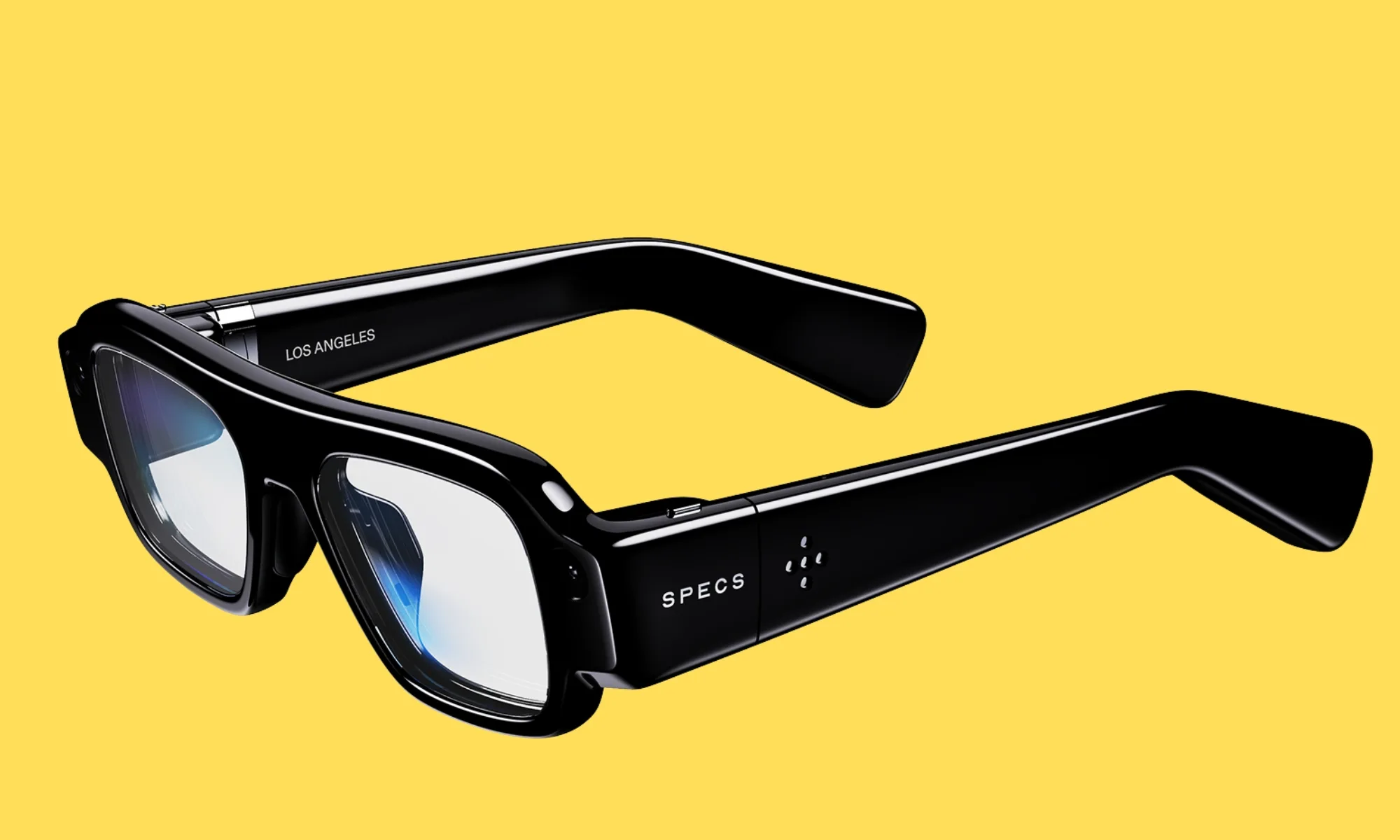
Snap’s newest hardware bet is not being framed as another screen for your face. It is being framed as a way to stop looking down.
At Augmented World Expo 2026, the company introduced SPECS, its new augmented reality glasses, describing them as a standalone computer built for AI assistance, work tools, entertainment, and shared experiences in the world around you. That positioning matters, because Snap is trying to land somewhere between today’s lightweight AI glasses and the bulkier headset category that still feels separate from everyday life.
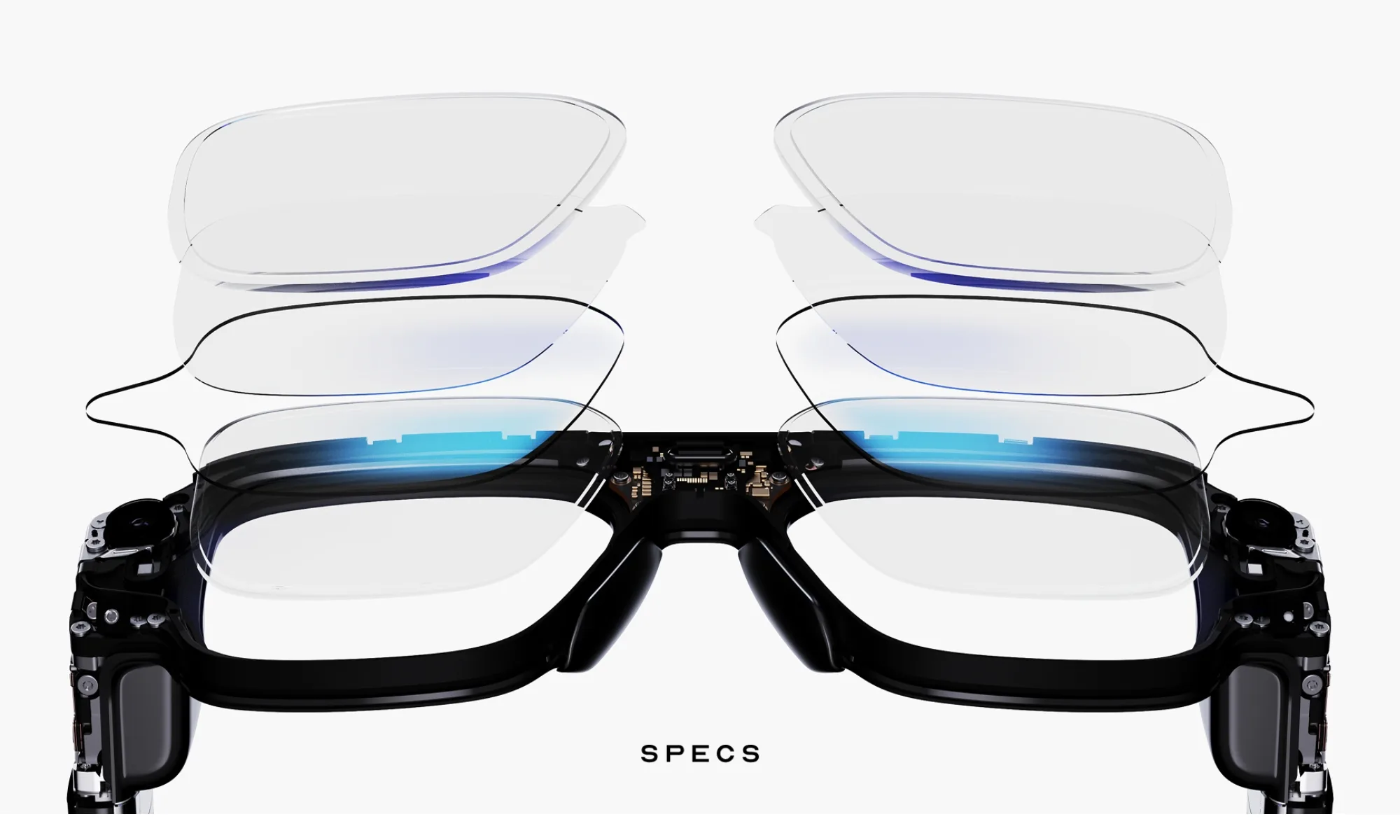
The hardware details are doing a lot of that work. SPECS are fully standalone, with no puck and no tether. They are made from Swiss TR90 polymer and come in two sizes: a 47 mm model weighing 132 grams and a 52 mm model weighing 136 grams. Removable inserts support a wide range of prescriptions, while the display uses Snap’s proprietary liquid crystal on silicon technology to deliver a 51-degree field of view and 16 million colors.
Snap says the display can feel like a 24-inch desktop monitor for work, or a 115-inch home cinema screen for entertainment. The company also points to electrochromic lenses, dual Snapdragon processors, 7ms latency, four hours of mixed use, and up to 20 hours with the charging case. Pre-orders are priced at $2,195, with shipping planned for the fall in the US, UK, and France.
That is a very specific pitch: powerful enough to be useful, light enough to be worn, and social enough to avoid becoming another isolating device.
The real bet is presence
Snap’s announcement leans heavily on a familiar criticism of modern computing: phones became more capable, but they also demanded more of our attention. The company’s argument is that AR can bring information, assistance, and entertainment into view without pulling people away from the people and places around them.
That is not just a philosophical line. It connects directly to the product choices. Standalone design means fewer visible compromises. Prescription inserts make the device more plausible as an everyday object. The 51-degree field of view pushes beyond notification-style eyewear toward real spatial interfaces. Four hours of mixed use still sounds like a boundary, but it is long enough for Snap to position SPECS around sessions of work, learning, watching, creating, and social play rather than quick camera moments.
This is where Snap’s history gives the move more weight. The company has been building AR through Lenses for years, teaching users and creators to think of cameras as interactive surfaces. SPECS move that same behavior off the phone and into a device that wants to be worn while the world is still happening.
Between AI glasses and headsets
Snap is also naming the category tension directly. In its announcement, it says AI glasses are lightweight but limited, while headsets are powerful but can feel isolating and cumbersome. SPECS are designed to sit in the space between those two extremes.
That is a difficult space to own. At 132 or 136 grams, SPECS are far heavier than normal eyewear, but much lighter than most mixed reality headsets. At $2,195, they are not a casual consumer accessory, but they are being sold as a self-contained AR device rather than a developer-only prototype. The early market is likely to include creators, developers, enterprise experimenters, and high-intent early adopters more than the average Snapchat user.
The important part is that Snap is not selling AR as a portal into a separate virtual world. It is selling it as a layer over normal life: a monitor when you need to work, a cinema when you want to watch, an assistant when you need help, and a shared experience when other people are part of the moment.
What brands should watch
For brands and marketers, SPECS are not immediately about scale. They are about format literacy.
If AR glasses become more viable, brand experiences cannot simply be resized mobile ads. A Lens that works on a phone asks someone to hold up a screen. A useful AR experience in glasses has to respect what the person is already doing, seeing, or trying to decide. That changes the creative brief.
Retail could become more contextual, with product information appearing in the aisle instead of buried in a mobile site. Entertainment could become more participatory, with characters, objects, or social prompts placed around the room. Education, events, sports, and travel could all use AR to add information without asking people to stop and search. But the bar will be higher because anything intrusive will feel physically closer.
Snap’s advantage is that it already has a creator and advertiser base familiar with AR through Lenses. The harder challenge is moving those experiences from playful camera effects into utilities people will tolerate in their field of view for hours.
Snap is trying to own the social version of computing
SPECS are expensive, early, and still dependent on people accepting another device on their face. That friction is real. But the announcement makes Snap’s direction clearer: it wants AR to be social computing, not just visual search, notifications, or private immersion.
The strategic consequence is simple: if Snap can make AR feel present rather than interruptive, the next big surface for brands will not be another feed. It will be the space between people, objects, and decisions.
Also Read:
Snapchat Turns Ads Into Conversations With AI Sponsored Snaps
Instagram Adds AI Creator Labels to Boost Transparency
LinkedIn Is Using AI To Rethink How Your Feed Actually Works