


The clearest sign that smart glasses are becoming normal may not be the glasses themselves. It may be the fact that people are now paying to detect them.
A $2.99 app that scans for nearby smart glasses has become one of Apple’s top paid App Store downloads. The app’s pitch is simple: help users spot smart glasses in their immediate environment at a time when camera-equipped wearables are becoming harder to notice and easier to wear in everyday settings.
That is the important part. This is not just a small paid utility having a moment in the App Store charts. It is a privacy behavior becoming consumer software.
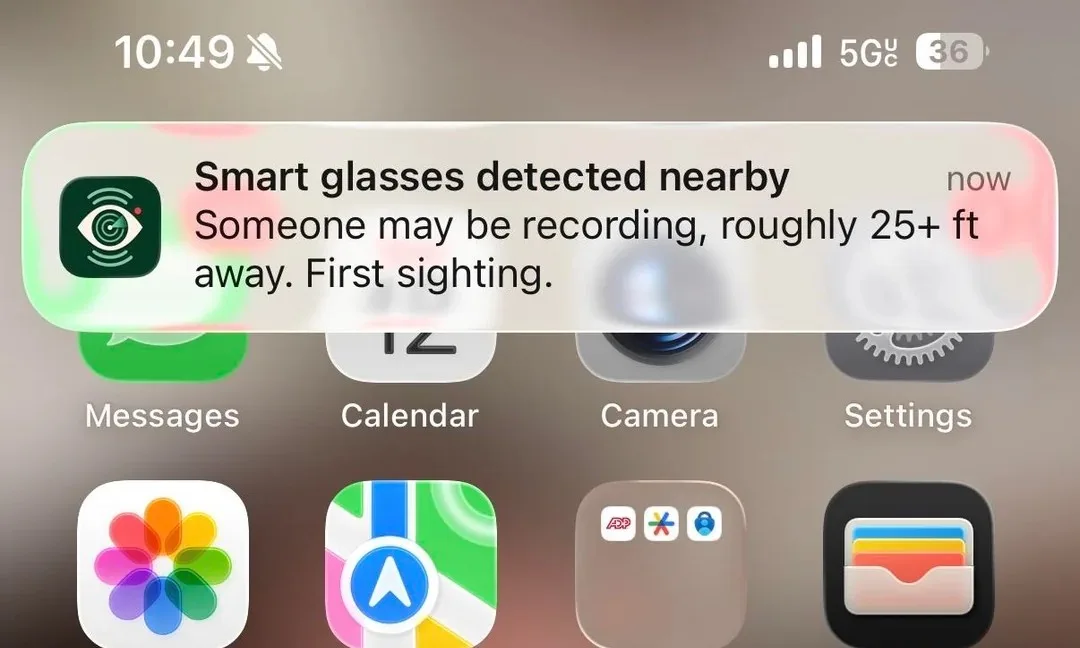
A paid app for an invisible social problem
The facts are small but telling. The app costs $2.99. It scans for nearby smart glasses. It has climbed among the App Store’s top paid apps. And its rise is happening against a broader wave of camera anxiety around wearable devices that can record from a person’s face rather than from a phone held up in plain sight.
Phones made public recording obvious. You can see the raised hand, the camera posture, the screen. Smart glasses blur that signal. The device can look like an accessory, not a camera. That changes the social contract around being filmed, because the moment of recording becomes harder for bystanders to read.
The app, then, is less interesting as a perfect technical solution than as a cultural workaround. People are not waiting for etiquette, platform rules, or public norms to catch up. They are downloading a detector.
That says something about trust. When a new interface removes visible cues, users look for replacement cues somewhere else. Sometimes that replacement is a label. Sometimes it is a permission prompt. Sometimes it is parental supervision, as platforms have been adding more control layers around everyday digital behavior, including Meta’s recent move to bring Threads into its parental supervision stack. In this case, the cue is a paid app that tries to make nearby wearables visible again.
The App Store chart is the signal
A privacy app reaching the top paid rankings matters because people rarely pay for friction unless the anxiety feels real. Free apps are easy to test and forget. A paid download, even at $2.99, suggests a more deliberate response: users want a practical layer between themselves and a device category they do not fully trust yet.
That creates a problem for smart glasses makers. The promise of the category depends on being lightweight, wearable, and socially acceptable. But the more seamless the product becomes, the more invisible its recording potential can feel to everyone else in the room. The design win for the wearer can become the trust problem for bystanders.
For platforms, brands, and creators, this is the part to watch. Wearable cameras could become a powerful content capture surface, especially for hands-free moments, live experiences, travel, retail, sports, and creator-led storytelling. But adoption will not only be shaped by specs, battery life, or AI features. It will also be shaped by whether people around the device feel they can understand what is happening.
The smart glasses detector app does not need to become a permanent mass-market utility to matter. Its rise already points to the next battleground for wearable tech: not just making devices smarter, but making their presence legible enough for public life.