


WhatsApp is making it easier to clean up one quietly annoying side effect of Channels: all the media they leave behind.
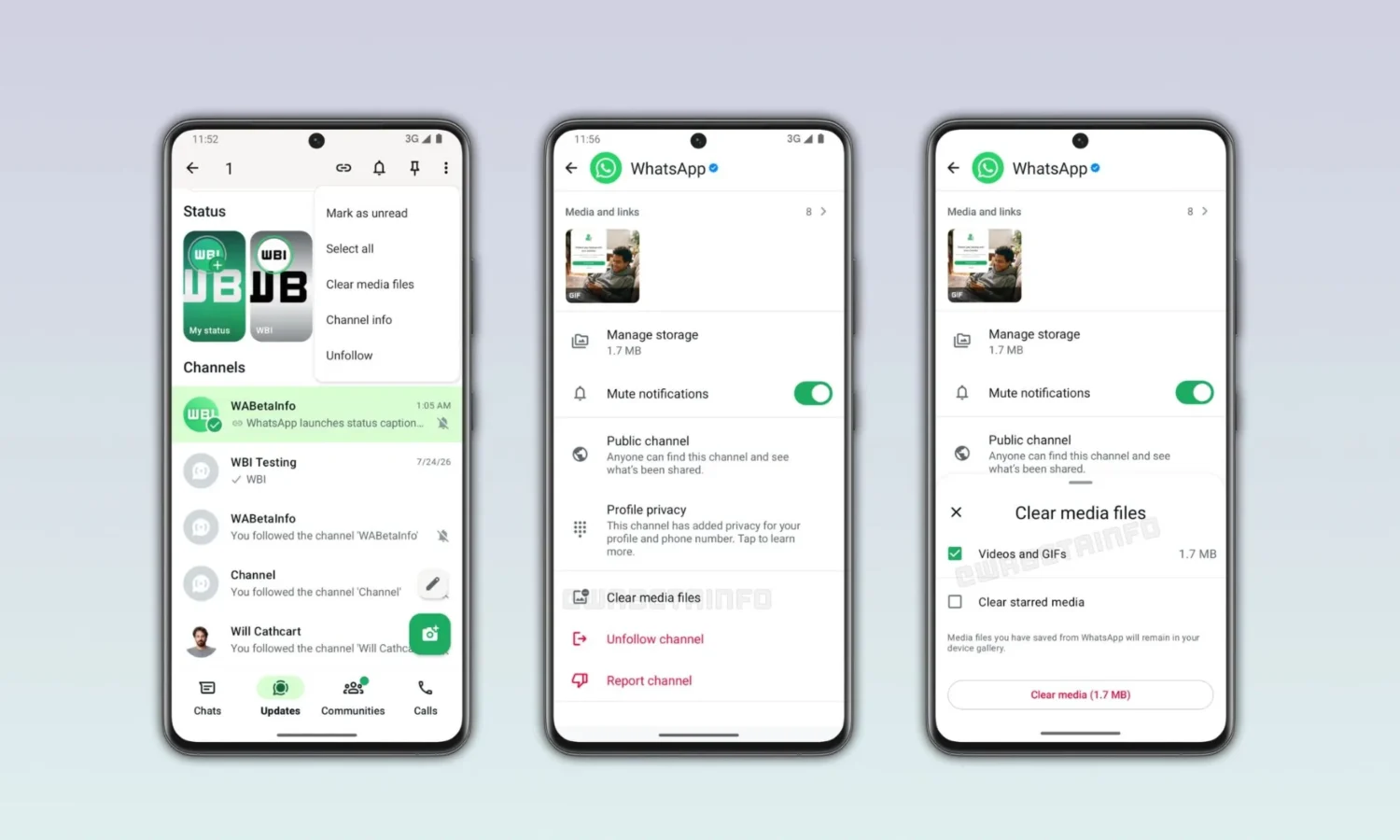
A new cleanup tool is aimed at people who follow too many WhatsApp Channels and then watch their phone storage get eaten by downloaded content. The point is simple: instead of treating Channel media like just another buried WhatsApp mess, the app is giving users a more direct way to reclaim space.
The feature focuses on one of the app’s most obvious new pain points. Channels are built for broadcast updates, not two-way conversation, which means users can passively follow creators, publishers, teams, brands, and communities without realizing how much visual content those follows are accumulating. Digital Trends frames the update as a fix for one of WhatsApp’s biggest storage headaches, specifically because Channel media can pile up quickly when users subscribe to multiple feeds.
Channels needed their own cleanup layer
This is the kind of update that sounds small until you look at what WhatsApp has become. For years, WhatsApp’s storage problem mostly came from chats: family groups, forwarded videos, vacation photos, work documents, and the usual chaos of modern messaging. Channels changed that dynamic. They turned part of WhatsApp into a one-to-many media stream.
That matters because the user behavior is different. In a chat, media usually arrives from someone you know or a group you actively participate in. In Channels, media can arrive because you once tapped follow on a public feed. The new tool acknowledges that distinction. Channel content needs its own controls because it creates a different kind of storage pressure.
It also fits a broader WhatsApp pattern we have been watching: the most useful updates are increasingly less about shiny new surfaces and more about how people actually live inside the app. As we noted when WhatsApp’s newer features started leaning into real-life habits, the platform’s advantage is not just reach. It is daily dependency. And daily dependency gets stronger when small annoyances disappear.
The strategic shift is control, not cleanup
For WhatsApp, this is not only a storage feature. It is a retention feature. Channels can only become a serious discovery and publishing layer if they do not make the app feel heavier, messier, or harder to manage. Once following more Channels starts to feel like subscribing to clutter, the behavior breaks.
That is the bigger signal here. WhatsApp is still a messaging app, but Channels push it closer to a content platform. And content platforms need management tools: ways to clean up, mute, filter, unsubscribe, save, and reset. The more WhatsApp invites public media into a private messaging environment, the more it has to give users ways to keep that environment under control.
For brands, creators, and publishers using Channels, the lesson is pretty direct. Distribution inside WhatsApp is powerful because it feels personal and immediate. But that same intimacy makes friction more costly. Heavy, repetitive, storage-hungry content is not just bad creative discipline; it gives users a reason to clean you out.
The cleanup tool solves a practical problem, but the strategic consequence is bigger: WhatsApp wants Channels to grow without making WhatsApp feel like another bloated feed.