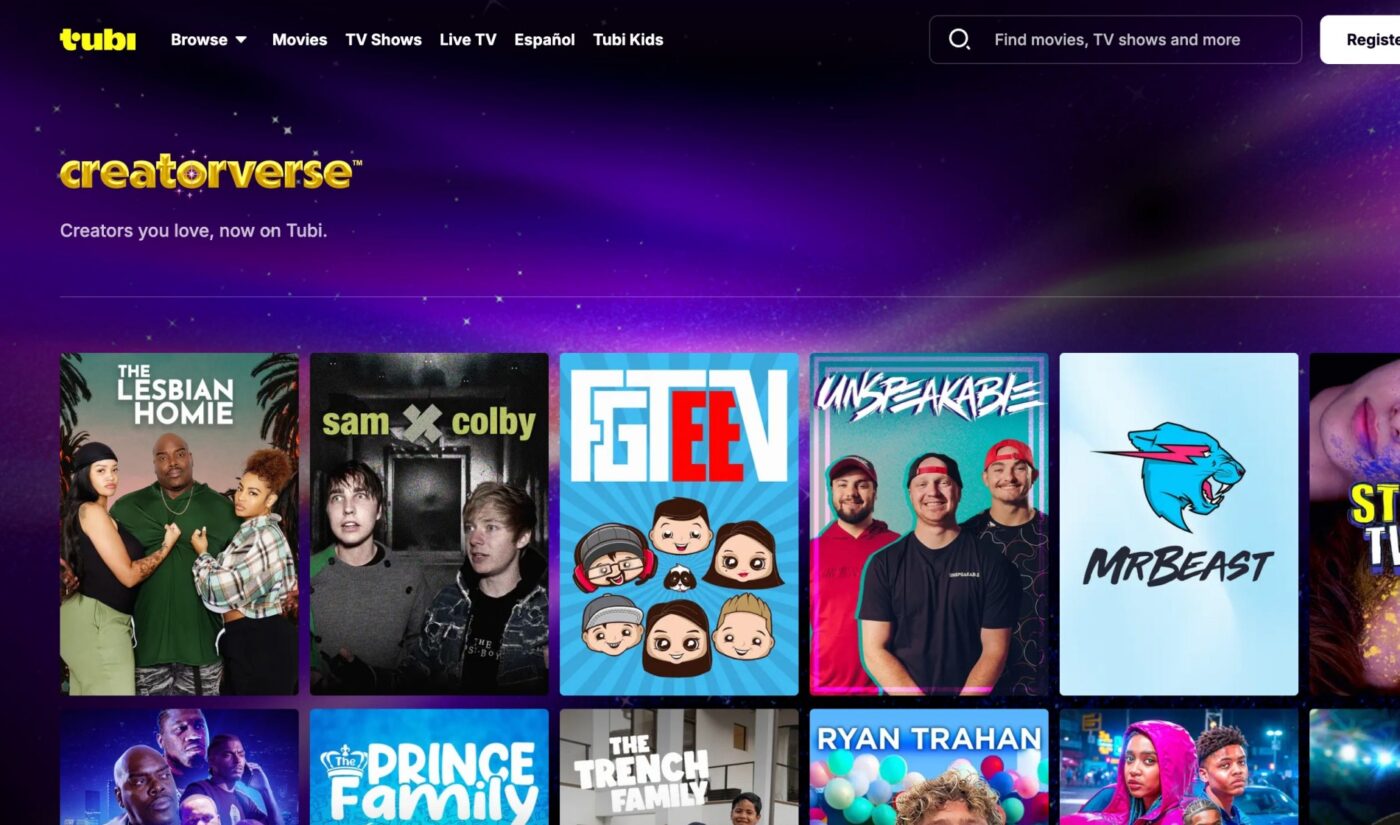
Tubi is no longer treating creators as a nice-to-have marketing layer. It is using them as a programming strategy.
The free streaming platform is coming off its strongest showing yet in Nielsen’s The Gauge, the monthly report tracking U.S. TV and streaming usage. In the April 2026 edition cited by Tubefilter, Tubi’s traffic rose 3%, giving it a 2.3% share of overall streaming. Combined with Roku, which sits alongside Tubi under the Fox umbrella, the total reached 5.3%, higher than Disney and Prime Video in that same report.
That is the backdrop for what Tubi is now saying publicly: creators are not just a discovery channel. They are part of the content engine.
From creator audience to streaming audience
At VidCon, Tubi Senior Manager of Creator Partnerships Jess Borison said the platform is putting “fandom at the forefront” of its content strategy, Tubefilter reports. The idea is simple, but important: instead of asking creators to promote someone else’s show, Tubi wants to build around the categories and communities that already work on the platform.
That means matching creators to viewing behavior already happening inside Tubi. Borison pointed to true crime and horror as two strong categories, which helps explain the platform’s revival of Joey Graceffa’s Escape The Night. Tubi’s push into Black entertainment has also been supported by partnerships with creators such as Kinigra Deon.
The logic is not just that creators bring followers. It is that some creators bring audiences with habits, taste, and repeat behavior. A horror creator is not only a promotional asset if Tubi already knows horror overperforms. They become a way to make the platform’s catalogue feel more alive to a specific fanbase.
That is a different kind of creator deal. It is closer to programming with a built-in audience thesis than buying influence around a finished product.
The new question is whether fandom travels
Tubi’s creator push is also moving beyond its own app. A partnership with TikTok led to Creatorverse, a creator-focused content program that is now heading to Amazon’s Fire TV devices. That move matters because it shows Tubi is not only trying to pull audiences into one destination. It is testing whether creator-led entertainment can travel across screens and platforms.
Borison framed the challenge clearly at VidCon: does a creator’s audience follow them into new spaces? Do they show up for live shows? Do they buy merch? Are they engaged enough to watch longer-form content somewhere other than the feed where they first found the creator?
That is the real test for creator-led streaming. Social platforms are good at proving attention. Streaming platforms need proof of commitment. The fan has to move from a clip, a follow, or a parasocial habit into a lean-back viewing decision.
For Tubi, the timing makes sense. Free, ad-supported streaming has grown partly because it removes subscription friction. But free access alone is not a brand. Creator-led programming gives Tubi another way to organize attention: around fandoms that already know what they like and who they trust.
For marketers, the useful signal is not simply “work with creators.” It is to look for portability. The creators that matter most in this model are not always the biggest. They are the ones whose audiences will follow them when the format, screen, and context change.
If Tubi can keep turning creator communities into watchable programming, the platform’s next phase will not be defined only by catalogue depth. It will be defined by how well it can make fandom behave like distribution.
Also Read:
Instagram Is Thinking Beyond Reels, Eyeing Long-Form Content for TV
Instagram Adds “AI Creator” Labels to Boost Transparency
Instagram Cracks Down On Content Aggregators To Boost Originality