


Google is adding a new kind of warning to one of the oldest digital behaviors: answering the phone.
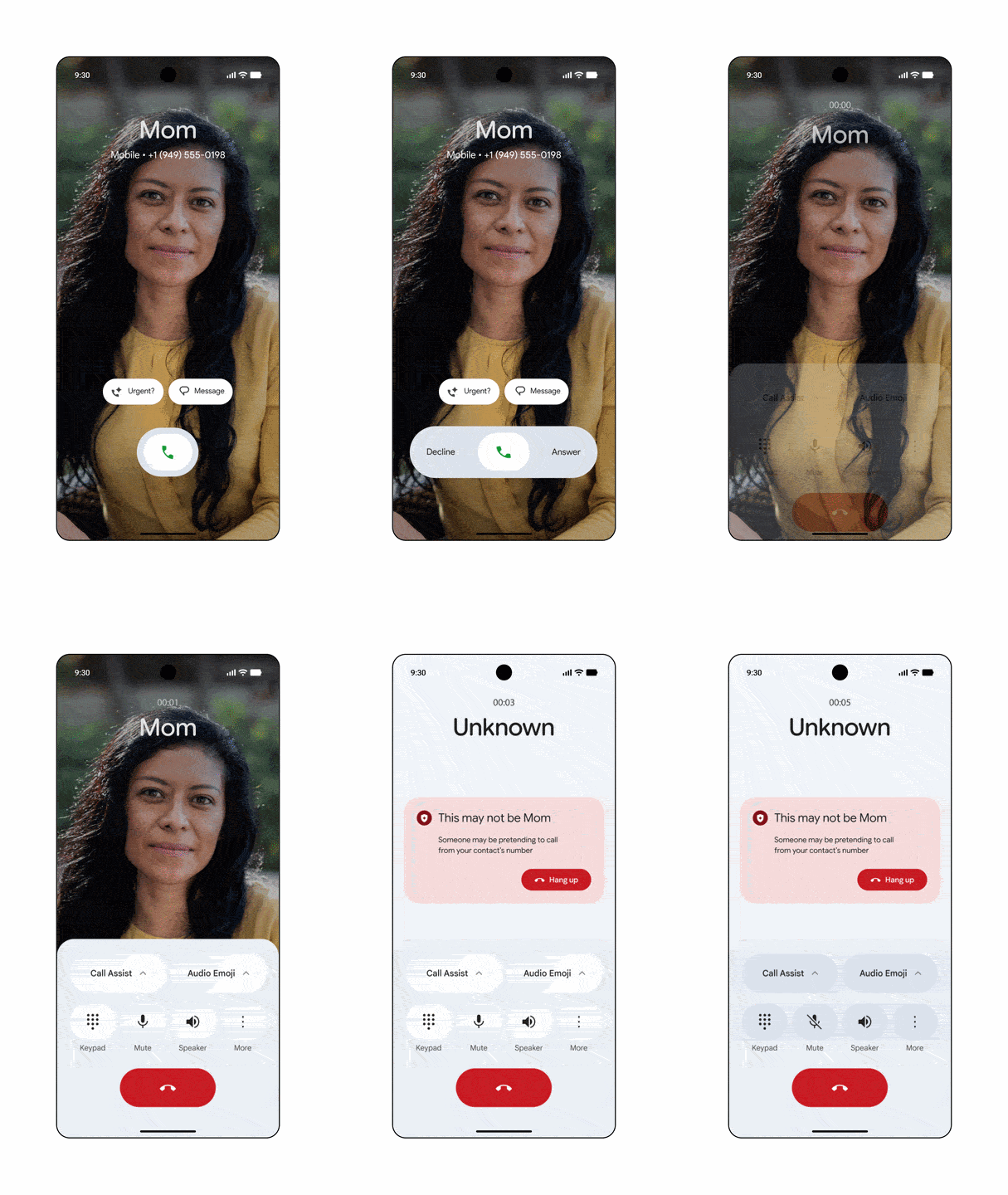
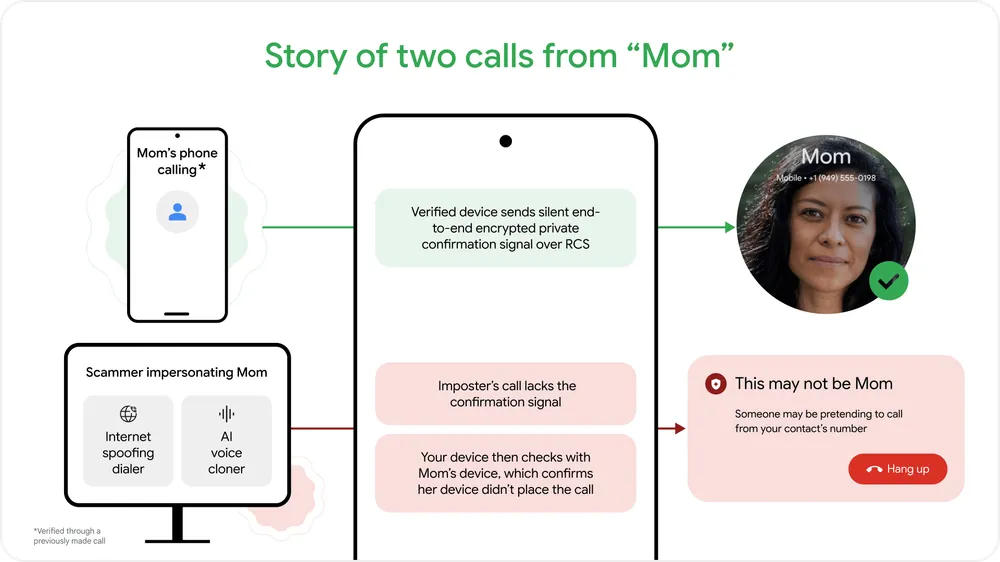
The company is launching a feature for the Phone by Google app that can tell users when a caller may be impersonating someone they know. The feature is designed to protect people from AI impersonation scams, including calls that appear to come from one of their contacts. If the app detects something suspicious, it will flag the call so the user can hang up.
That is a small product update with a very specific job. This is not a generic spam filter. It is not just blocking unknown numbers. It is focused on a newer problem: scammers using AI to make a call feel familiar, personal, and urgent enough to bypass skepticism.
When familiarity becomes the attack surface
Phone scams have always relied on pressure. AI impersonation adds something more dangerous: recognition.
If a call appears to involve someone already in your contacts, the user’s normal defenses change. We are trained to be wary of unknown numbers. We are less trained to question a familiar name, a familiar relationship, or a voice that sounds close enough to someone we know. That is why Google’s feature is interesting. It treats the contact list itself as something scammers can exploit.
There is also a bigger shift here in how platforms think about identity. For years, trust signals were mostly visual: a blue check, a verified handle, a profile photo, a known domain. AI voice scams attack a different layer. They do not need to win a feed. They need to win a moment.
And phone calls are very good at creating moments. They interrupt. They demand a response. They carry emotional weight, especially when the caller seems to be a family member, friend, colleague, or client.
Trust is moving closer to the interface
Google’s move says something important about where AI safety is heading. Warnings are becoming part of the communication layer itself.
That matters because the old model of digital literacy puts too much responsibility on the user after the fact. Check the number. Listen carefully. Ask a question only the real person would know. Call them back. Good advice, but not always realistic when a scam is designed around panic, speed, and emotional manipulation.
By putting a warning inside Phone by Google, the company is trying to add friction at the exact point of risk. The call comes in. The app sees something suspicious. The user gets a signal before committing to the conversation.
This is where AI changes the job of communication platforms. They are no longer just carrying messages between people. They are being asked to judge whether the person, voice, or context attached to that message is real enough to trust.
More than a consumer safety feature
Customer communication already depends on fragile trust. Banks call about fraud. Delivery companies call about access. Healthcare providers call about appointments. Retailers send SMS updates. Creators message fans. Sales teams chase leads. Every one of those touchpoints becomes harder when people begin to assume that familiar names, voices, or numbers can be faked.
For marketers, the lesson is practical: authentication can no longer be treated as a back-office security issue. It is part of the customer experience.
If consumers start receiving more warnings around calls, texts, and messages, legitimate brands will need clearer verification habits. That could mean consistent caller IDs, verified communication channels, in-app confirmation, better education around what a brand will never ask for, and fewer high-pressure scripts that accidentally resemble scam behavior.
The brands that win trust in an AI-heavy communication environment will not be the ones that sound the most human. They will be the ones that make it easiest to prove they are real.
The new trust tax
Google’s feature is a sign that synthetic identity is becoming ordinary enough to require built-in defenses. Not because every call will be fake, but because enough of them might be.
That changes the cost of communication. Every brand, platform, and creator now has to think about how trust is established before a message is believed. A familiar name is no longer enough. A convincing voice may not be enough either.
The next competitive advantage in communication may be simple: being recognizably real before anyone has to wonder.