Teen safety in AI is moving beyond the filter.
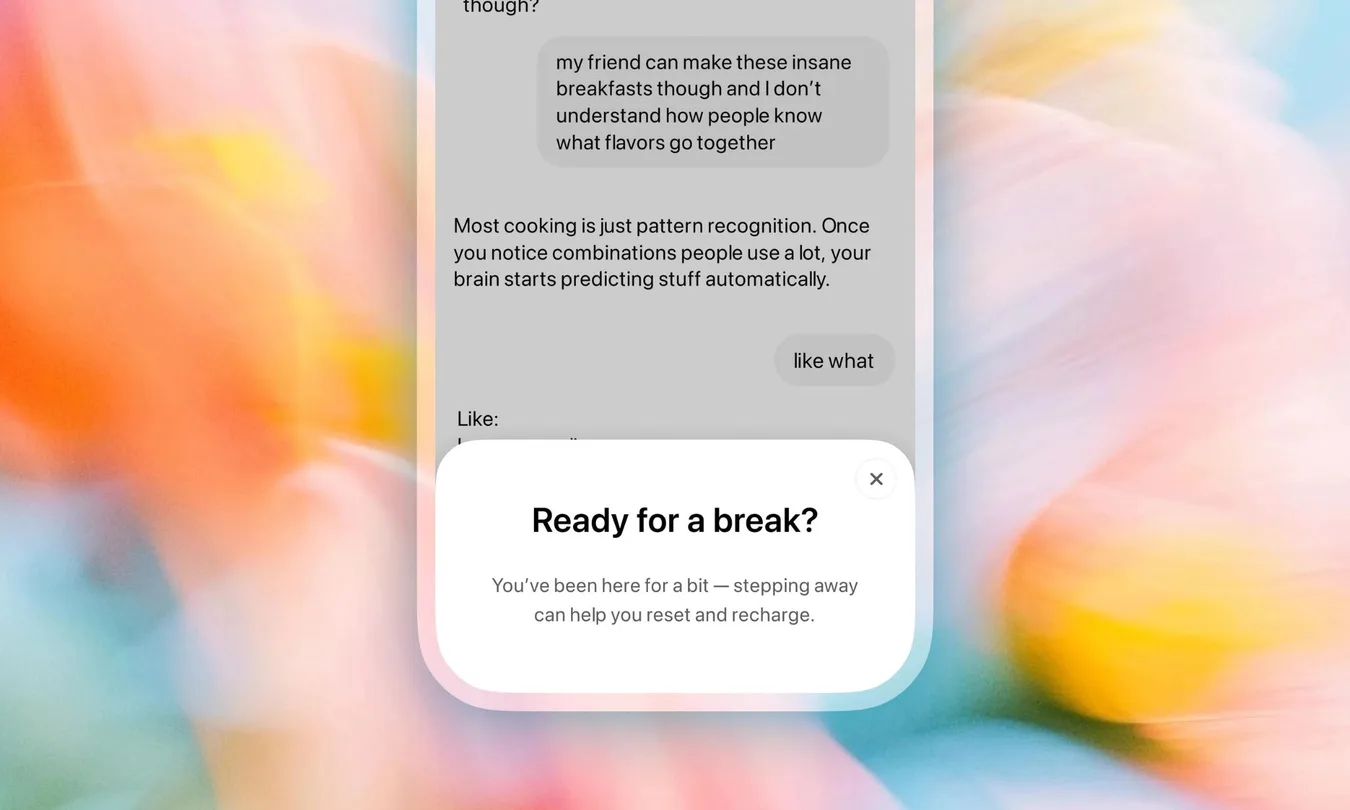
OpenAI is expanding its teen-focused ChatGPT safeguards, adding more frequent break reminders for young users who spend extended time in the product, while also pointing families toward parental controls, quiet hours, content protections, and limited safety notifications.
In a new post on why teens deserve access to safe AI, OpenAI argues that blocking young people from AI entirely would leave them less prepared for a technology that will shape their future. But access, the company says, has to come with protections designed specifically for teens.
That sentence alone says a lot.
The story is not just that ChatGPT will tell teens to take a break. It is that AI companies are starting to design teen safety as a product system: content limits, usage nudges, parent controls, age-aware settings, and escalation paths all working together.
From content filters to usage habits
For years, online safety has often been framed around what platforms should hide, block, or remove. With AI, that frame is too small.
A chatbot is not a feed. It can answer homework questions, generate ideas, write essays, roleplay, explain personal problems, and keep a user inside a private conversation for a long time. That makes the rhythm of use part of the safety question.
OpenAI says teens who spend extended time in ChatGPT will now receive more frequent reminders to pause and step away. The goal is not to remove access, but to help younger users build healthier technology habits while still using AI for learning, creativity, and problem-solving.
That is a subtle but important shift. Safety is no longer only about whether the model refuses a harmful answer. It is also about whether the product notices when the interaction itself may need a boundary.
Parents get controls, not full visibility
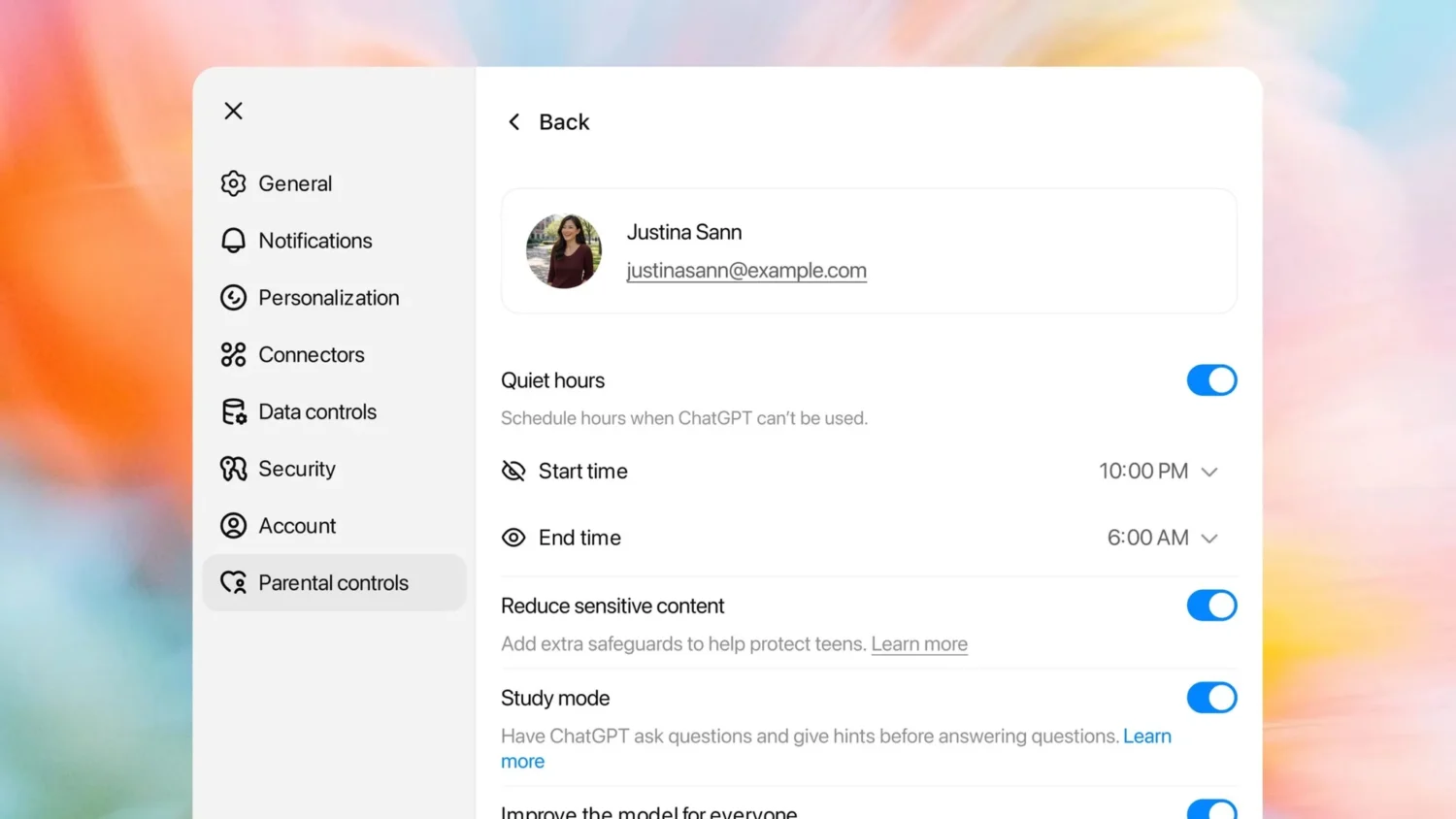
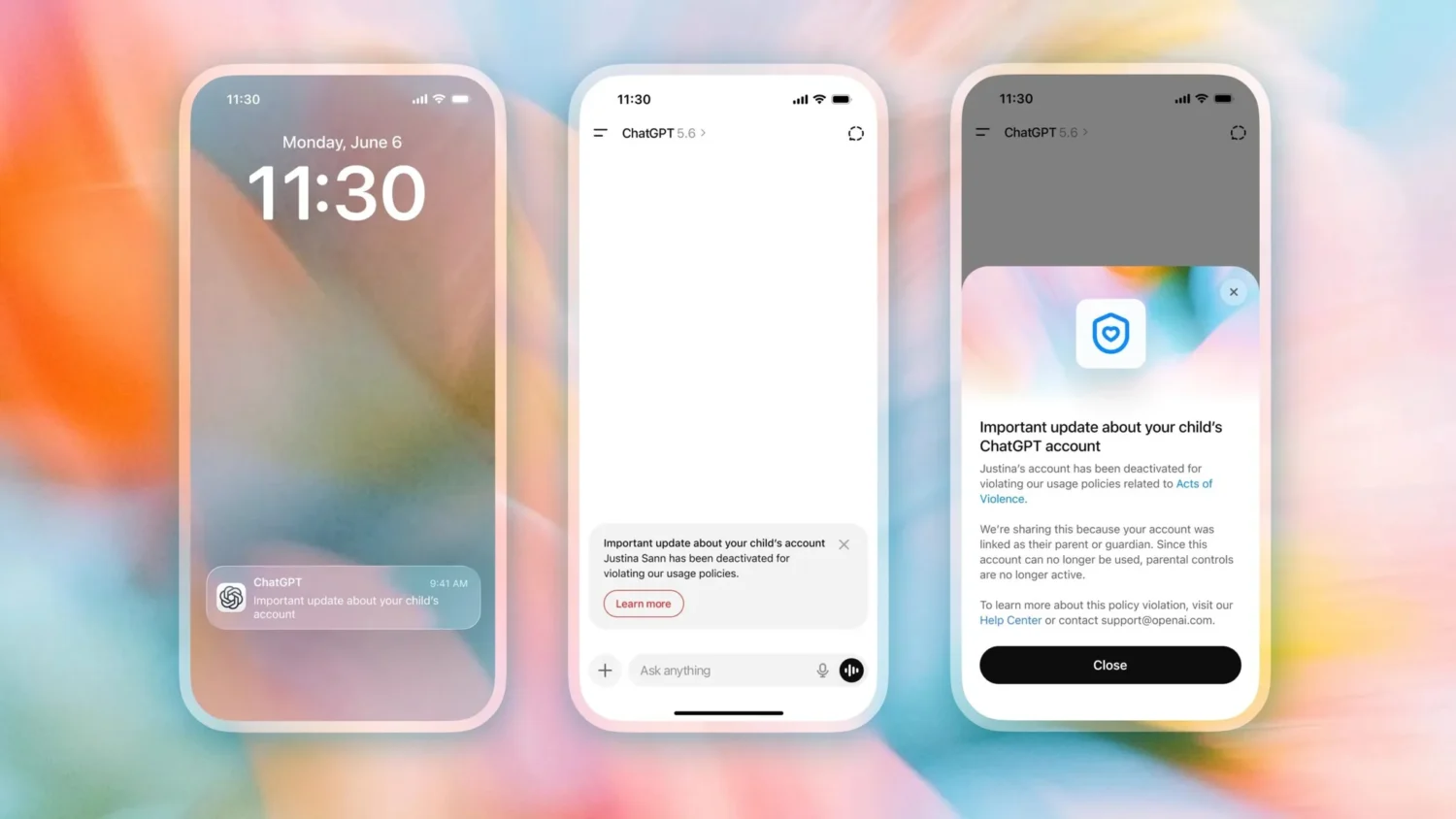
The parental-control layer is just as important. OpenAI’s support documentation says parents and guardians can link accounts with a teen, manage selected settings, set quiet hours, turn off features like voice mode or image generation, and receive safety notifications in limited high-risk situations.
But the company is also drawing a privacy line: parental controls do not give parents access to a teen’s conversations. That matters because AI chats can be much more intimate than social feeds. They can feel like search, tutoring, diary, therapist, and friend, sometimes all in the same week.
That creates the core tension. Teens need room to explore and learn. Parents want enough visibility to intervene when something serious may be happening. Platforms need to support both without turning every conversation into surveillance.
OpenAI is positioning ChatGPT as something teens should learn to use, not avoid. But it is also acknowledging that AI products now sit inside family life, education, mental health, and identity formation. That is a much heavier role than a search box.
The broader signal is clear: the next stage of AI safety will not be judged only by model behavior. It will be judged by the surrounding product architecture. Who gets controls? What defaults apply to minors? When does a system nudge, restrict, notify, or escalate?
For AI companies, teen access is becoming something they have to earn continuously. Not with one safety page. With the product itself.
Also Read:
Meta AI Will Alert Parents When Teens Discuss Self-Harm
The Teen Social Media Ban Wave Is Becoming A Global Operating Risk
Your Shared ChatGPT Conversations Are Being Indexed By Google