


Spotify’s music discovery machine is getting a little less passive.
The company is updating Release Radar with new controls and a refreshed look, giving listeners more say over how their weekly new music playlist behaves. In a new announcement, Spotify says the update is rolling out this month across both mobile and desktop, with the new controls placed right at the top of the Release Radar playlist.
Release Radar already has scale. Spotify says the playlist reaches nearly 9 million listeners every week. Every Friday, it delivers new drops from artists users already follow or listen to, alongside new singles selected based on their taste. In other words, it is one of Spotify’s biggest recurring discovery habits: a weekly appointment for new music that still feels personal.
Now Spotify is adding more direction to that habit. The new session controls let listeners shape the playlist around specific modes, including narrowing the selection to a genre, focusing on new-to-you artists, or choosing other personalized options. Spotify says users will be able to choose from up to five options, such as “Discover new artists,” “Editors’ picks,” and “Pop.”
That may sound like a small interface change. It is not. It changes the role of the listener inside the recommendation loop.
Discovery is becoming more adjustable
Spotify has spent years making discovery feel automatic. Discover Weekly, New Music Friday, Fresh Finds, Release Radar, and more recently DJ all push listeners toward music they might not have gone looking for themselves. The promise has always been simple: open the app, and Spotify will do the digging.
The Release Radar update does not walk that back. Spotify says it is also making the playlist more relevant with sharper, more personalized recommendations, alongside new cover and header art. The algorithm is still very much in charge of the raw material.
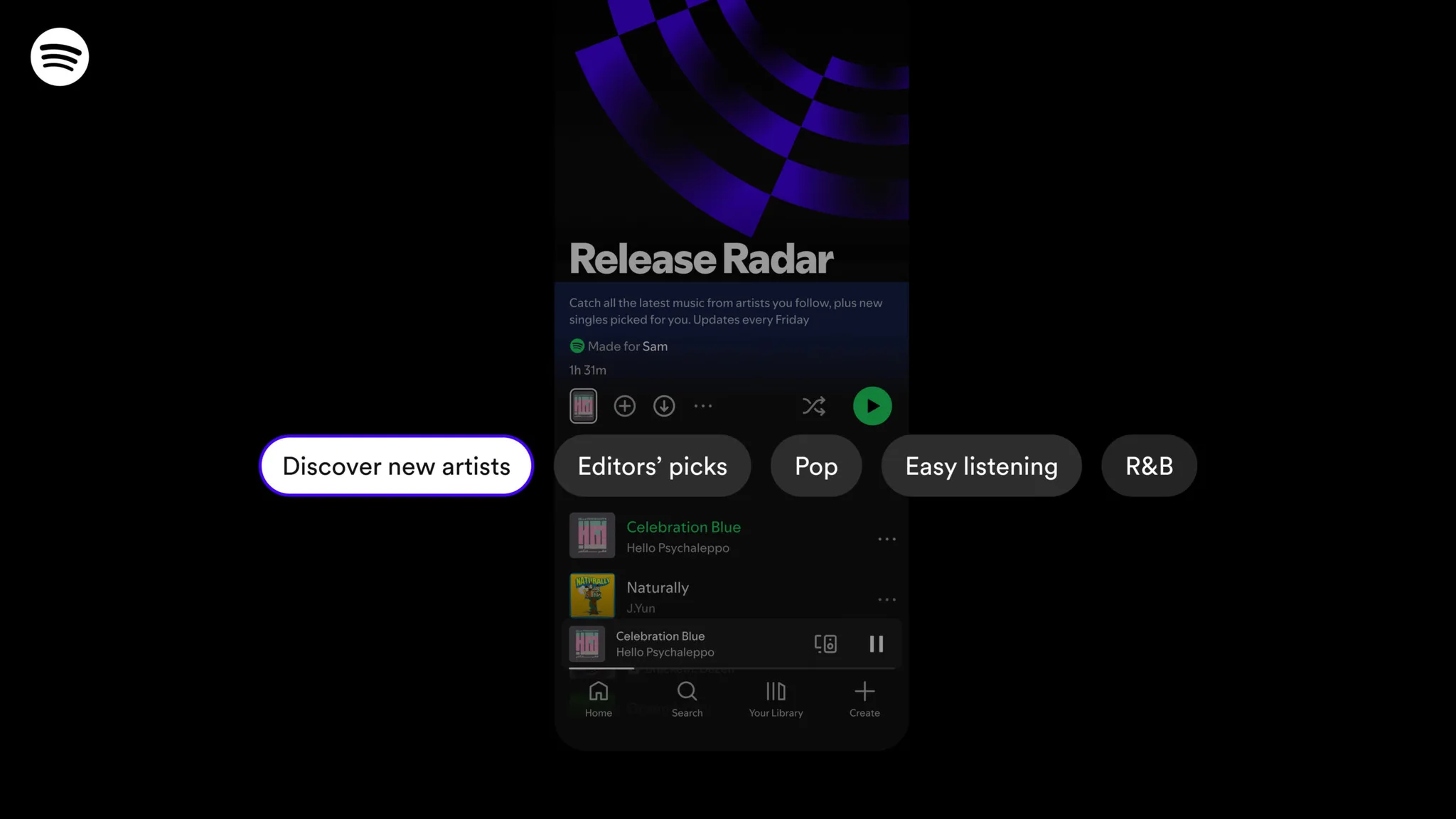
But the behavior changes when users can steer the session before listening. Someone who wants familiar artists can stay close to their current rotation. Someone who wants only new-to-you acts can push the playlist further out. Someone in a pop mood can tell Release Radar to tighten the frame.
That is a different kind of personalization. It is not just Spotify predicting what you want next. It is Spotify letting you declare the kind of discovery you are in the mood for.
For listeners, that makes Release Radar feel less like a black box and more like a dial. For artists, it also matters. If more users choose discovery-forward modes, playlists like Release Radar could become even more important for breaking outside an existing fan base. If users narrow by genre or editorial picks, the context around a new release becomes more intentional.
The playlist is becoming an interface
The bigger move here is that Spotify is treating playlists less like static containers and more like flexible listening interfaces.
Release Radar still refreshes every Friday. It still revolves around new music. It still mixes artists users love with personalized recommendations. But with controls at the top of the playlist, Spotify is making the act of listening feel more interactive before the first track even plays.
That matters because music discovery has become crowded. There are editorial playlists, algorithmic playlists, social clips, artist campaigns, fan edits, short-form video trends, and AI-assisted recommendations all competing to introduce the next song. Spotify’s advantage is not simply that it has data. It is that it can turn discovery into a repeat behavior inside the product.
Release Radar already had the recurring habit. The update adds intent.
The strategic consequence is clear: Spotify does not want discovery to feel like scrolling through endless recommendations. It wants users to tune the recommendation system, stay inside the playlist, and feel like the next favorite song was both found for them and chosen by them.