AI assistants are starting to borrow one of social media’s most revealing habits: showing you what you have actually been doing.
Anthropic is introducing Reflect with Claude, a beta feature designed to help people track, visualize, and question how they use Claude. The company says the idea came from user interviews, where people kept asking a more practical question than “what can AI do?” They wanted to understand how AI should fit into daily life, when it helps, and when a task is still better left to a human.
That is a subtle but important shift. The AI race has mostly been framed around speed, capability, and model performance. Anthropic is now adding a mirror.
Claude gets its own reflection dashboard
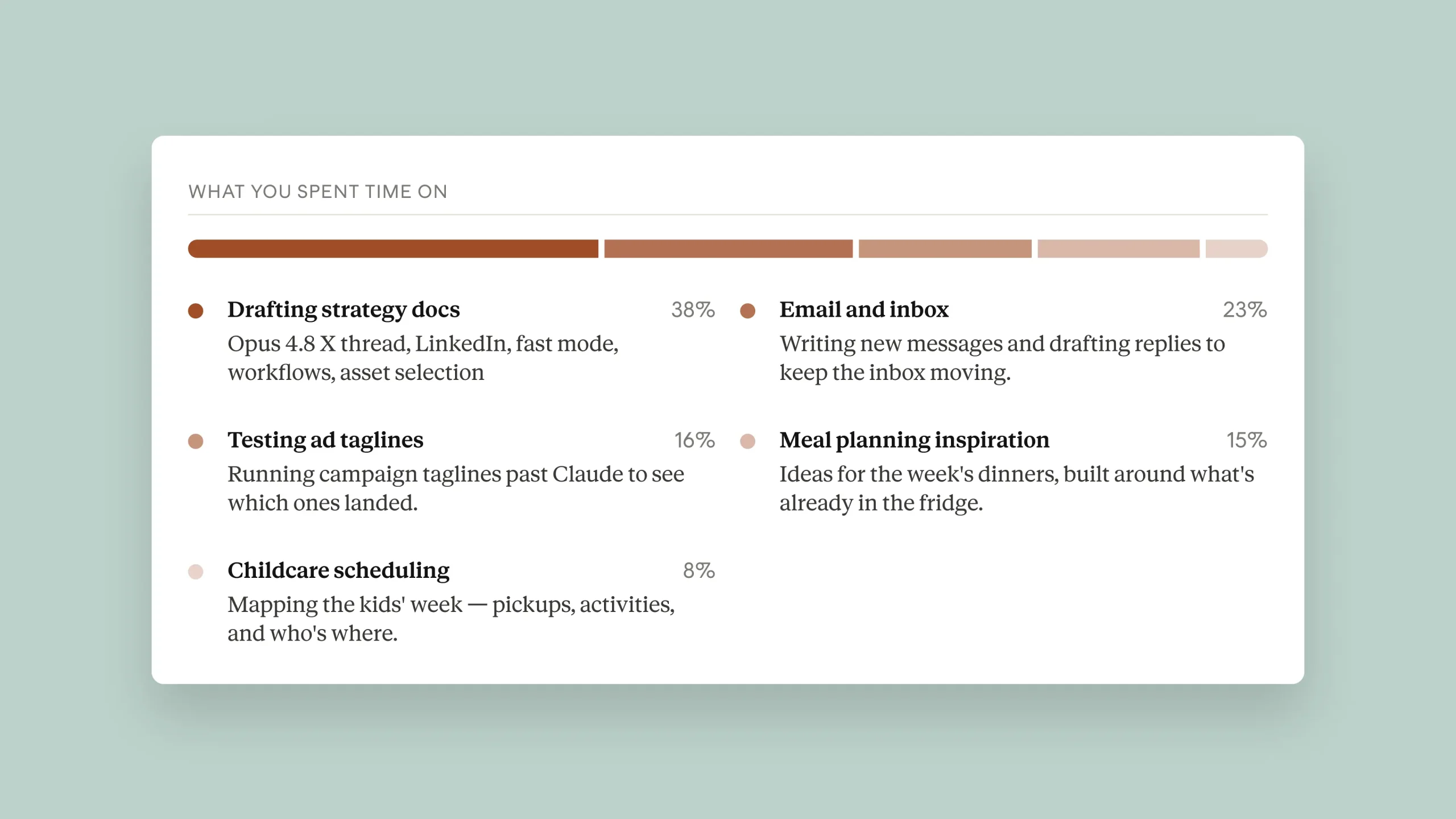
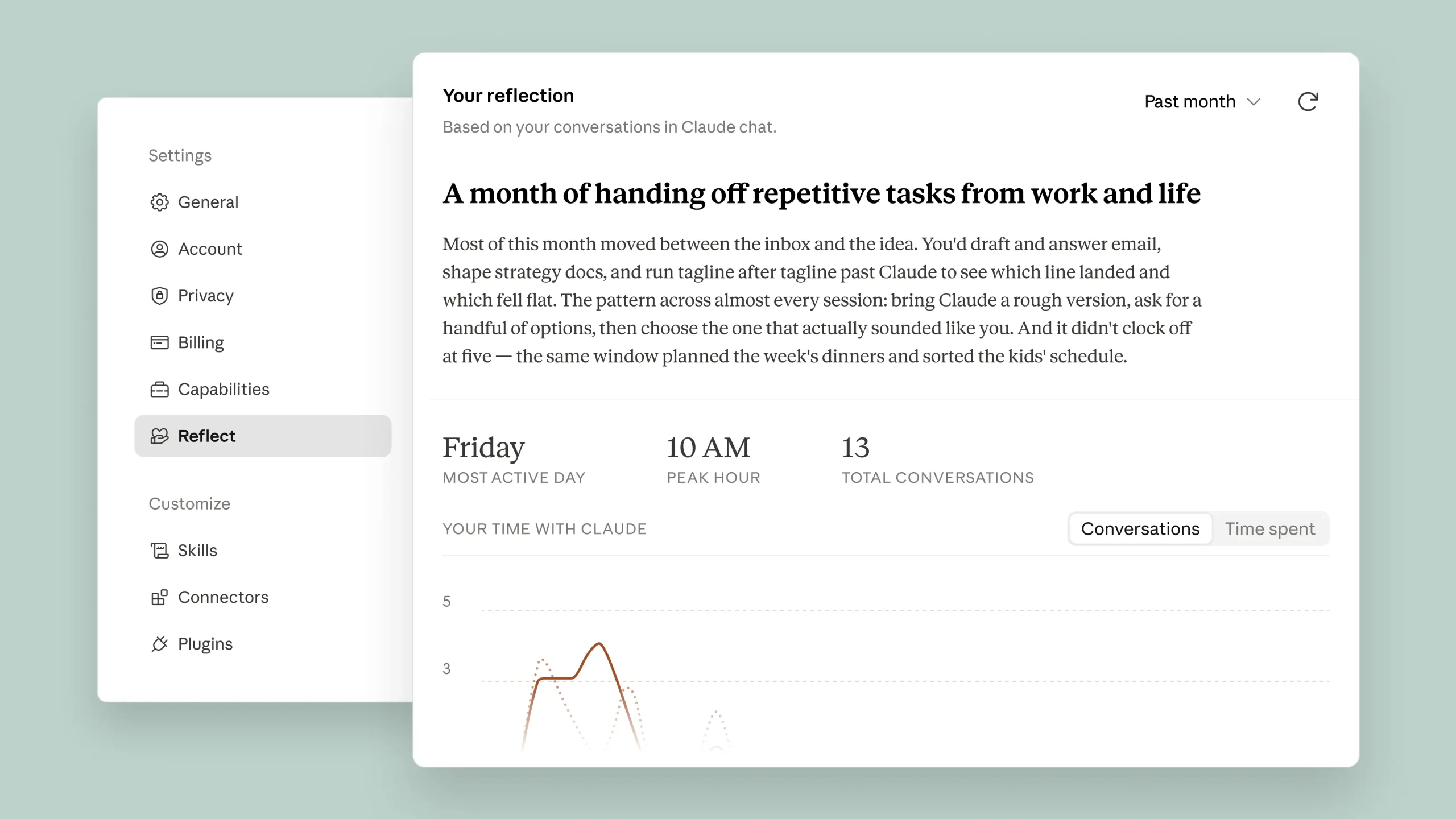
The new reflection dashboard lives in Settings on Claude for web and the desktop app. From there, users can look back on their Claude chat activity across the past 1, 3, 6, or 12 months, with summaries covering key topics, usage patterns, and the kinds of tasks they tend to work through with the assistant.
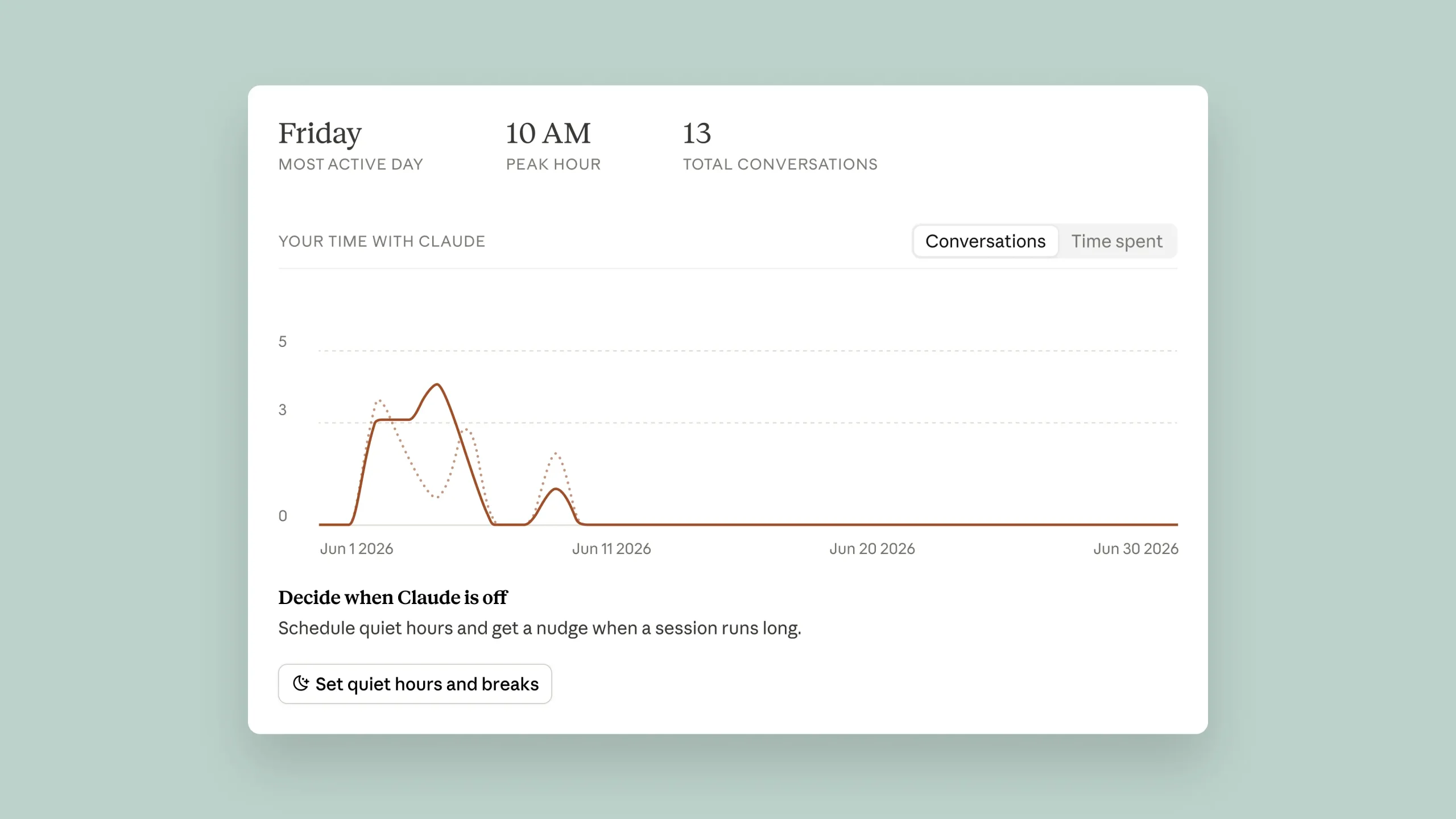
The dashboard also breaks down when someone uses Claude most and what they spent that time working on. Anthropic says a view showing how much time users have spent with Claude is coming soon.
That makes Reflect feel closer to a mix of screen-time controls and a Wrapped-style behavioral recap than a simple analytics panel. But the more interesting part is not just measurement. It is prompting users to decide whether the pattern they see is actually the one they want.
Anthropic says Reflect will periodically surface questions such as, “What’s one thing you want to keep doing yourself, even if Claude could do it faster?” Users can talk through those questions with Claude, turning the dashboard into something closer to a self-audit than a passive report.
There are also built-in friction points. Users can set quiet hours or schedule a nudge to take a break after a certain amount of time using Claude. Both are reminders based on the user’s own preferences, and both can be dismissed.
The real feature is intentional use
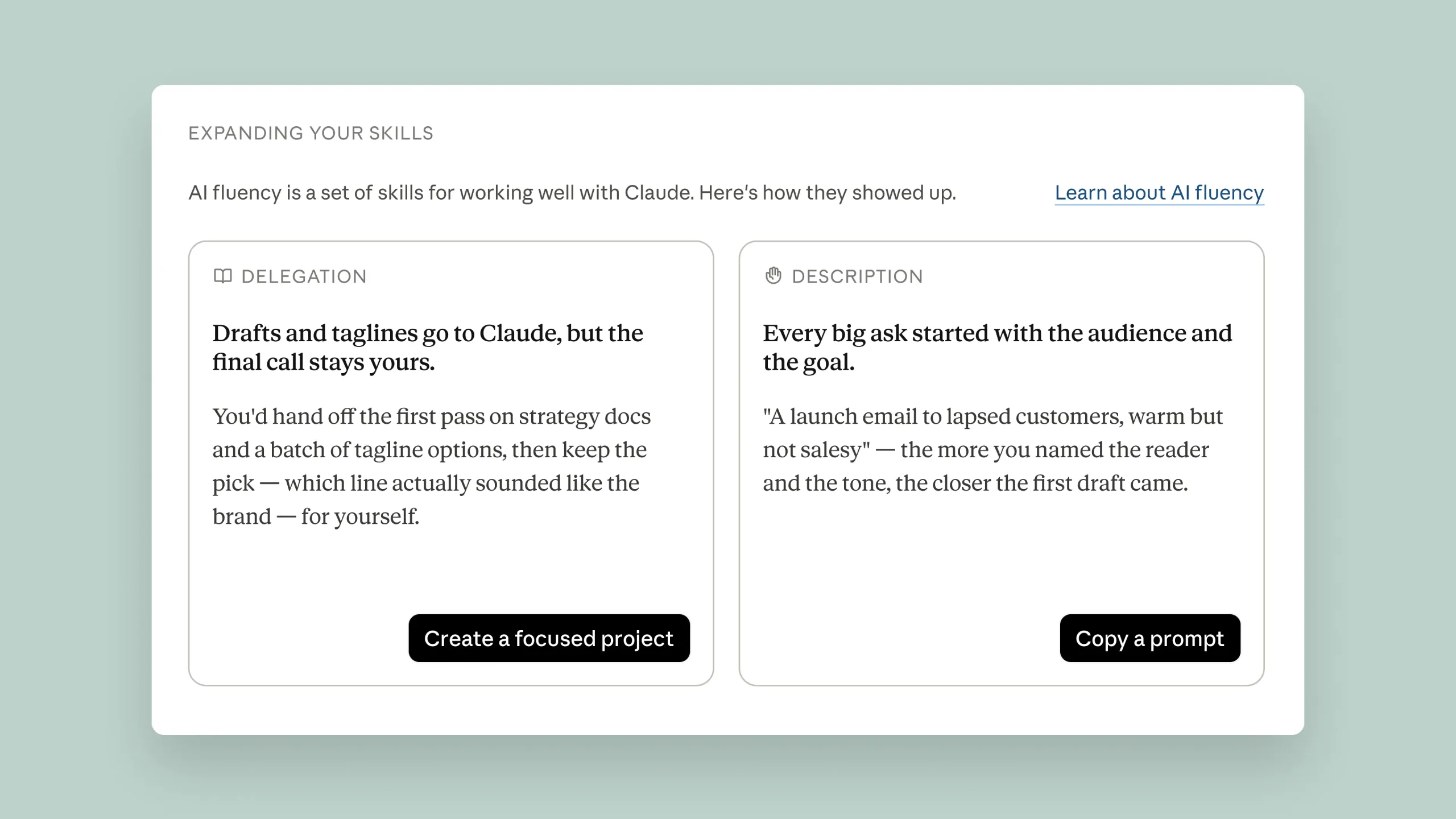
Anthropic is also using Reflect to push a more structured idea of AI literacy. The feature connects user activity to the company’s 4D AI Fluency Framework: Delegation, Description, Discernment, and Diligence.
In practice, that means the report can summarize how someone collaborates with Claude across those dimensions. Anthropic gives examples such as a user often reworking email drafts in their own voice, or delegating tasks only after they have already settled the strategy themselves. Reflect can also suggest more practical changes, like starting a Project instead of repeatedly re-explaining context for ongoing work.
The privacy details matter here because a feature like this only works if it does not feel creepy. Anthropic says Reflect does not draw from incognito chats and does not pull in underlying files from connected tools. If a user asked Claude to summarize an inbox, the summary may appear in the reflection, but the source emails would not.
For an AI assistant, that boundary is part of the product story. Reflect is not just trying to make people use Claude more. It is trying to make them notice the shape of that use, set limits around it, and build better habits inside it.
That may become a bigger expectation for AI tools as they move deeper into work, writing, learning, and personal decision-making. Once an assistant becomes part of someone’s routine, the next question is no longer only whether it can complete the task. It is whether the user still understands which parts of the routine they want to keep for themselves.
Also Read:
ChatGPT Wants To Stop Feeling Like A Stranger
Sensitive Work In ChatGPT Is Getting Its Seatbelt Moment
Claude Opus 4.8 Comes With Honesty As Its Killer Feature