


Instagram is trying to make algorithm control feel less like a setting you visit once and more like something you adjust while using the app.
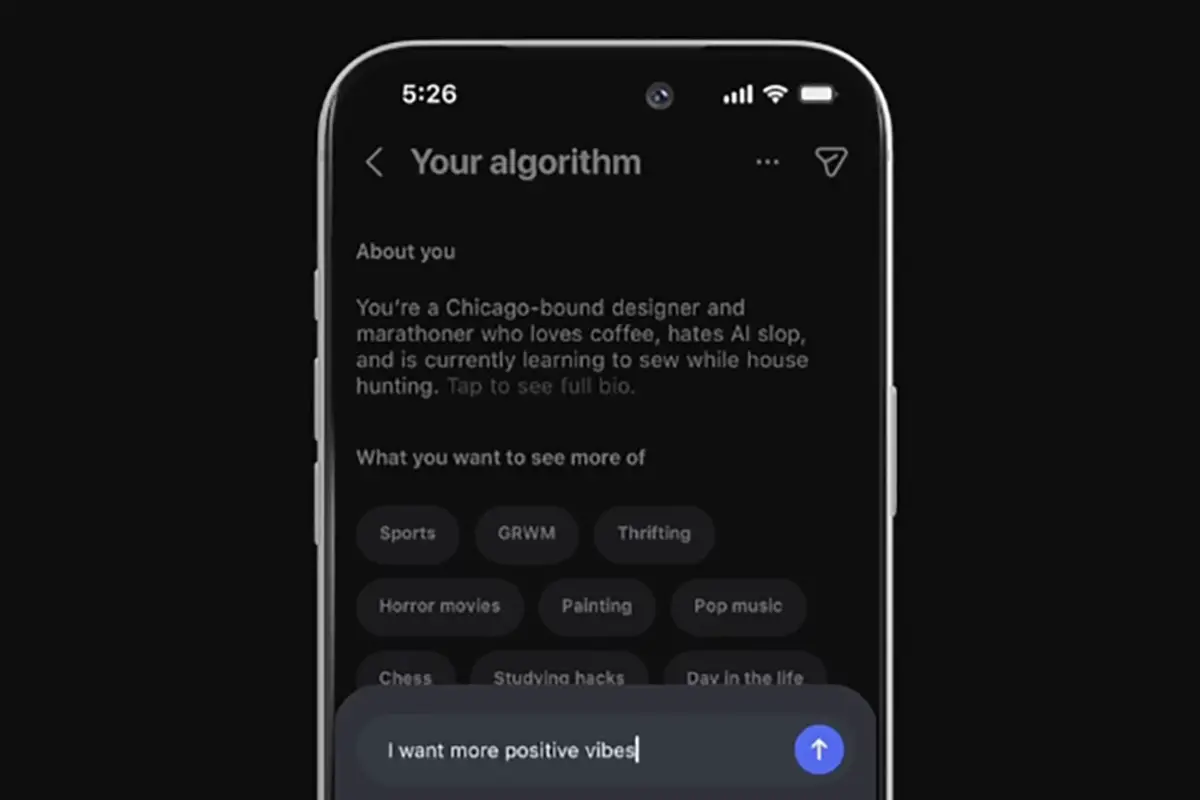
The platform is testing new ways for users to access “Your Algorithm,” a feature that lets people tell Instagram which topics they want to see more of, and which ones they want to see less of. The update was shown by Instagram head Adam Mosseri, with examples that move the control directly into the feed and Reels experience.
From hidden setting to everyday gesture
Instagram launched Your Algorithm last year and has since been bringing it into more areas of the app. Mosseri’s framing is the clearest signal here: “We want to evolve Your Algorithm from a setting to something that feels central to your experience on Instagram.”
The tests he showed make that ambition very literal. In one example, pulling down in the Instagram feed eventually opens the Your Algorithm menu. In another, swiping up from a Reel brings up a similar customization prompt. A third example shows buttons beneath each Reel, letting users indicate whether they want to see more Reels like the one they are watching.
Those are small interface changes, but they change the role of the user. Instead of relying only on passive signals like watch time, likes, shares, saves, and skips, Instagram is asking for explicit direction at the moment content is being consumed.
The control users want may not be the control Instagram is offering
The most revealing part of the story may be the reaction. One of the most popular comments on Mosseri’s post made the same request: users want the algorithm to show them the people they follow.
That tension has followed Instagram for years. The platform wants to compete in a discovery-driven social web, where recommended content and Reels can travel far beyond a user’s follow graph. Many users, meanwhile, still judge Instagram against an older promise: I follow accounts, therefore I should see them.
Your Algorithm sits right in the middle of that conflict. It gives users more influence over the recommendation system, but it does not necessarily return the feed to a follower-first model. Choosing “more” or “less” of certain content is not the same as asking Instagram to prioritize friends, creators, or brands someone already chose to follow.