


X is taking one of the oldest complaints about social platforms and turning it into a product surface: show me what the algorithm is doing to me.
X is significantly expanding the open-source code behind its For You feed and core ranking engine, while also adding a transparency tool that will let users see whether ranking systems have affected their accounts or posts.
The move matters because it shifts algorithmic trust from vibes to evidence. For years, “shadowbanning” has been the word users reach for when reach suddenly collapses and the platform gives them no useful explanation. X now wants to make at least part of that system inspectable.
The feed is becoming inspectable
According to the report, X is making the source code for its default For You timeline available on GitHub under the Apache v2 license. The expanded release goes further than earlier open-source efforts by including model configuration, filters, and core ranking system details.
That detail matters. This is not just a symbolic code dump. TechCrunch says the release includes parameters used to weight different signals, which are central to understanding why some posts are surfaced and others are suppressed. The company’s open-source codebase is also reportedly becoming 10 to 15 times larger than it was before.
Keith Coleman, X’s VP of Product, told TechCrunch that users will be able to see “the core ranking code that pulls posts and ranks them for any given user and assembles the feed.” He also said some systems, including the ranker and score, can be run outside the company.
That is a notable posture for a major social platform. Ranking systems are usually treated as sensitive platform machinery: explained in broad strokes, protected in practice, and only really legible to the company operating them. X is trying to turn some of that machinery into a public artifact.
There are limits, of course. Open-source code is not the same as total visibility into live enforcement, real-time model behavior, internal policy calls, or the full commercial logic of a feed. But it does change the conversation. Instead of asking users to trust a black box, X is giving developers, researchers, creators, and critics something to inspect, challenge, and possibly run themselves.
Transparency is becoming part of the interface
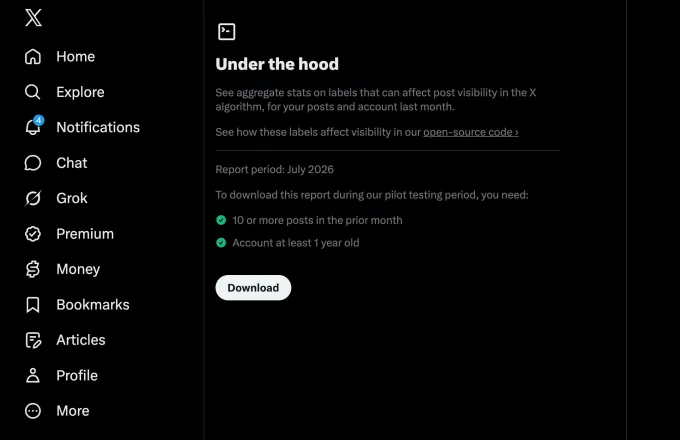
The more user-facing part of the update may be even more important. X is also rolling out a new transparency tool inside an “Under the Hood” page in the app’s settings. Users who have posted 10 or more times over the past month will be able to download aggregate stats as a JSON file.
That file will show whether labels have been applied to their account or posts over the past calendar month. In plain English: users may finally get a clearer signal when X’s ranking systems have reduced visibility or otherwise affected distribution.
The JSON format is telling. This is transparency built first for machine readability, not casual browsing. TechCrunch notes that non-technical users could drop the file into an LLM of their choice to help interpret it. That makes the feature feel very 2026: the platform opens the data, then assumes AI will become the interface that explains it back to people.
For creators, this could become a new kind of performance diagnostic. Reach drops are usually interpreted through guesswork: bad timing, weak creative, algorithm changes, policy penalties, audience fatigue. If X can show whether ranking labels were applied, creators get a clearer distinction between content performance and platform intervention.
For platforms, the bigger signal is that transparency is becoming part of the social license. We are seeing the same pressure across very different products, from algorithmic feeds to AI interfaces to hardware that records the world around us. As we wrote about Meta’s smart glasses, the technical capability is only one part of adoption; people also need to understand what the system is doing and when it is doing it.
X’s move will not end the shadowban debate. If anything, it may make the debate more specific. Users will still argue about whether labels are fair, whether the public code matches production behavior, and whether the tool explains enough. But that is also the point. A vague trust argument becomes a more concrete product argument.
The strategic consequence is simple: X is betting that opening the ranking machine, even partially, is better than asking users to keep guessing why the machine moved against them.