


Instagram is testing a new feature that lets users display their interests directly on their profiles, adding another layer of identity to the app beyond photos, Stories and Reels.
First spotted by app researcher Radu Oncescu, the feature allows users to select up to five interests that will appear publicly on their profile page. Think of it as a lightweight social signal designed to tell visitors what you’re actually into, whether that’s fashion, sneakers, fitness, gaming or photography.
But the move is about more than profile customization.
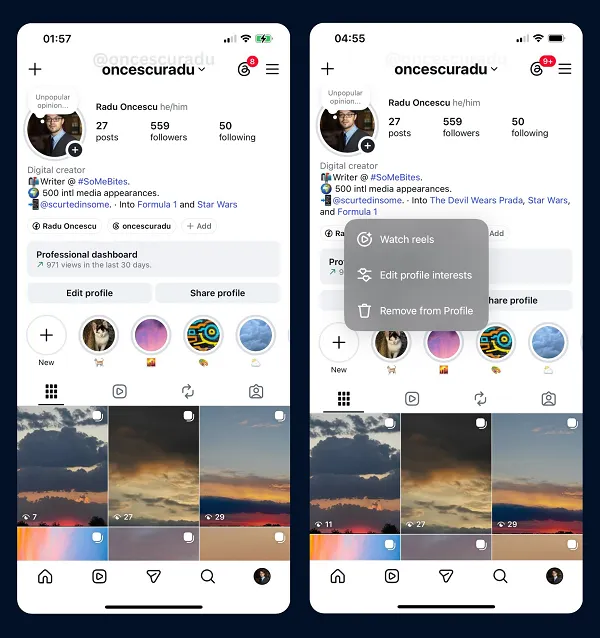
According to the test, these interests may also influence the content users see across the platform, similarly to Instagram’s existing “Your Algorithm” controls. In other words, Instagram is not just asking users to express themselves, it’s asking them to actively train the feed.
The feature also feels like a continuation of Instagram’s broader push to make the platform feel more social again.
Over the past year, the app has experimented with multiple ways to surface personality and shared interests, including a previously tested “Picks” feature that let users showcase interests through Notes in DMs. Even Threads has tested nearly identical profile topic displays.
That’s likely not a coincidence.
As Instagram continues its aggressive pivot toward entertainment and AI-driven recommendations, it also risks losing part of what originally made the platform sticky: identity, community and connection.
TikTok may dominate when it comes to pure content discovery, but Instagram still owns a unique social graph built around relationships, interests and aspiration.
Features like this suggest Instagram is aware of that tension.
Because if the app becomes nothing more than an endless stream of algorithmic Reels, it starts competing purely on content efficiency, a battle that’s increasingly difficult to win long term. Giving users more ways to express who they are, and connect over shared interests, could help Instagram preserve some of its original social DNA while also feeding its recommendation engine with richer behavioral signals.
And perhaps more importantly for Meta, it could encourage more people to actively participate instead of just passively consuming content.