


Google Search is getting a little closer to the social feed.
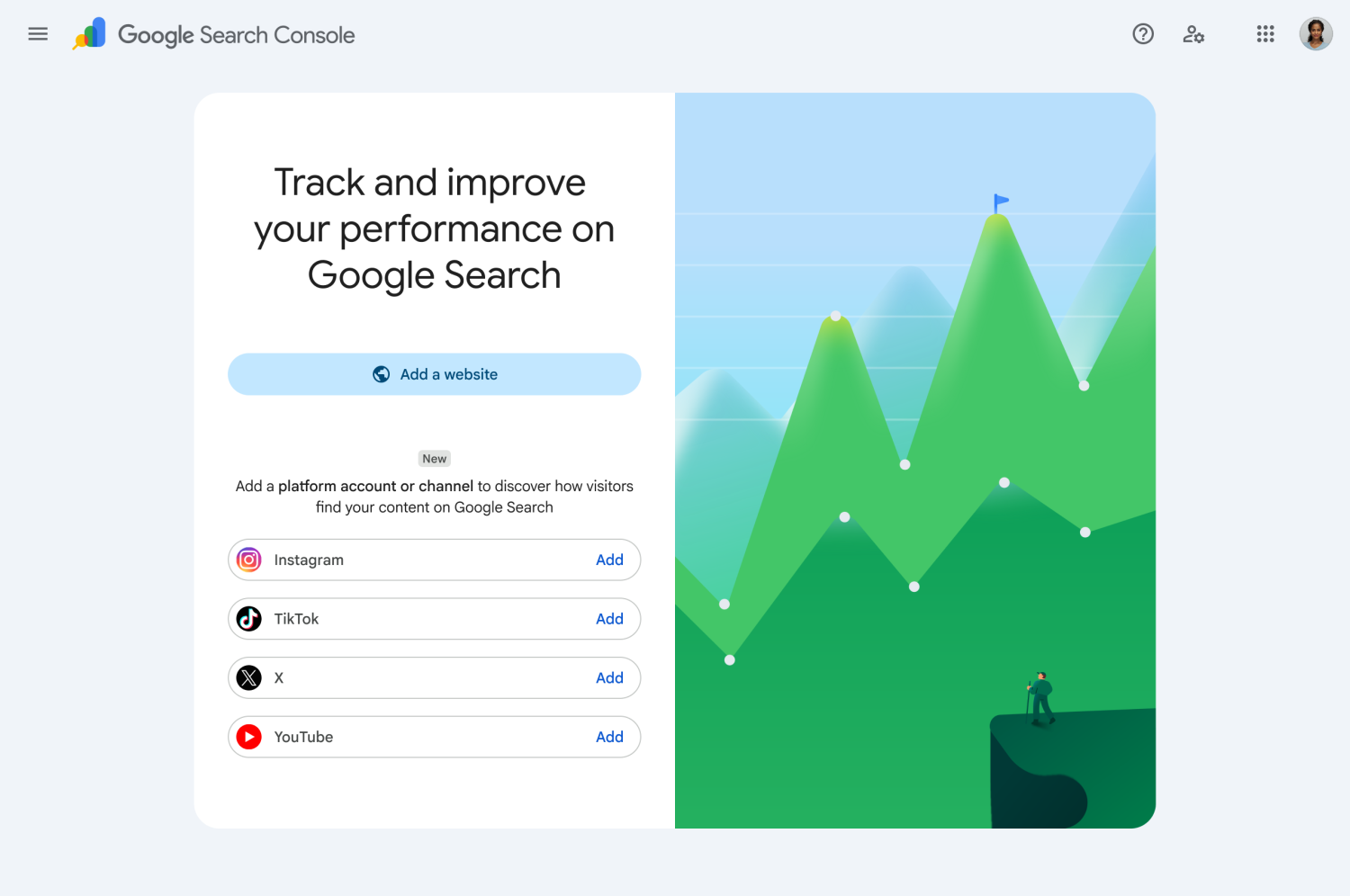
In a new Google Search Central update, Google says Search Console can now help users see how content from social and video platforms performs on Google Search. That is a specific, useful shift: the reporting is no longer only about pages that live on your site, but also about the platform-native content that increasingly carries a brand, creator, or publisher’s public presence.
The update lands in a very clear pattern. Google’s own Search Central archive shows a recent run of Search Console reporting additions, including social channels in December 2025, weekly and monthly views, an AI-powered configuration tool, a branded queries filter, and Search Generative AI performance reports in June 2026. Now, in July 2026, social and video platform content is being pulled further into the same measurement conversation.
That sentence alone says a lot. Social content has always been discoverable outside the app where it was posted. But once Google starts giving that content a more visible place inside Search Console, it becomes harder to treat social posts and videos as purely feed-based assets.
The social post is becoming a search asset
Search Console has traditionally been the place where site owners understand how their web presence appears in Google Search: what gets surfaced, how people find it, and how performance changes over time. By pointing the product toward content from social and video platforms, Google is acknowledging something marketers and creators already feel every day: audiences do not move neatly from search to website to social. They jump between formats.
A product video, a creator collaboration, a social post, or a short-form clip may start life inside a platform, but it can still answer a question, reinforce a reputation, or show up when someone is actively looking. That makes it part of the search footprint, even if it does not behave like a traditional landing page.
This is the practical value of the update. It gives teams a better way to understand when social and video content is being discovered through Google Search, rather than only through in-app analytics. For brands, that matters because performance has often been split across disconnected dashboards: social teams look at platform metrics, SEO teams look at Search Console, and everyone argues about which content actually influenced discovery.
Google is not magically solving that entire attribution mess. But it is making one piece of it more visible.
A cleaner bridge between publishing and discovery
The bigger move here is not that social content gets another report. It is that Google is continuing to reshape Search Console around the way content is actually found now. The same archive that includes this July update also points to recent reporting around generative AI search, branded queries, social channels, and broader time-based views. Search performance is becoming less about one static website chart and more about understanding how different content surfaces show up across Google.
That has a real consequence for social teams. The post is no longer finished when it leaves the scheduler. If it can perform in Google Search, then naming, context, format, and usefulness matter beyond the first wave of feed distribution. A video made for attention today may become a discovery asset tomorrow.
But this should not turn every social caption into an SEO exercise. The trap would be to over-optimize social and video content until it loses the reason people engaged with it in the first place. The smarter move is to use the new reporting to see which platform-native content already earns search visibility, then understand why.
The strategic consequence is simple: social content is becoming measurable as part of search discovery, and that brings social, SEO, and content teams one step closer to being judged against the same audience behavior.