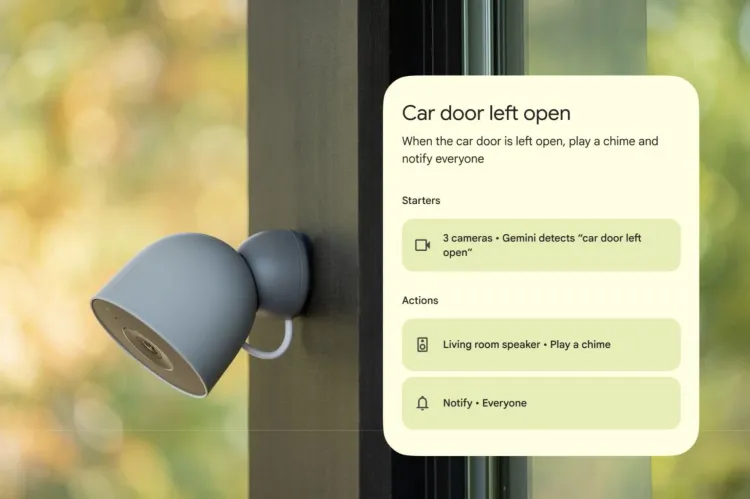
Google is turning smart homes into something a little closer to science fiction. The company just announced a new Gemini-powered feature for Google Home that allows automations to trigger based on what your security cameras actually *see*.
Instead of relying on simple motion detection or pre-programmed rules, Gemini can now interpret visual events in real time and react accordingly. That means your smart home can respond to situations like a red BMW entering your driveway, a package arriving at your door, or even a FedEz delivery person dropping your package and raccoons approaching your trash bins
The setup works through natural language prompts
Users can simply describe the event they want the system to look for and assign an action to it.
For example, if the camera spots you returning home with a yoga mat, your house could automatically dim the lights and start playing relaxing music. Or if Gemini notices someone delivering mail, it could trigger a notification or turn on exterior lights.
It’s part of Google’s broader push to make Gemini the brain of its smart home ecosystem.
Over the past year, the company has gradually expanded Gemini inside Google Home with features like AI-generated camera summaries, conversational automation building, and natural-language searches through video history.
Google is also improving voice controls
Gemini for Home can now handle more complex multi-step requests in a single sentence, like lowering blinds, dimming lights, setting a timer, and starting a playlist all at once.
Of course, there’s a catch. The new camera automation features are currently limited to users in the U.S. enrolled in the Google Home Public Preview program, and they require a Google Home Premium Advanced subscription, which costs $20 per month.
Google also warns that these AI-powered triggers are not designed for security-critical situations because the cameras need “a brief moment” to process what they’re seeing.
Still, the bigger shift here is philosophical. Smart homes are slowly moving away from rigid “if this, then that” logic and toward contextual understanding. Your home is no longer just detecting motion, it’s interpreting situations.
And whether that feels exciting or slightly dystopian probably depends on how much you trust AI watching your driveway.
Also Read:
Google Wants Its Universal Cart To Become The Brain Of Online Shopping
YouTube Will Now Automatically Label AI-Generated Videos
2025 Internet Crime Report: A Terrifying New Milestone