


- Epic Games has launched a real-world citywide treasure hunt across Tokyo to celebrate Fortnite’s new ‘One Piece’ collaboration
- Participants can scan hidden QR codes across Shibuya and Shinjuku to unlock exclusive posters and enter to win a custom gold Mercedes-AMG G 63
- The Tokyo Treasure Hunters campaign runs through November 8 culminating with a physical mega chest installation at Harajuku Station
Fortnite is taking its latest collaboration out of the game and into Tokyo. The reported Tokyo Treasure Hunters activation turns the launch of the Fortnite x ONE PIECE season into a citywide search, asking players to follow clues, scan QR codes and collect digital stamps across Shibuya and Shinjuku.
That matters because the collaboration is not being treated as a simple in-game skin drop. It is being designed as a physical participation loop, with the city functioning as the interface and the reward structure doing the work of moving fans from attention to action.
The game is now a route through the city
Participants can follow clues through the official @treasurehunters LINE account and locate QR codes marked with Captain X’s Jolly Llama insignia. The trail includes several physical set pieces: a Peely-inspired three-wheeled Banana Cart, a miniature Cat Door, a “WANTED” photo booth, blacklight-reactive street art and Gachapon machines.
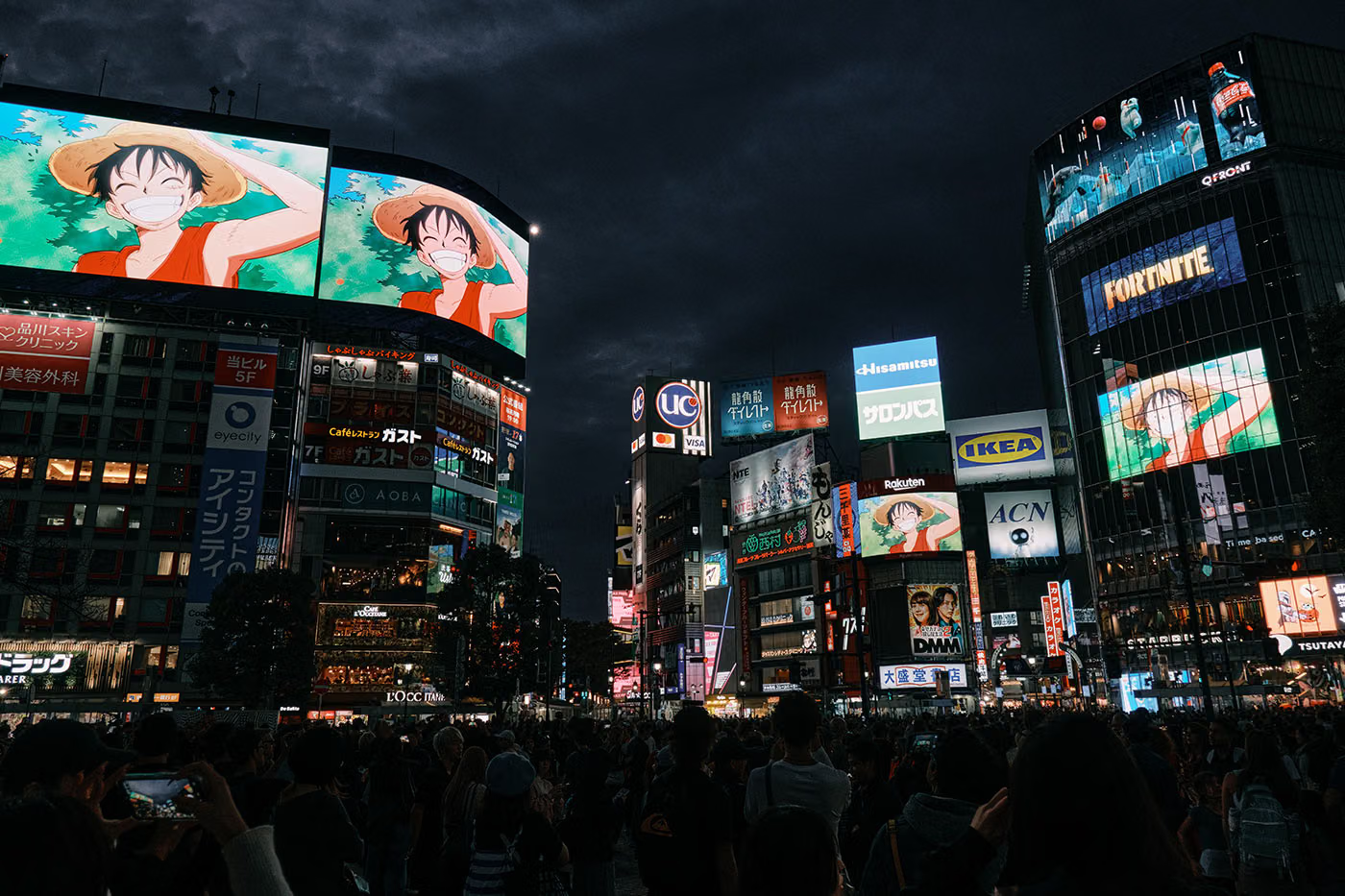
The campaign began with a takeover of the screens around Shibuya Scramble Crossing and is connected to an animated season trailer produced with Toei Animation. It will culminate in a life-sized mega chest installation at Harajuku Station’s Takeshita Exit Park on November 7 and 8, while the broader hunt runs through November 8.
Those details are important because they show how the activation has been constructed. The digital layer gives people a reason to move. The physical checkpoints give them things to discover and share. The final chest gives the campaign a visual climax that can exist both as an event and as content.
Participation is the prize system
The reward mechanics make the route feel closer to a game than a conventional pop-up. Two collected stamps unlock a limited-edition ONE PIECE x Fortnite poster. Five stamps enter participants into a draw for a Treasure Box containing a ONE PIECE Card Game Booster Box. Every collected stamp also creates an entry into the sweepstakes for a custom gold Mercedes-AMG G 63.
That is a deliberately wide reward ladder. The poster gives casual participants an achievable payoff. The card-game bundle rewards deeper participation. The Mercedes creates the oversized headline, even for people who never expect to win it.
It also shows why the strongest entertainment collaborations increasingly need more than a branded environment. The collaboration has to give fans a reason to behave differently. Here, that behavior is exploration: opening LINE, following a clue, walking to another neighborhood, scanning another code and documenting the find.
For Epic Games, the useful shift is from owning a moment inside Fortnite to organizing a moment around it. The game remains the central cultural object, but the campaign gives fans a way to perform their connection to it in public. That is a bigger ask than downloading a cosmetic item, and potentially a more valuable one for a collaboration built around fandom, collecting and discovery.
The tension is that this model depends on execution. The clues need to be clear, the checkpoints need to feel worth the journey and the rewards need to justify the effort. If those pieces work, Tokyo becomes part of the Fortnite experience. If they do not, the campaign is simply a scavenger hunt with expensive branding.
That is the strategic consequence: collaborations are becoming less about placing two names next to each other and more about creating a behavior that only the combined fandoms would find worth doing.