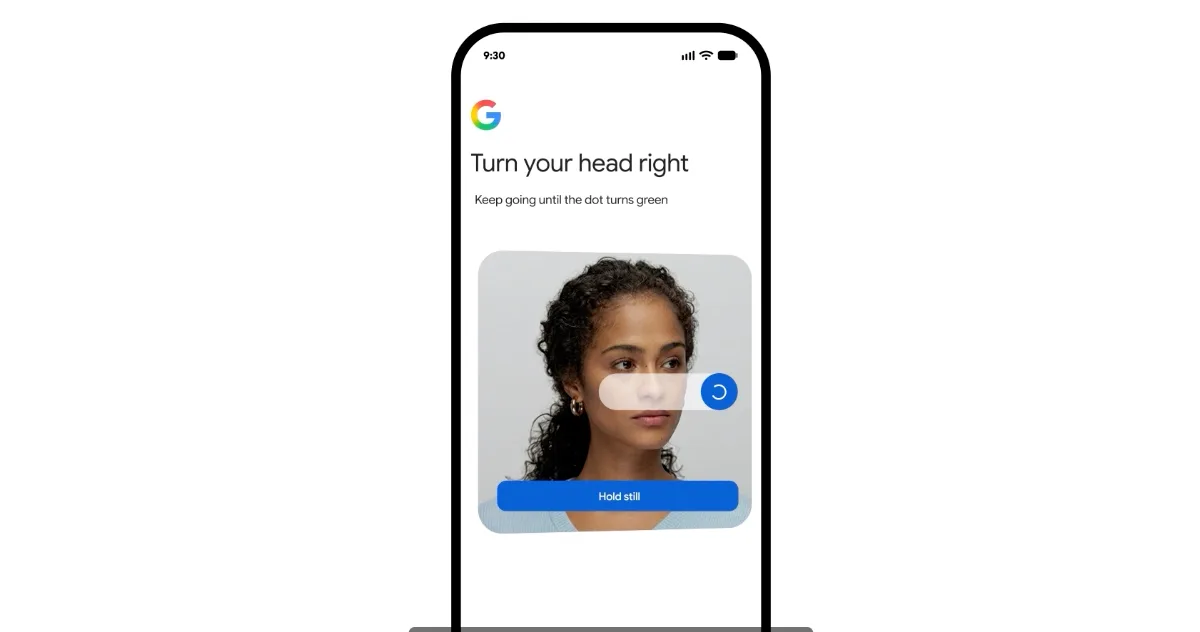
Google is turning account access into a camera moment.
Google will now let users authenticate their identity with a live selfie video, giving people another way to sign in without leaning on passwords alone. The key details are simple: it is Google, it is for sign-in, it uses a live selfie video rather than a static photo, and it is positioned as an identity authentication option instead of the familiar password prompt.
That makes this more than a quirky biometric shortcut. It is Google taking a behavior people already understand, opening the front-facing camera, and turning it into a trust signal.
A password problem with a camera-shaped answer
Passwords have always had a weird job. They are supposed to prove identity, but what they really prove is possession of a secret. That secret can be forgotten, reused, phished, stolen, or shared. A live selfie video tries to answer a different question: is the person trying to get in physically present, and can Google verify that moment with enough confidence?
The word “live” matters. A selfie image can be copied. A video prompt creates a more active check, asking the user to perform identity in real time. It also changes the emotional shape of the login flow. Instead of typing, resetting, waiting for codes, or hunting through old recovery options, the user is asked to do something that feels native to the smartphone era.
There is friction here, of course. Some people will not want to give a platform a face-based verification moment, even if it is convenient. But that friction is also the point. Google is not just making sign-in faster; it is making identity proof more embodied. The camera becomes part of the security stack.
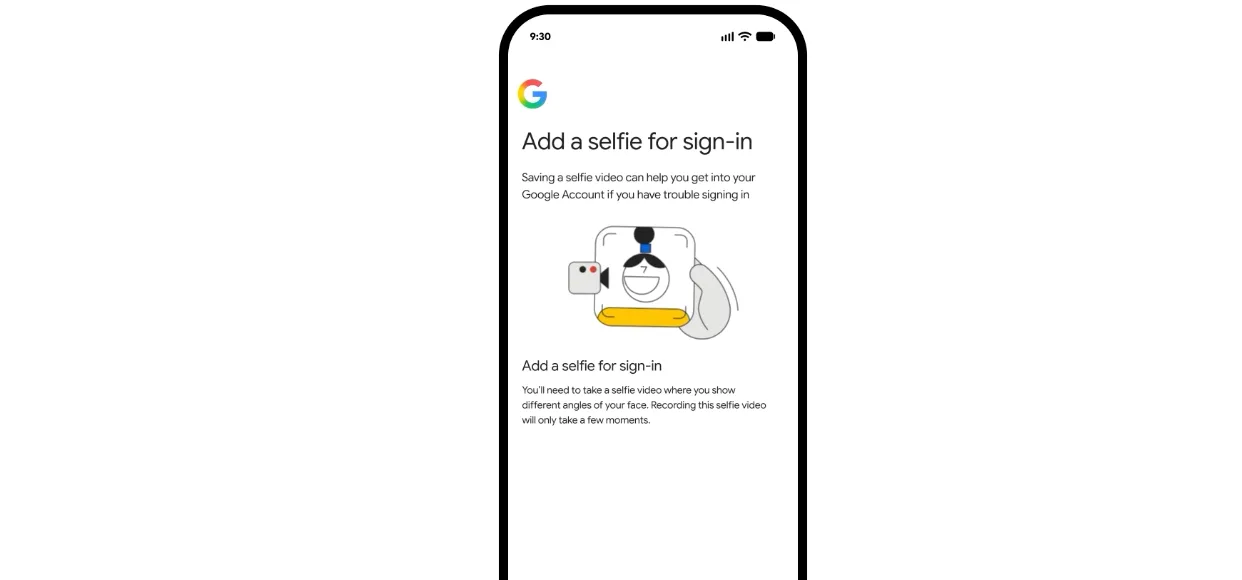
Security is becoming an interface decision
The bigger shift is that trust is moving closer to everyday product behavior. Platforms are no longer only asking users to remember credentials. They are asking them to confirm themselves through devices, biometrics, behavior, location, and now, in this case, a live video interaction.
That same product instinct is visible across consumer platforms: core interactions are being rebuilt around how people actually behave, not how systems wish they behaved, as we recently saw with WhatsApp’s new features around real-life habits. Google’s selfie video sign-in sits in the same broader lane, even if the use case is more sensitive. The interface is doing more of the trust work.
For users, the practical promise is obvious: fewer moments where access depends entirely on a password. For Google, the strategic benefit is deeper. The more account security feels like a natural phone behavior, the less it feels like a separate layer people avoid until something breaks.
This is not the end of passwords, and it should not be treated like one. But it does show where account access is heading. The login screen is becoming less about what you know and more about what your device, your face, and your real-time behavior can prove.
Also Read:
WhatsApp’s New Features Are About Real-Life Habits
Threads Joins Meta’s Parental Supervision Stack
WhatsApp’s Liquid Glass Redesign Is Coming To Mac