


Aptoide is back inside Google Play in the U.S., and that makes a once-awkward Android workaround feel much more mainstream.
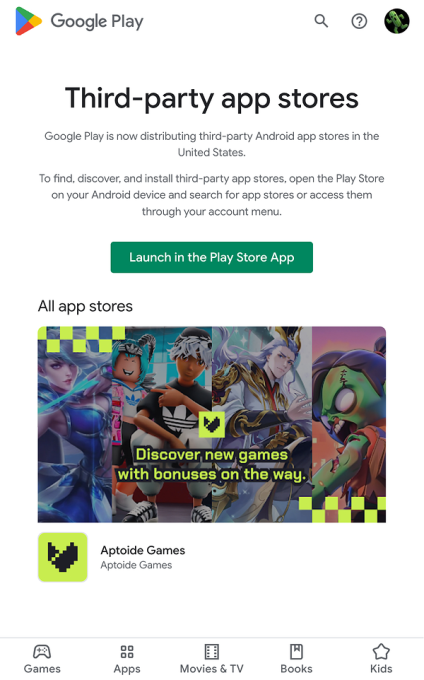
Aptoide has brought its games store back to Google Play after more than a decade away, becoming the first rival app store to take advantage of court-ordered changes opening the Play Store to more competition in the U.S.
That may sound like a distribution footnote. It is not. For years, alternative Android app stores could exist, but they sat outside the cleaner, safer, more familiar path users were trained to follow. If you wanted Aptoide, you had to sideload it. That alone capped adoption, especially for mainstream users who may technically own an open device but still behave as if Google Play is the only front door.
A Rival Store Inside The Store
Aptoide is not a tiny experiment. The Portugal-based app distributor is one of the larger Android marketplaces outside Google Play, with more than 40,000 Android apps and around 25 million monthly active users, according to the report. The U.S. has also been its largest market to date, which makes the Google Play return more than symbolic.
The important shift is where the trust now sits. Until now, Aptoide’s reach in the U.S. depended on users being willing to leave the default app installation flow and accept the friction that comes with sideloading. By appearing through Google Play itself, a competing app store starts from a much more familiar user behavior: search, install, open.
That changes the mental model of app competition. Instead of alternative stores living as technical detours for power users, they can begin to look like apps in their own right. For gaming in particular, that could matter. Aptoide’s store is focused on games, where discovery, payments, exclusives, and publisher relationships can create real reasons to step outside the default marketplace.
The Epic Case Starts To Reshape The App Economy
The move follows U.S. District Judge James Donato’s ruling in Epic Games’ lawsuit against Google. Epic first sued Google in 2020, alleging anticompetitive behavior in the Android app ecosystem. A jury ruled in Epic’s favor in 2023, and Google later lost its appeal, according to TechCrunch.
The result is now becoming visible at product level. Google began allowing third-party app stores to access Google Play’s app catalog through its Play Catalog Access Program on June 22, 2026, according to the report. That gives rival stores access to Google Play infrastructure and catalog availability while letting them remain independent stores.
For users, the immediate change is simple: installing a rival store no longer has to feel like stepping outside the system. For developers, publishers, and app distributors, the bigger signal is that Android’s openness may finally become less theoretical in the U.S. market.
Google Play is still the gravity center. But Aptoide’s return shows that the battle is moving from whether rival stores can exist to whether they can earn enough user trust, discovery, and habit once they are allowed through the front door.