


Cloudflare is joining the browser conversation from a very different angle. Not with another Chrome rival for people, but with a browser built for software that needs to use the web on our behalf.
The company has introduced Kitesurf, a cloud-hosted browser designed specifically for AI agents. The idea is simple: if agents are going to navigate websites, fill out forms, extract information, and complete browser-based tasks, developers should not have to build and scale their own browser stack to make that happen.
That also means the browser itself can look very different. A human browser cares about tabs, themes, extensions, visible interfaces, and all the small comforts that make browsing feel personal. An agent browser has another job. It has to manage context windows, performance, token costs, and scale. It also has to deal with a different security model, including risks like prompt injection, where malicious instructions hidden inside web content could manipulate an AI system.
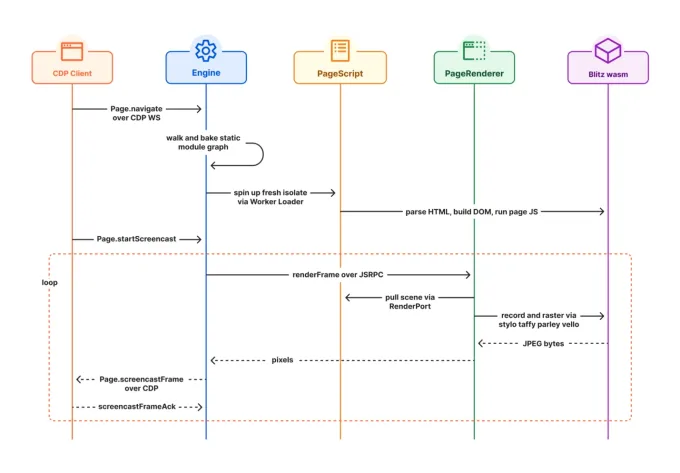
Kitesurf is currently available for free while in beta inside Browser Run, Cloudflare’s environment for programmatically controlling and interacting with headless browser instances on its network. Cloudflare says it built Kitesurf in 12 weeks and that it runs entirely on Workers, the company’s serverless platform.
The browser becomes invisible infrastructure
The strongest signal here is not that Cloudflare has made a browser. It is that browsing is becoming something AI systems do in the background.
Cloudflare’s pitch is heavily practical. The company says Kitesurf uses significantly less CPU and memory than Chromium for common agentic tasks such as screenshots and HTML extraction. For developers building agents that may need to open, read, process, and act across many web pages, that efficiency directly affects cost and scale.
It also changes what a “browser” is supposed to be. Kitesurf does not need to win a homepage slot, sync bookmarks, or convince anyone to switch their default app. It needs to make the web easier for agents to access reliably, safely, and cheaply. In that sense, the browser becomes less of a destination and more of a utility layer.
That trust question will matter. As AI interfaces move closer to acting, seeing, and deciding for users, the product challenge increasingly becomes about control and safety, not just capability. It is the same broader tension we are seeing around AI-powered interfaces that have to earn permission before they become normal.
For marketers, the near-term impact is not a new ad format. It is a more automatable web. If agents can browse more efficiently, more discovery, comparison, form completion, booking, and purchase behavior could happen through software rather than through a person scrolling a page. That makes structured, machine-readable, trustworthy web experiences more important.
If Kitesurf works, Cloudflare is not just helping AI agents browse the web. It is helping turn browsing into compute that agents call when they need to get something done.