


World Cup fandom has always been collectible. TikTok now wants to make it daily, social, and native to the For You era.
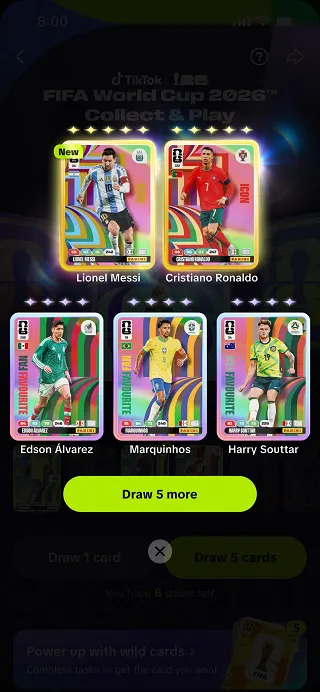
The platform has announced a global partnership with Panini, FIFA’s exclusive partner for official stickers and trading cards, to launch a digital collectible card experience tied to the FIFA World Cup 2026. The collection lives inside TikTok’s FIFA World Cup Fan Experience Hub and is available now to fans worldwide. To start, users search for “World Cup” on TikTok, tap “Visit FIFA World Cup hub,” then select “Play Now.”
That simple flow matters. TikTok is not sending fans elsewhere to collect. It is pulling a familiar football ritual into the same place where fans already watch clips, follow players, react to moments, and argue about teams.
Panini collecting, rebuilt for TikTok behavior
The TikTok and Panini partnership includes 144 collectible digital cards across all 48 nations competing in the tournament. Each country gets three types of cards: a Country Emblem card for the nation’s badge and identity, a Star Player card featuring a standout athlete, and an Icon Card representing a legendary figure from that nation’s football history.
That structure is very Panini. The behavior around it is very TikTok. Fans unlock cards by completing daily tasks, including following accounts or commenting on posts. TikTok says new activities will roll out throughout the FIFA World Cup 2026. Users can also earn wild cards by hitting specific milestones, trade duplicate cards, and unlock more rewards as their collections grow.
So the card is not just a reward. It is a reason to return, interact, and keep moving through the hub.
From sticker album to engagement loop
Panini’s power has always been repetition. Buy packs. Open them. Find duplicates. Trade. Complete the page. Repeat. TikTok is translating that behavior into platform actions: follow, comment, collect, trade, unlock.
Rollo Goldstaub, TikTok’s Global Head of Sport, framed the move as bringing Panini’s collecting culture “to a social platform for the first time.” Panini’s Elisabetta Mussini described the collaboration as a way to expand the collector experience into “a new social dimension.” Both statements point to the same strategic move: this is not only about football content, but about making fandom measurable through repeated in-app participation.
That distinction is important. A World Cup hub could simply be a content destination. This one adds progression. Fans are not just visiting to see what is new. They are building something, and the platform gives them fresh tasks to complete over time.
The lesson for brands: build the ritual, not just the badge
For brands and marketers, the interesting part is not that TikTok has found another sports sponsorship surface. It is that the platform is wrapping one of football’s most durable rituals around actions brands already care about: follows, comments, repeat visits, and reward-based participation.
That opens a sharper question for World Cup marketing. Being present around the tournament will not be enough if attention is being shaped by daily challenges and collectible progress. The brands that win inside this kind of environment will need to give fans something to do, not just something to watch.
There is also a useful constraint here. The experience works because Panini collecting already has cultural memory. Fans understand duplicates. They understand the satisfaction of completing a set. They understand why a star player and an icon matter. TikTok is not asking users to learn an entirely new behavior; it is giving an old one a new place to live.
That is a better model for brands than forcing novelty for novelty’s sake. The strongest activations around global events often start with a behavior fans already love, then make participation easier, more visible, or more rewarding.
Why TikTok wants the match before the match
The World Cup is not just 90 minutes on a pitch. It is anticipation, national identity, player debates, nostalgia, prediction, disappointment, and celebration. By launching the Panini experience inside its Fan Experience Hub before and during the tournament, TikTok is trying to own more of that surrounding behavior.
The collectible mechanic gives the platform a way to stretch attention across the tournament calendar. A fan might come for a highlight, stay to unlock a card, comment to complete a task, and return the next day for another activity. That turns fandom into a routine rather than a one-off spike around matches.
There is some friction in that, too. Collecting on TikTok depends on fans accepting platform actions as part of the collecting experience. For some, that will feel natural. For others, the joy of collecting may depend on whether the rewards feel meaningful enough to justify the daily tasks. But the bet is clear: TikTok believes the future of sports fandom is not only watched in feeds. It is played through them.
For brands planning around FIFA World Cup 2026, the strategic consequence is direct: being part of the habit may matter more than being seen during the match.