


WhatsApp is tightening the security layer around accounts, with new protections aimed at two of messaging’s weakest points: account takeover and contact from unknown people.
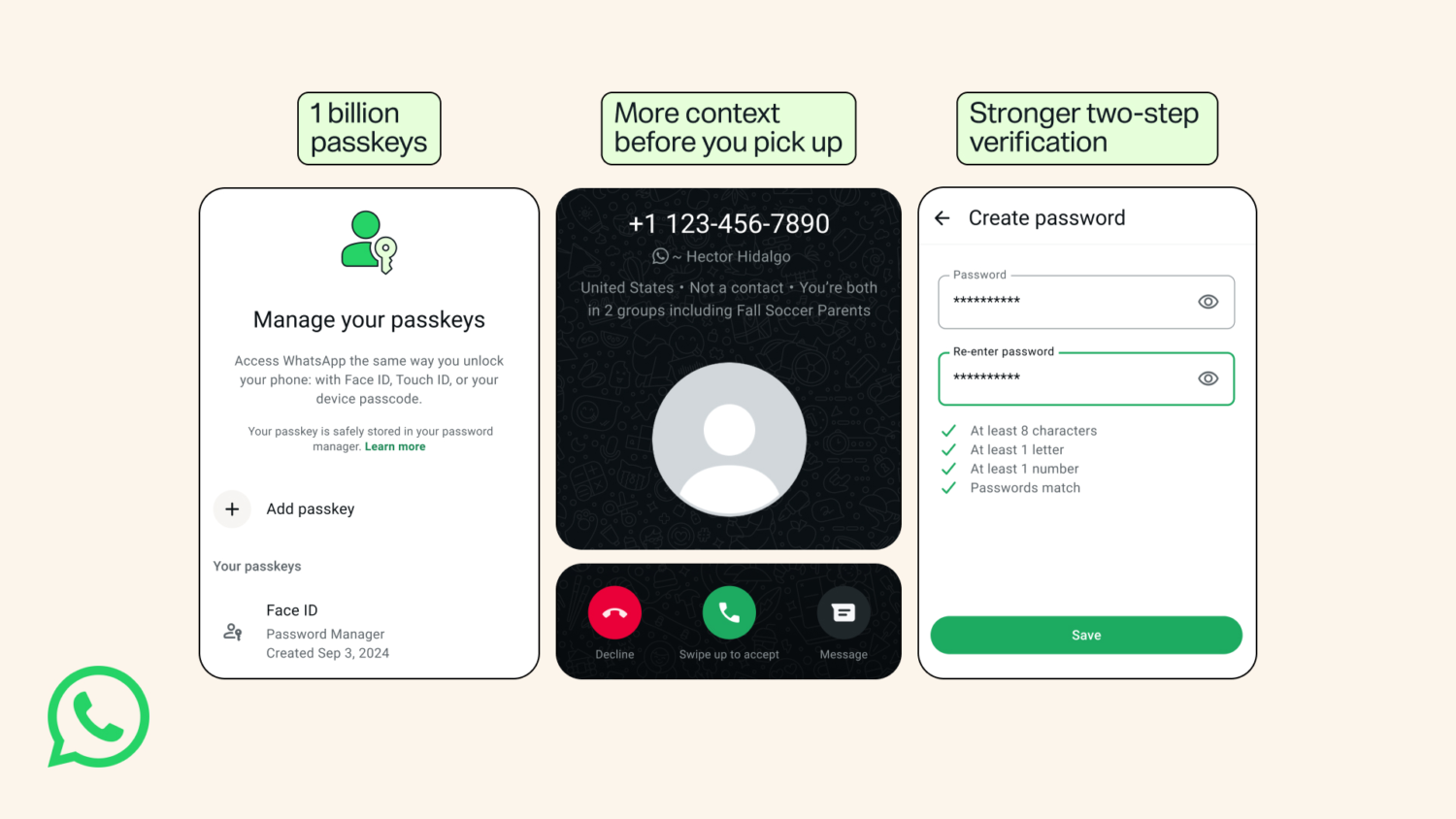
In an official Meta Newsroom announcement, WhatsApp says it is adding new account security features, including stronger two-step verification and additional context for calls from unknown callers. The update was published under WhatsApp on Meta’s Newsroom on August 25, and it puts the focus squarely on account-level protection rather than another chat feature or content tool.
That distinction matters. Messaging apps have spent years making conversations faster, more private, and more portable. WhatsApp, in particular, has also pushed users toward more flexible account access across devices, something we have seen before with WhatsApp’s tests around multiple-device access. But the more useful and mobile an account becomes, the more valuable it becomes to attackers, scammers, and impersonators.
Security is becoming part of the messaging interface
Two-step verification is not new as an idea, but Meta’s language here is telling. WhatsApp is not simply reminding users that security settings exist; it says it is making two-step verification stronger. That suggests the platform wants account protection to become a more active part of the WhatsApp experience, not a buried setting users only discover after something goes wrong.
The second feature points in the same direction. Extra context for calls from unknown callers is a small interface change, but it targets a very human problem: people make trust decisions quickly, often before they have enough information. In messaging, voice calls can feel more urgent and more personal than a text from an unknown number. Giving users more context before they respond shifts security from passive protection to real-time decision support.
This is where account security is heading across consumer platforms. The login is no longer the only security moment. Google has also been pushing identity checks deeper into account access, including using selfie video as part of sign-in security. The pattern is clear: platforms are trying to make trust visible at the exact moment a user has to act.
WhatsApp’s trust problem is bigger than encryption
WhatsApp has long leaned on privacy as a core product promise, but privacy and safety are not the same thing. End-to-end encryption protects the content of a conversation. It does not automatically tell you whether the person calling is legitimate, whether an account has been compromised, or whether a user is being pushed into a scam.
That is why this update is more interesting than its feature list. Stronger two-step verification protects the account itself. Caller context protects the moment before engagement. Together, they show WhatsApp moving trust closer to the user’s everyday behavior, where scams and impersonation actually happen.
For brands, customer support teams, community managers, and anyone using WhatsApp as a relationship channel, this matters quietly but significantly. The more commercial and service-based messaging becomes, the more trust has to be built into the interface rather than outsourced to user caution.
WhatsApp does not need to turn security into a flashy product story. It needs users to feel that the app helps them make safer decisions before they tap, answer, verify, or trust. That is the strategic consequence: account security is becoming less of a back-end setting and more of a front-line messaging feature.