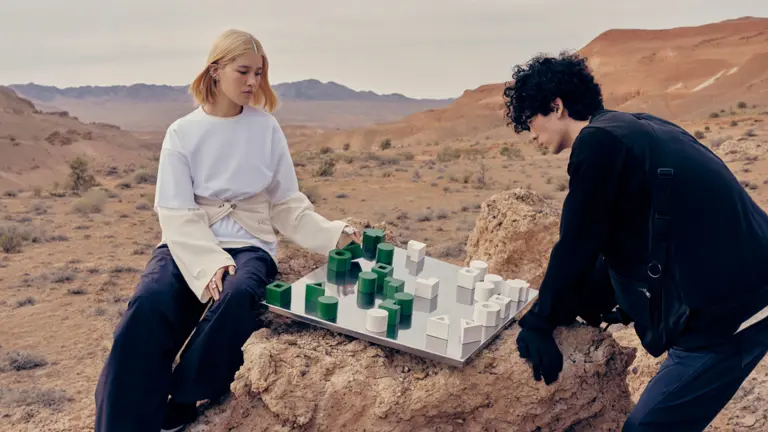
Teaching a five-year-old to play chess isn’t easy. Remembering how the different pieces move can be particularly challenging.
So when designer Anastassiya Leonova noticed her son struggling with the rules, she came up with a wonderfully simple idea: what if the pieces themselves could explain how to move?
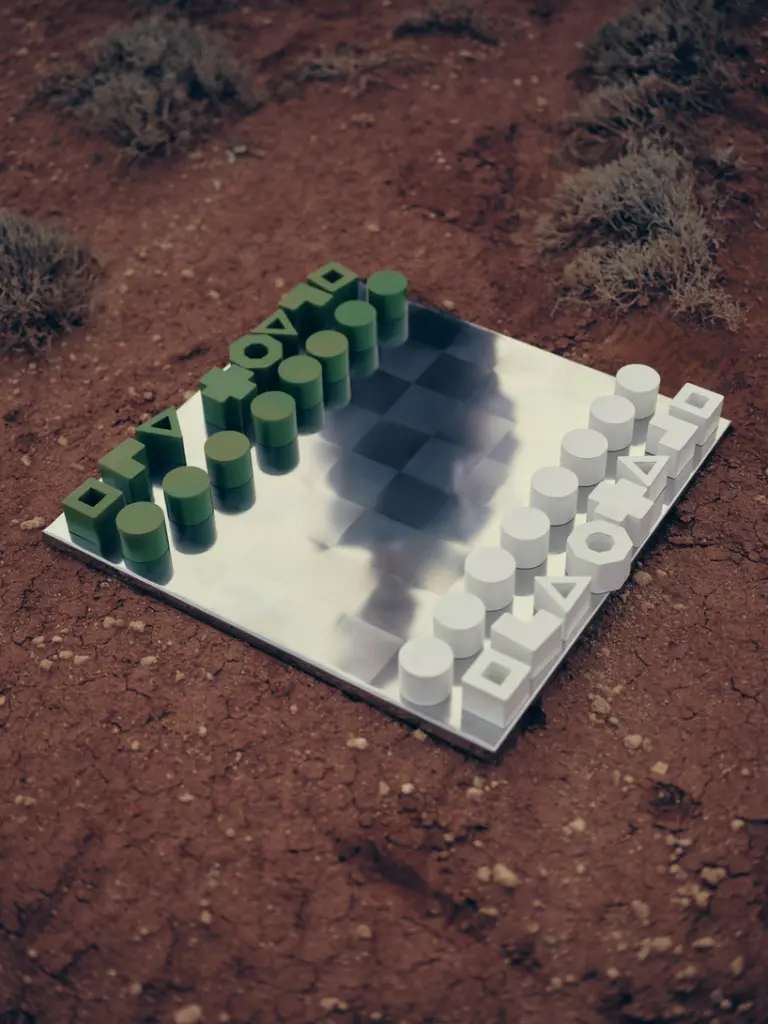
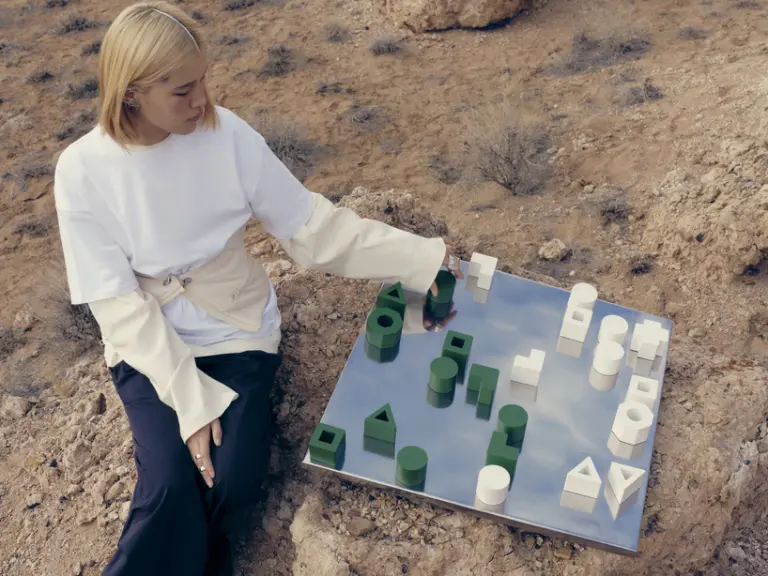
The result is Play Forms, a beautifully minimalist chess set that replaces traditional pieces with geometric shapes designed to communicate their movements visually.
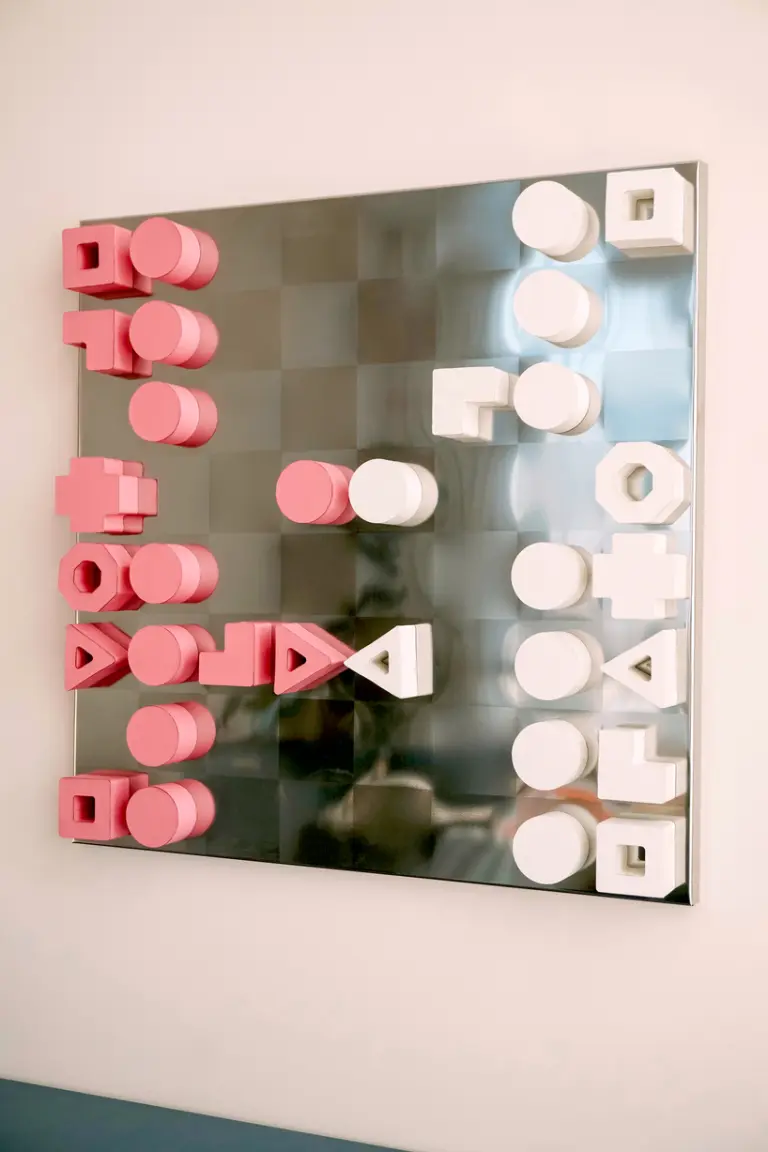
And because good design rarely stops at solving just one problem, the entire chessboard doubles as a piece of wall art.
When the shape becomes the instruction
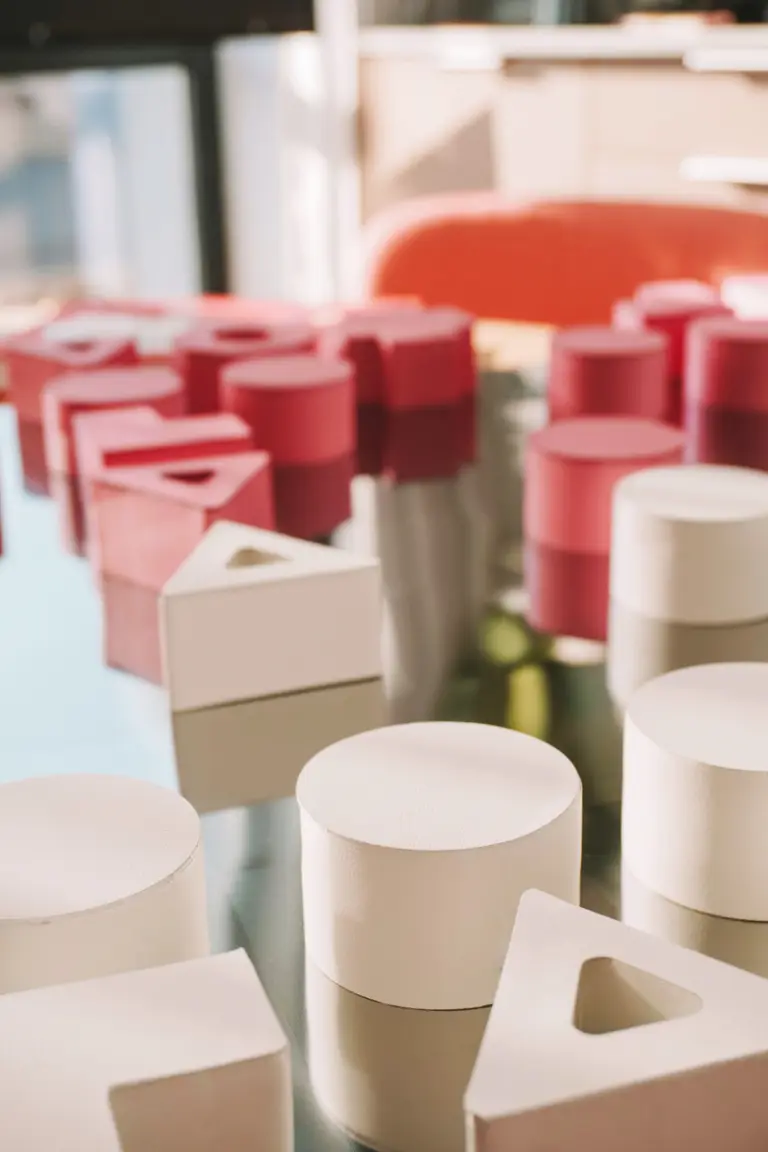
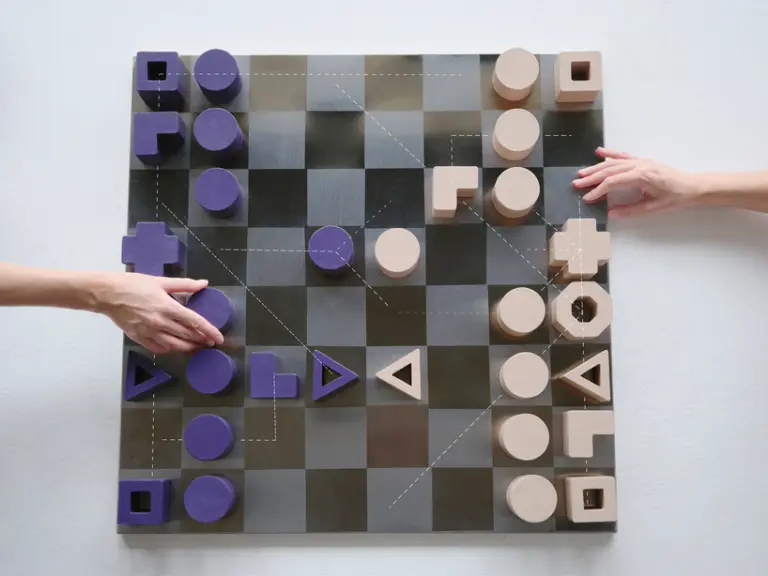
Created by Leonova, founder of Kazakhstan-based design studio somaforma, Play Forms reimagines the familiar king, queen, bishop, knight, rook, and pawn as flat geometric forms.
Each piece features distinctive silhouettes and cutouts referencing the directions it can move across the board. Instead of relying entirely on memorized rules, players can use the shapes as visual clues. It’s a clever approach to something chess has largely taken for granted: the traditional pieces tell you what they represent, but not necessarily what they do.
The idea also builds on a much older design tradition. In the 1920s, Bauhaus designer Josef Hartwig created a geometric chess set whose pieces reflected their permitted movements.
Play Forms revisits that principle with a contemporary visual language and a different way of interacting with the board.
A chess game that becomes wall art
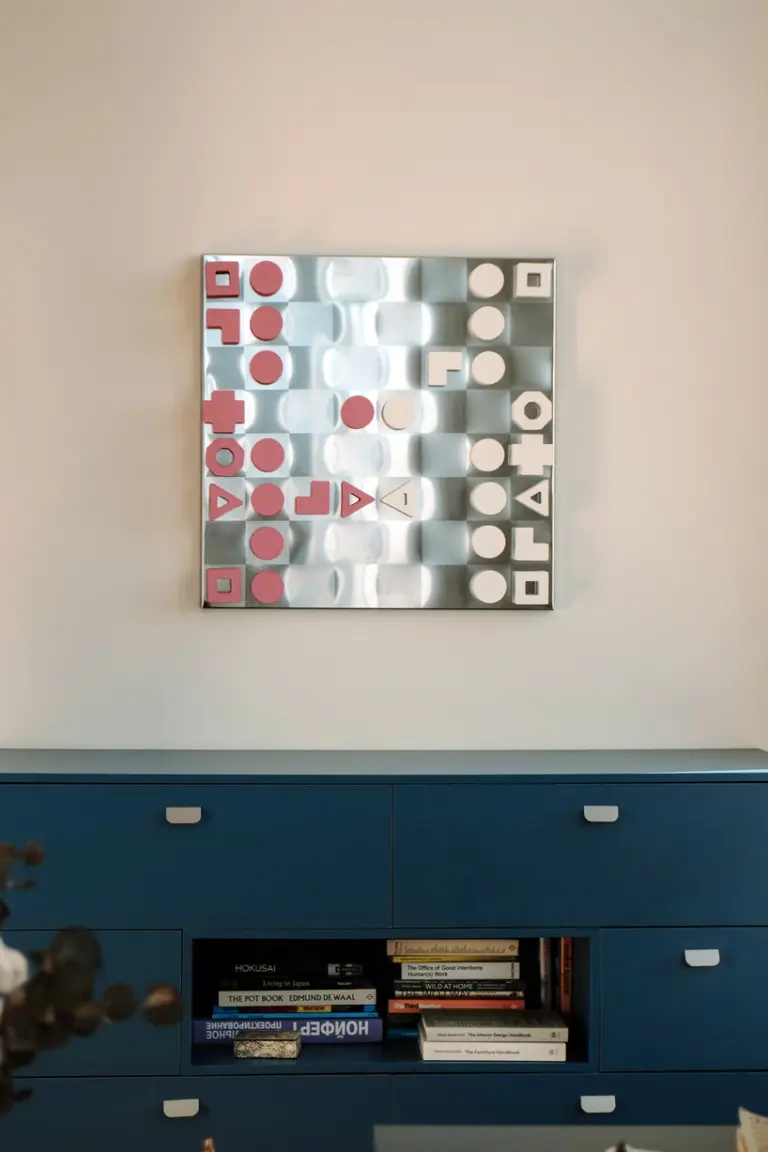
Leonova didn’t just redesign the pieces. She also reconsidered where chess should be played. Rather than placing the board on a table, Play Forms hangs vertically on the wall.
Measuring 60 by 60 centimeters, the board is made from engraved stainless steel, while the pieces are crafted from natural leather with magnetic backing. The result looks more like a graphic composition than a traditional chess set.
And that opens up an entirely different way to play.
Instead of sitting down for an uninterrupted match, players can make a move whenever they walk past. A game might unfold over several hours or even days, with the arrangement of colorful geometric pieces constantly changing.
The design is also intended for production in customizable color combinations, with a special green-and-white edition developed for Freedom Holding Corp.
It’s simultaneously a functional game, a teaching tool, and a decorative object.
Good design makes things intuitive
What makes Play Forms interesting isn’t simply its aesthetic. It’s the thinking behind it.
Leonova started with a very human frustration, questioned something everyone accepts as normal, and found an opportunity to make the experience more intuitive.
Whether the new shapes actually help beginners learn faster hasn’t been established through formal testing. But the design principle is compelling.
We’re surrounded by products that require instructions, explanations, tutorials, and increasingly elaborate interfaces.
Sometimes the smartest solution isn’t to explain more. It’s to design something that needs less explaining.
Also Read: