TikTok’s AI problem is not just that synthetic videos exist on the platform. It is that for some users, they may be one of the first things the platform teaches them to expect.
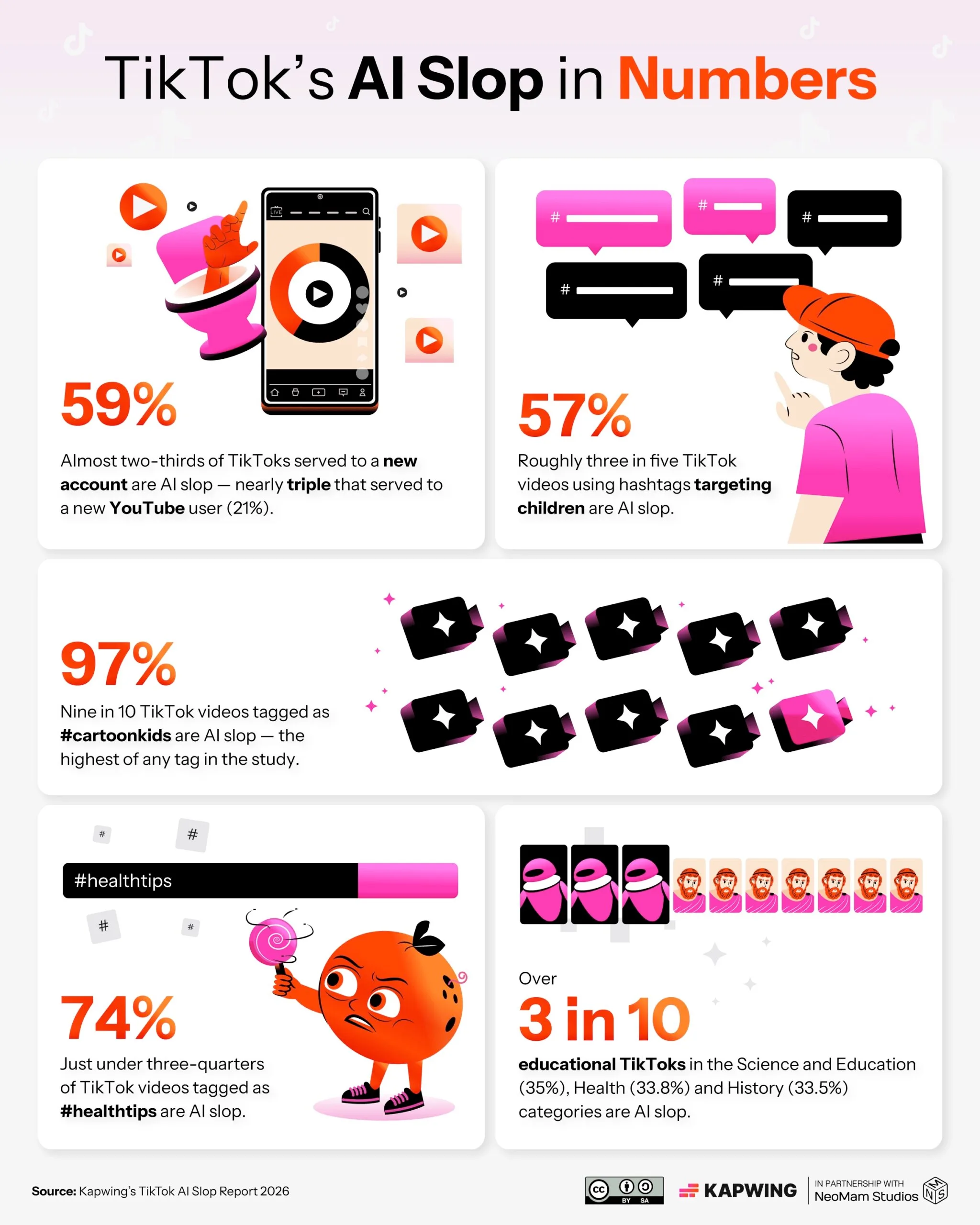
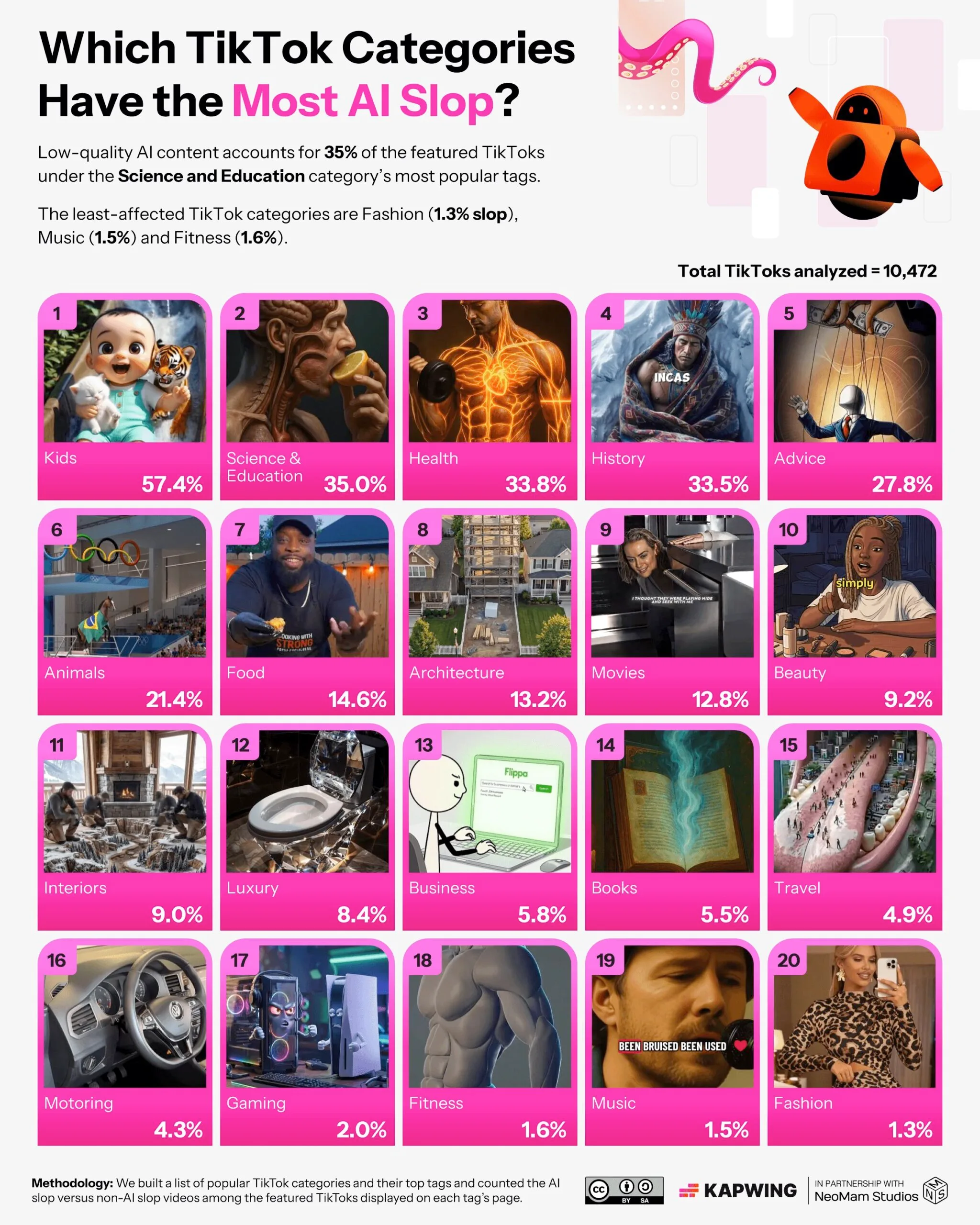
A new Kapwing report on TikTok AI slop found that 59% of videos served to a fresh TikTok account’s For You page were AI slop. For videos aimed at children, the share was almost the same: 57.4%.
That turns AI slop from a creator-side nuisance into a feed-quality problem. And on TikTok, the feed is the product.
What Kapwing actually tested
Kapwing says it analyzed more than 10,000 TikTok videos across popular categories and hashtags, then ran a separate fresh-account test. For that test, the company created a new TikTok account and reviewed the first 500 videos served to its For You page, sorting them into human-made videos and AI slop.
The result: 294 of those first 500 videos, or 59%, were classified as AI slop. Kapwing defines that as low-quality AI-generated or AI-assisted content made to farm views, subscriptions, or attention. The first video served to the dummy account was itself a low-quality AI-generated clip, the report notes, and appears to have since been deleted.
The comparison with YouTube is what makes the number feel sharper. Kapwing says a similar fresh-account test on YouTube Shorts found 104 AI slop videos in the first 500, or 21%. TikTok’s fresh feed delivered nearly three times that share.
The For You page has an onboarding problem
A personalized feed can always be defended with one simple argument: your feed is not everyone’s feed. That is true. A new account test is not a complete map of TikTok, and classifying “slop” includes a judgment about quality, not just whether AI was used.
But cold-start feeds matter because they shape the first impression. Before TikTok knows what someone likes, it has to decide what is safe, broad, engaging, and worth testing. TikTok says its recommendation system uses signals including user interactions, video information, and device and account settings, as explained in its own guide to how TikTok recommends videos. Kapwing’s test suggests the default experience can still be heavily synthetic.
That is especially uncomfortable when the highest-density category in Kapwing’s wider analysis was Kids. Children are not just heavy short-form viewers. They are also less equipped to distinguish synthetic filler, engagement bait, and strange AI-generated narratives from human-made entertainment.
AI control is not the same as AI quality
The tension here is not AI itself. TikTok has already acknowledged that many users enjoy AI-generated content, and the platform has been moving toward giving people more control over how much AI-generated content appears in their feeds.
But giving users a slider for AI does not solve the slop problem if the incentive remains volume. A polished AI explainer, a creator using AI as part of a visible workflow, and a mass-produced clip designed to farm watch time are not the same thing. Users may not object to synthetic tools. They object to feeling tricked, bored, or fed disposable content that exists only because it was cheap to make.
Kapwing also points to a messy engagement loop: backlash can make AI slop more visible. Critical comments, ridicule, and hate-watching still count as activity. Even rejection can become a signal.
What it means for TikTok
TikTok does not need a feed with zero AI. That is neither realistic nor necessarily desirable. But it does need users to believe that the For You page is still doing curatorial work on their behalf, not just absorbing whatever synthetic output can hold attention for a few seconds.
If the first layer of discovery starts to feel disposable, the damage spreads beyond AI content. It affects creators who rely on trust, brands that rely on context, and users who rely on the feed to decide what is worth their time.
The strategic consequence is simple: platforms that cannot make synthetic abundance feel worth watching will force creators and brands to spend more effort proving that real people are still behind the content.
Also Read:
Instagram’s AI Creator Label Is A Trust Patch For The Feed
TikTok Shows How Culture Becomes Commerce One Community At A Time
Snapchat Turns Ads Into Conversations With AI Sponsored Snaps