


That gray box from 1994 is coming back, but do not expect the startup chime.
LEGO and Sony have unveiled the first official brick-built PlayStation console, a 1,911-piece recreation of the original PS1 and its first controller.
Designed at near 1:1 scale, the finished model measures 10.5 inches wide, 7.5 inches deep and 2.5 inches high. It recreates the circular disc lid, controller ports, buttons and wonderfully serious gray color that defined Sony’s arrival in gaming.
Look closer, however, and the console begins hiding considerably more than nostalgia.
The Buttons Still Want To Be Pressed
The set recreates the original PlayStation controller from before analog sticks became standard.
Its directional pad, Start and Select buttons, shoulder controls and colorful triangle, circle, cross and square symbols have all been reproduced in LEGO bricks. The controller can also be plugged into the front of the console using its brick-built cable.
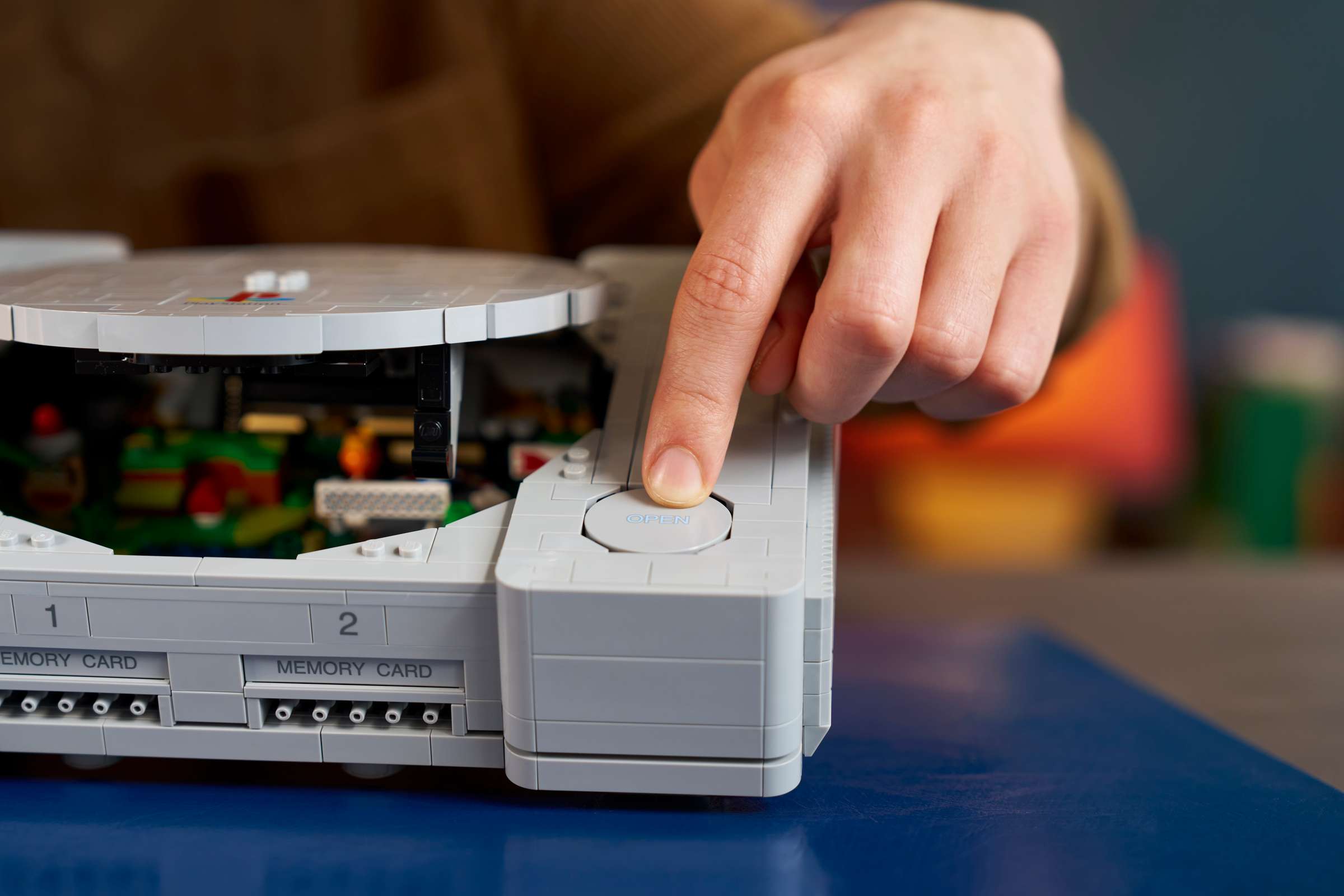
The Power and Open buttons are tactile and functional, adding physical interaction to what is otherwise an adult display model. Pressing the controls will not launch a game, but it does recreate the small ritual of using the original hardware.
That distinction matters.
The most memorable consoles are not only remembered by their shapes. They are remembered through gestures: connecting a controller, pressing Power, opening the lid and waiting for the machine to come alive.

Gran Turismo And Ape Escape Are Hiding Inside
The best details are not visible from the outside.
Open the console and builders can discover two removable dioramas inspired by games from the original PlayStation era.
The first recreates a miniature Gran Turismo racetrack, complete with tiny cars and a curving section of road. The second takes players to the colorful world of Ape Escape, with an island scene and the game’s recognizable monkey helmet. Its top piece can be switched between red and blue.
Both scenes can remain concealed inside the console or be removed and displayed separately.
It is an unexpected design choice. Rather than placing a brick-built disc inside the machine, LEGO and PlayStation have put pieces of the games themselves inside it.
The hardware becomes a container for the experiences people remember playing on it.

It Is Almost The Size Of The Real Console
The near life-size proportions help distinguish the set from a miniature gaming souvenir.
At 10.5 inches wide, it occupies almost the same visual space as the original PlayStation. From across a room, the silhouette, color and circular lid make it look remarkably close to the console people remember.

Only the studs and block-built edges reveal what it really is.
That makes the set feel closer to a piece of retro decor than a conventional toy. It is designed for adults, intended for display, and detailed enough to sit comfortably alongside actual gaming hardware.
There is no screen, oversized logo or elaborate presentation stand. The object itself is the reference.
The LEGO PlayStation Arrives In October
The LEGO PlayStation set is priced at $179.99 in the United States.
It will be available through PlayStation Direct beginning October 1, 2026. LEGO Insiders will also receive early access from October 1 through October 3.
General availability begins October 4 through LEGO’s US website, LEGO Stores and selected retailers.
The set is officially recommended for builders aged 18 and older.
LEGO Is Rebuilding How Gaming Felt
LEGO has become very good at turning retro hardware into objects adults want to reconstruct.
Its Game Boy recreated interchangeable cartridges and screens. Its Donkey Kong Arcade rebuilt the movement of barrels rolling through the original game. The PlayStation set brings that same thinking to Sony’s first console.
These products work because they offer more than accurate shapes.
The building process slows down the act of remembering. Every button, cable and familiar edge becomes something the collector has to notice and rebuild.
The hidden dioramas push that idea further. Gran Turismo and Ape Escape are not simply references printed onto the box. They become small worlds physically stored inside the console that once contained them digitally.
The LEGO PlayStation cannot run a game.
But it can reconstruct the feeling of sitting in front of one.