LEGO is taking another trip through gaming history, this time rebuilding one of the most recognizable arcade machines ever made.
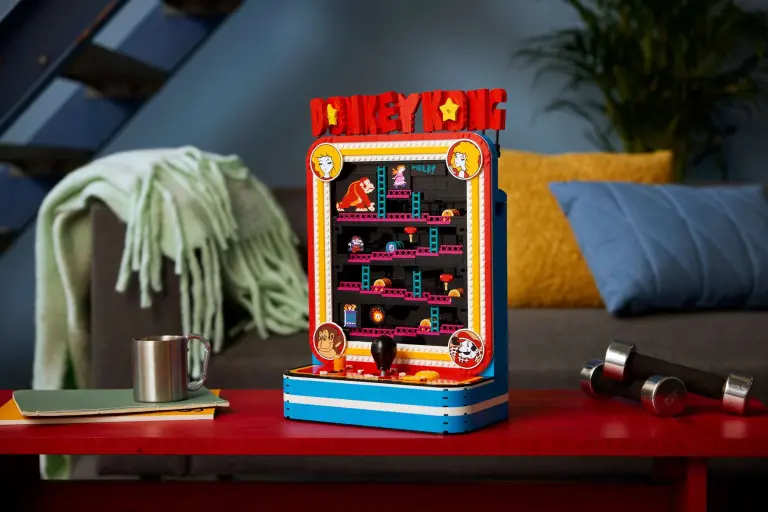
The new LEGO Donkey Kong Arcade recreates Nintendo’s original 1981 cabinet, the game that introduced Donkey Kong, a character then known as Lady, and Jumpman, the character who would eventually become Mario.
But this isn’t simply a brick-built replica designed to sit on a shelf. LEGO has turned the central mechanic of the original game into a physical, playable system.
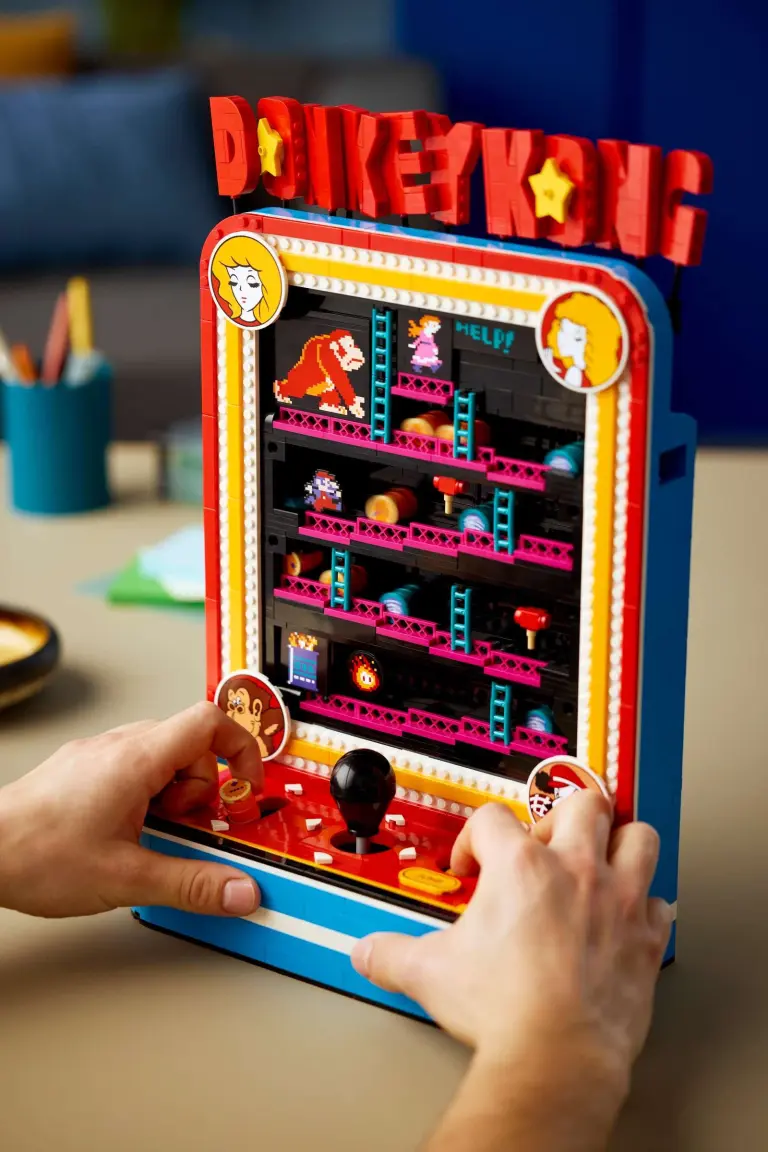
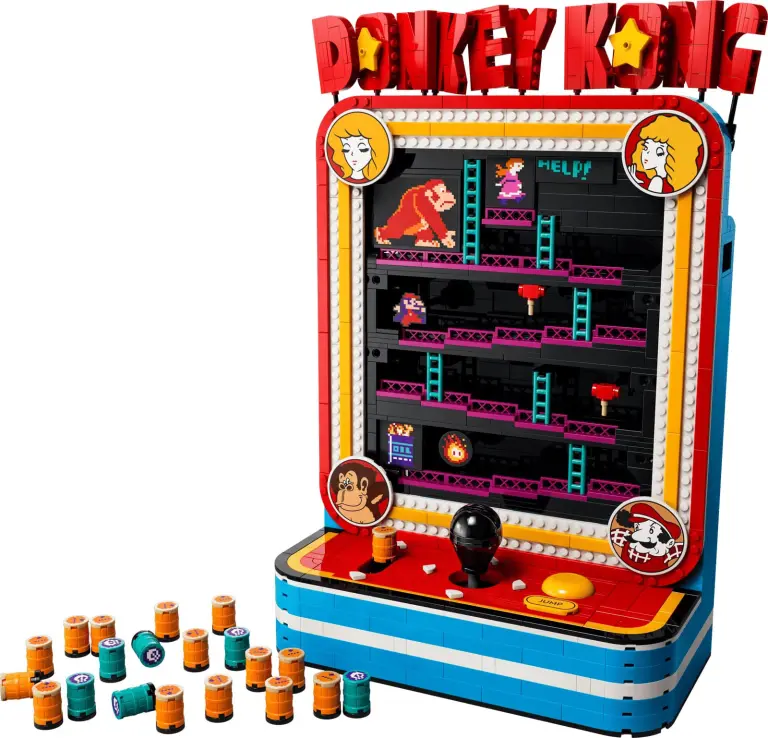
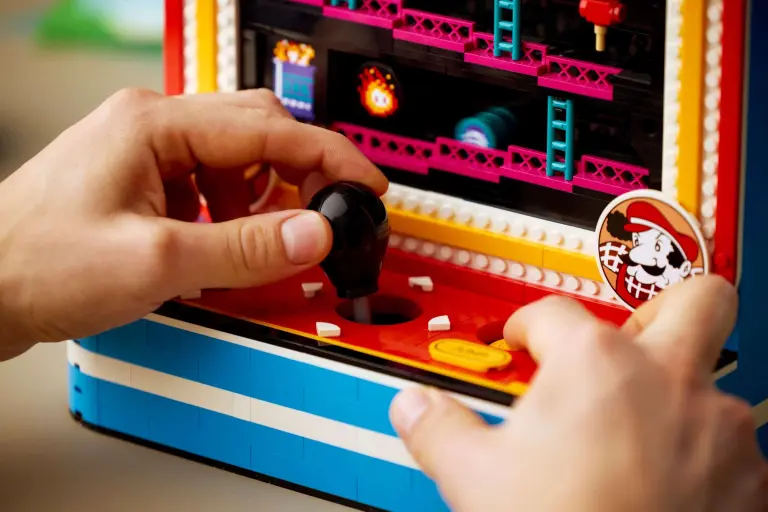
Pull a lever and barrels begin rolling down the familiar sloping platforms. A working joystick moves Jumpman from side to side, while a button makes him jump to avoid the incoming barrels. The model contains 21 barrels and uses an internal mechanism to keep them circulating through the machine in a continuous loop.
An arcade game rebuilt in bricks
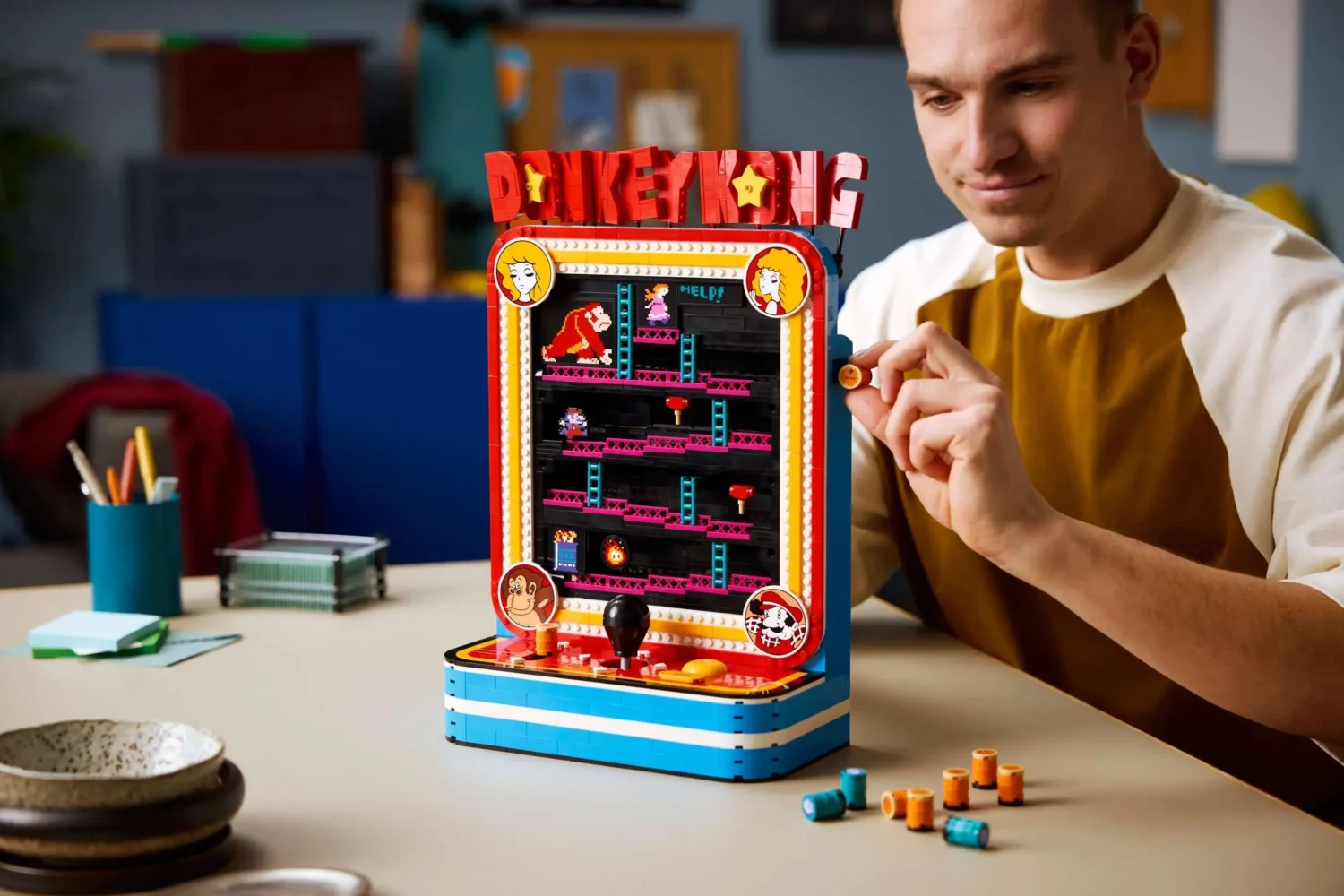
The 1,367-piece set recreates the first level of the original Donkey Kong with its red scaffolding, ladders and hammer power-up, alongside figures of Jumpman, Lady and Donkey Kong himself.
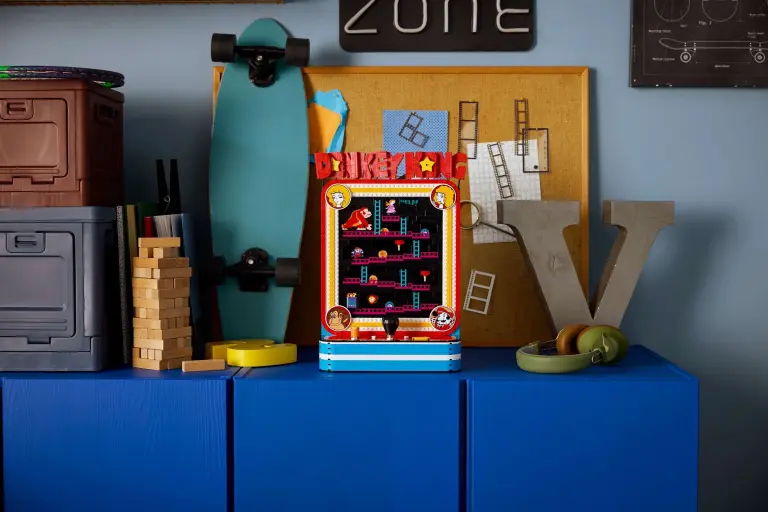
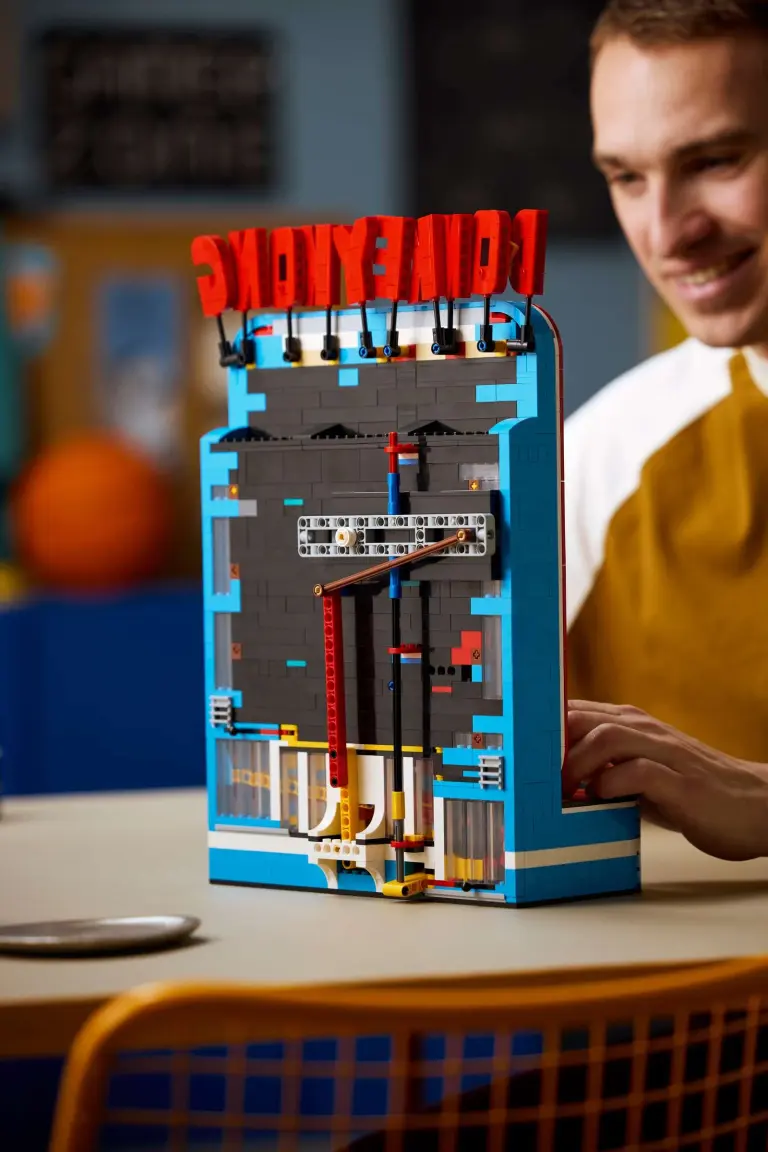
At 39cm tall, 27cm wide and 15cm deep, it lands somewhere between a playable LEGO model and a piece of retro gaming decor. Transparent elements on the side also expose parts of the mechanism responsible for moving the barrels through the machine.
The mechanics may actually be the most impressive part.
LEGO designer Carl Merriam explained that the barrel system works essentially like a pump. Barrels that reach the bottom are collected and pushed back up through the side of the model before being released again at the top.
Getting that movement right required considerably more experimentation than the finished model suggests. Merriam says he rolled thousands of barrels down prototypes while trying to find a way to make them move slowly enough to resemble the original game without getting stuck.
Even the barrels themselves carry a little LEGO history: they use the same barrel element first introduced with LEGO’s Pirates sets in 1989.
LEGO knows exactly who this is for
Donkey Kong Arcade belongs to LEGO’s growing collection of sets aimed less at children discovering an IP and more at adults remembering one.
The company has increasingly turned recognizable pieces of gaming history into buildable objects: the Nintendo Entertainment System and its retro television, the LEGO Game Boy, PAC-MAN Arcade and now Donkey Kong.
The strategy works because LEGO isn’t simply licensing characters. It is recreating the objects and experiences around them.
For someone who remembers Donkey Kong from an arcade, the cabinet itself carries as much nostalgia as the character. The joystick, rolling barrels, ladders and pixel-era graphics are all part of that memory.
Making those elements mechanical gives collectors something more satisfying than a static recreation: they can physically replay a tiny version of an experience they remember.
Even the launch campaign goes deep into arcade culture
LEGO and Nintendo pushed that nostalgia even further by bringing in Steve Wiebe, the competitive Donkey Kong player made famous by the documentary The King of Kong, to promote the set.
It is an unusually specific piece of casting. Wiebe isn’t a mainstream celebrity attached to gaming; he is part of the mythology surrounding this particular game.
That makes the collaboration feel built for people who know, rather than simply people who recognize Donkey Kong.
The set was shown publicly for the first time at San Diego Comic-Con before its August 1 release. It retails for $199.99 in the US, £149.99 in the UK and €169.99 in Europe, with LEGO limiting purchases to three per household.
What LEGO keeps demonstrating with these retro gaming sets is that nostalgia becomes much more powerful when people can interact with it.
Donkey Kong Arcade doesn’t just recreate what an iconic game looked like in 1981. It rebuilds a small piece of what it felt like to play it.
Also Read:
LEGO Unveils Its Biggest Set Ever With A 12,060-Piece Sagrada Família
You Can Play Classic Nintendo Games on These Custom SNES Nike Sneakers
Wrinkles Turns Local History Into An AI Audio Guide