


The open web has always had the content. What it has usually lacked is the muscle memory.
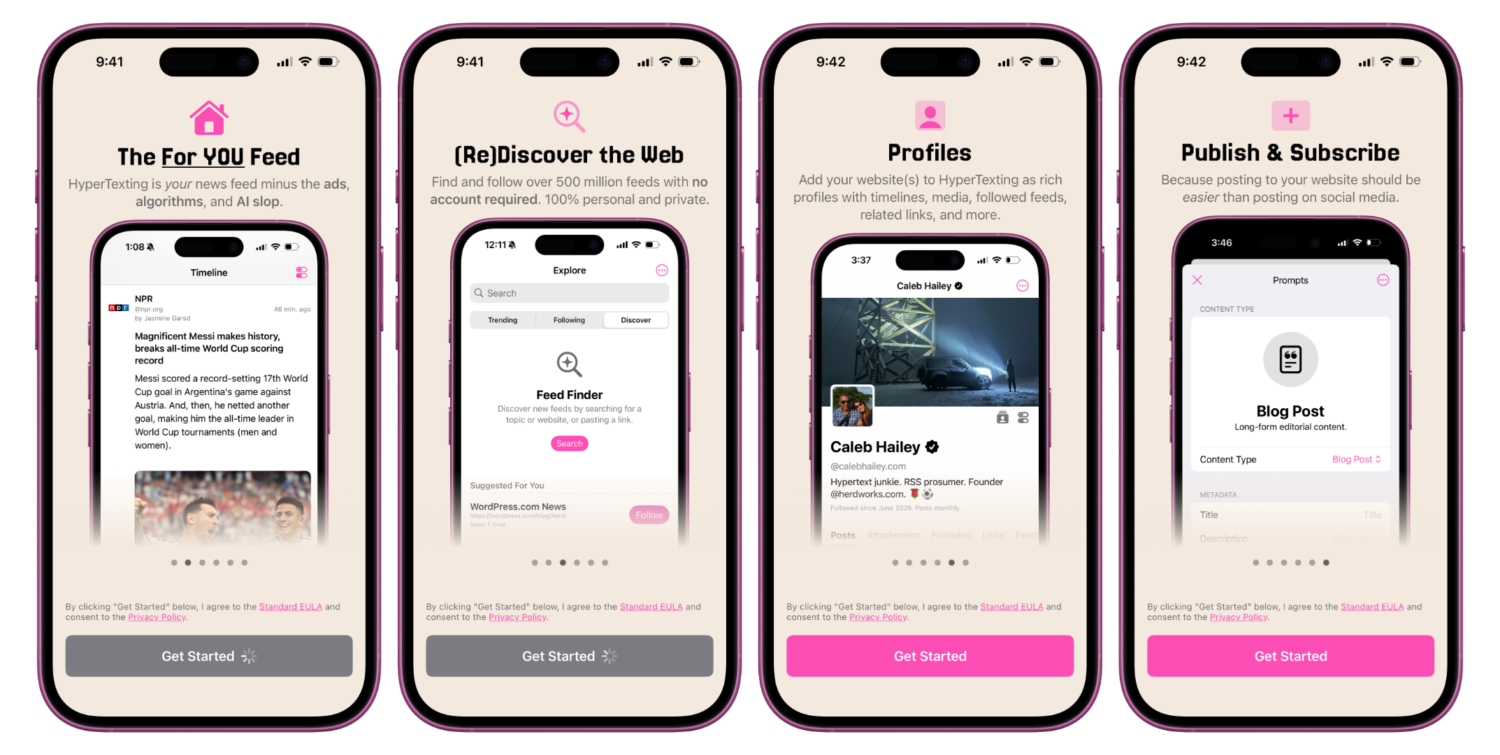
That is the bet behind HyperTexting, a new iOS app that wants to make websites, blogs, newsletters, podcasts, and personal pages feel as easy to browse as a social feed. Instead of jumping between tabs, inboxes, bookmarks, and apps, users can follow people, publishers, websites, and other sources, then scroll through their updates in one familiar stream.
The app was built by Caleb Hailey, a 20-year tech veteran who still believes in the older promise of the web: everyone owning a domain and publishing on their own small piece of it. HyperTexting is also designed to make updating a personal website as simple as sending a text message.
That combination matters. This is not just a reader app. It is trying to make publishing and consuming the open web feel like the same behavior people already learned from social platforms.
The web gets the feed treatment
HyperTexting borrows the interface language of social media very deliberately: a scrollable feed, profiles, following, likes, and comments. The difference is the source material. Instead of asking creators and publishers to move everything into one closed platform, it pulls the web into a format that feels native to mobile social behavior.
Hailey told TechCrunch that part of the inspiration came from watching Twitter lose what once made it useful for discovery and sharing. The shift away from reverse-chronological timelines, the rise of algorithmic feeds, and the deranking of links all made the platform less hospitable to the wider web. HyperTexting is his attempt to bring back some of that discovery without forcing everything through a platform algorithm.
The idea is simple but sharp: people did not necessarily choose social platforms because they preferred centralized publishing. They chose them because posting, following, and scrolling were easier than maintaining websites, RSS readers, bookmarks, or email subscriptions.
HyperTexting takes that lesson seriously. It does not ask the open web to become more nostalgic. It asks it to become more usable.
An algorithm-free feed is still a feed
The interesting tension is that HyperTexting is using the grammar of social media to push back against some of social media’s core trade-offs. It wants the ease of the feed without the opaque ranking system. The quick post without giving up your own site. The follow graph without making one company the default container for identity, publishing, and distribution.
That is a very current idea. Creators, publishers, and brands have spent years learning that reach rented from platforms can disappear quickly, especially when links are deprioritized or distribution rules shift. But the alternative, sending people back to the open web, often feels clunky compared with the speed of TikTok, Instagram, X, or LinkedIn.
HyperTexting’s challenge is not whether the philosophy is attractive. It is whether enough people want an open-web feed when the existing platforms already own the habit. The app is trying to win on behavior, not ideology: make websites as easy to follow as accounts, and make publishing to your own space as casual as texting.
If that works, the bigger signal is not that the open web needs to defeat social media. It is that the next version of independent publishing may have to look a lot more like the platforms that made people leave it behind.
You can download HyperTexting for iOS.