


Facebook’s next creator tool is not another chart to stare at. It is an AI assistant designed to turn creator signals into actual guidance.
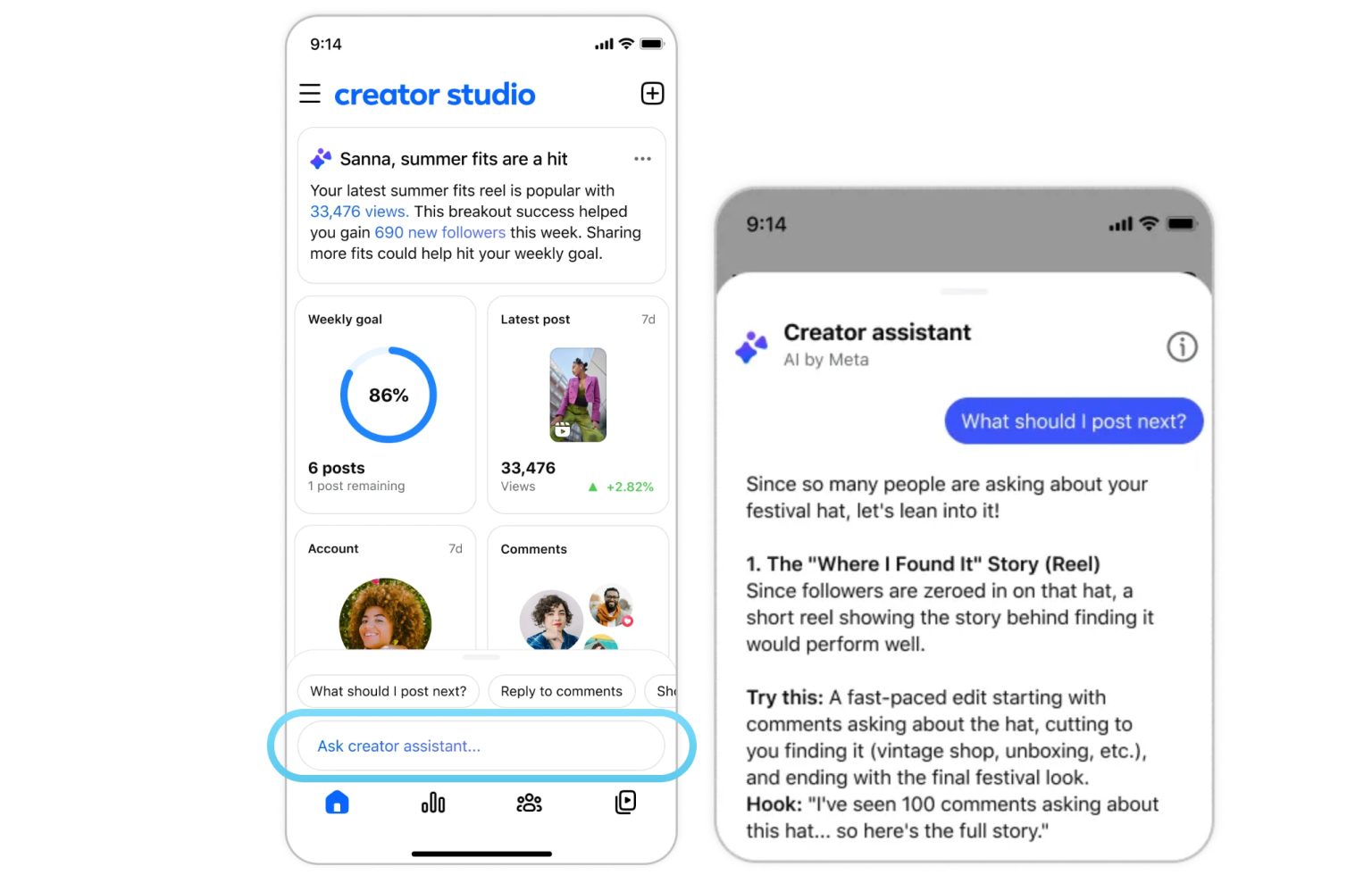
Meta has introduced Creator Assistant for Facebook, describing it as a tool that understands each creator’s “unique presence” and helps them take action to grow. In the same announcement, the company also confirmed that it is adding more languages for AI translations on Facebook.
Those details matter. This is not only about giving creators more data. Facebook already has plenty of surfaces for performance, publishing, and audience feedback. The shift here is that Meta wants AI to sit closer to the decision itself: what to make, how to improve, and how to reach more people across language barriers.
That is a different role for creator tools. The dashboard tells you what happened. The assistant is supposed to help decide what happens next.
From Creator Analytics To Creator Advice
The most important phrase in Meta’s announcement is that Creator Assistant understands a creator’s “unique presence.” That points to a more personalized layer than a generic help center or a list of best practices. The product is being positioned around the creator’s own Facebook activity, not just around platform-wide recommendations.
For creators, that could make growth feel less like interpreting a spreadsheet and more like asking a colleague who has been watching the account closely. The assistant’s value will depend on how well it can connect the creator’s actual content, audience behavior, and opportunities into clear next steps.
This is where Meta’s language is careful but revealing. The company says the assistant helps creators “take action to grow.” That means the product is not just being sold as explanation. It is being framed as a work tool.
In practical terms, that puts AI into the middle of the creator workflow. The assistant becomes part analyst, part coach, part production prompt. For Facebook, that is useful because better-guided creators can produce more relevant content, spend less time guessing, and potentially publish more consistently.
AI Translation Is The Other Half Of The Growth Story
Meta paired Creator Assistant with another Facebook update: more languages for AI translations. That pairing is not accidental.
If Creator Assistant is about helping creators understand how to grow, AI translation is about widening where that growth can happen. Facebook remains a global platform, and language is one of the most basic limits on distribution. Expanding translation support gives creators a better shot at being understood outside their immediate market.
For a creator, that changes the calculation. A video or post does not have to be limited to the language in which it was originally created. If AI translation improves reach and comprehension, Meta can make international discovery feel less dependent on creators manually localizing every piece of content.
That does not make translation invisible, or risk-free. Voice, humor, slang, and cultural context are still hard to move cleanly from one language to another. But the source-grounded signal is clear: Meta is treating creator growth as both a guidance problem and a language problem.
What Brands Should Watch
For brands and marketers, the useful part of Creator Assistant is not simply that creators now have another AI feature. It is that Facebook is moving creator optimization closer to the moment of decision.
If more creators start using AI to understand what is working and what to do next, brand partnerships will likely become more performance-aware by default. Creators may come to brand briefs with sharper reads on what their Facebook audience responds to. They may also expect brand content to fit the signals their assistant is surfacing.
That matters for campaign planning. A brand brief that ignores a creator’s actual audience behavior will feel increasingly out of step if the creator has an AI tool pushing them toward more account-specific decisions. The best collaborations will give creators enough room to apply those insights, rather than forcing every post into a fixed brand template.
AI translations add another layer. Brands working with creators on Facebook may need to think more deliberately about whether content can travel across languages. A simple product demo may translate well. A culturally specific joke may not. If Meta makes multilingual reach easier, the quality of localization becomes a creative consideration, not just a media one.
Facebook Wants To Reduce The Guesswork
Creator tools have often asked people to become part-time analysts. Look at retention. Read the comments. Compare reach. Adjust the next post. Repeat.
Creator Assistant suggests Facebook wants to compress that process. The creator still makes the content, but Meta wants AI to help interpret the signals and recommend action. Add AI translations, and Facebook is also trying to remove some of the language friction that limits who can understand that content in the first place.
The strategic consequence is straightforward: creators on Facebook are being pushed from managing performance after the fact to making AI-informed decisions before the next post goes live.