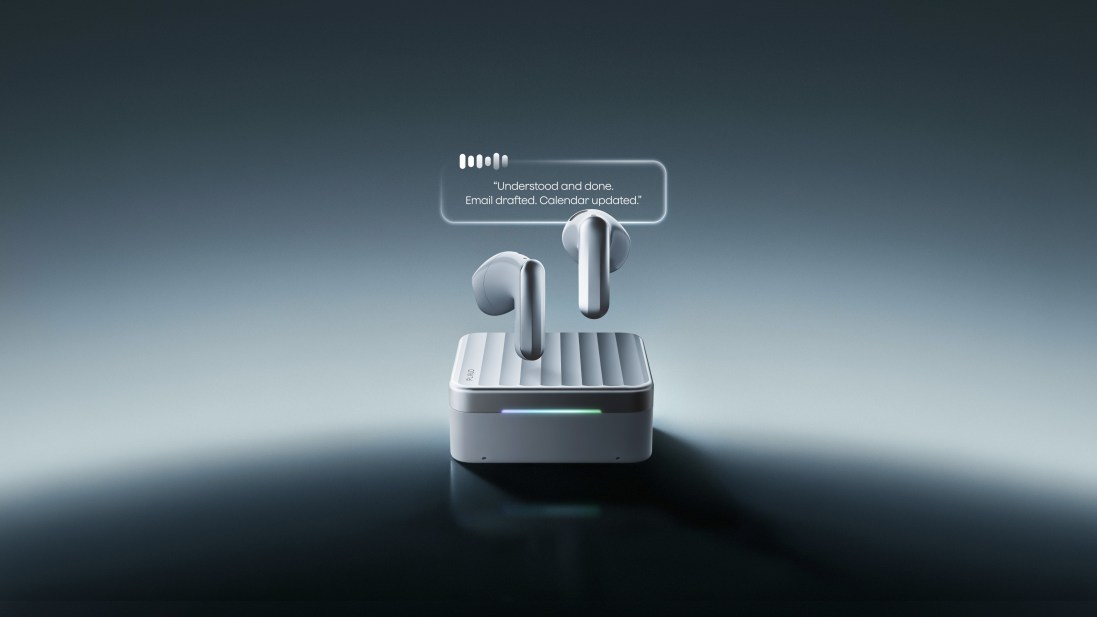
Plaud is taking the AI recorder off the lapel and putting it in the ear.
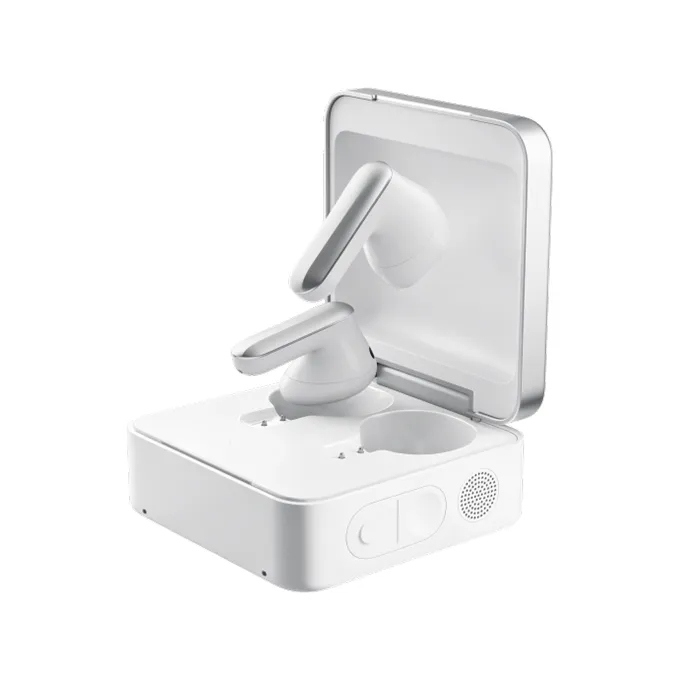
The new Plaud One Explorer Edition is an AI wearable that looks like a pair of earbuds, but its main job is not music. Plaud’s new device is designed to record, transcribe, and summarize conversations. Preorders are now open for $249.99, with shipping expected to start in September.
That makes Plaud One less interesting as another gadget and more interesting as a signal. AI hardware is still looking for the right everyday shape. Pins, pendants, glasses, phones, and now earbuds are all trying to answer the same question: where should AI sit when it wants to listen, remember, and act on what just happened?
The recorder is becoming something you already wear
The most important detail here is the form factor. Plaud has already played in dedicated AI recording hardware, but Plaud One makes the function look much more familiar. The device can be worn like traditional earbuds, according to the report, which matters because earbuds already have social permission in offices, streets, airports, and cafés.
That does not remove the tension. A wearable that records conversations still has to deal with consent, etiquette, and trust. But it does change the starting point. A pin announces itself as a new kind of object. Earbuds blend into an existing behavior. People already put them in before calls, meetings, commutes, and work sessions. Plaud is trying to attach AI memory to a habit that already exists.
The product promise is also very specific: record the conversation, turn it into text, and compress it into a summary. That is not a general-purpose AI assistant fantasy. It is a workflow wedge. Meetings, interviews, lectures, voice notes, sales calls, research conversations, and even spontaneous ideas all become raw material for AI to organize later.
AI’s next interface is capture first
Most consumer AI still begins with a prompt. Plaud One points to a different direction: AI that starts with capture. Instead of asking users to remember what to ask, the device records what happened and lets software turn it into something useful afterward.
That shift is bigger than one wearable. AI is moving closer to the moment where intent is created, not just the moment where a user searches for an answer. We are seeing the same behavioral pull elsewhere, from workplace tools that summarize meetings to shopping journeys where Reddit is becoming the place shoppers go to check AI recommendations before they buy. The interface is becoming less about opening a chatbot and more about letting AI sit inside the activity.
For brands and marketers, the lesson is not that everyone needs an AI device. It is that the most useful AI products are likely to disappear into behaviors people already understand. Plaud One is not asking users to learn a new ritual. It is asking them to wear something familiar and let the intelligence happen in the background.
The strategic consequence is simple: the next battle in AI hardware may not be about who builds the smartest assistant, but who gives that assistant the most acceptable place to listen.
Also Read:
Google TV Freeplay Now Lets Viewers Pick What To Watch
Heinz Adds A Dial To Its Ketchup Lid For The Perfect Squeeze
Reddit Is Becoming The Place Shoppers Go To Check AI Recommendations