


Google TV Freeplay is starting to look less like a channel guide and more like a streaming service people can actually choose from.
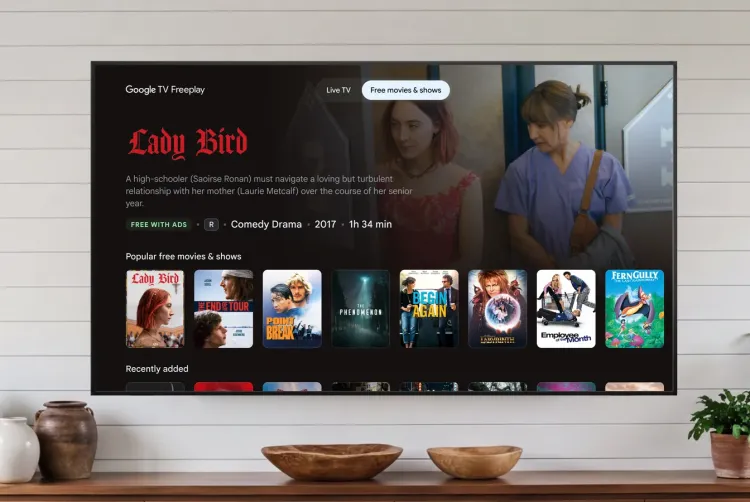
The free, ad-supported service now supports video on demand. That means viewers are no longer limited to whatever happens to be playing across Freeplay’s live-style channels. They can pick specific shows and movies to watch, with reported examples including Lady Bird, Hell’s Kitchen, and Seventeen Again.
It is a small product change with a bigger behavioral point. Free streaming has spent years borrowing from old TV: linear channels, always-on programming, and the feeling of something being available in the background. Google is now adding a more familiar streaming habit on top of that: choose the title, press play, and stay inside the interface.
Freeplay Moves From Browsing To Choosing
Freeplay sits inside Google TV as Google’s free, ad-supported streaming offer. Until now, the model was closer to channel surfing: useful, low-friction, and free, but not always intentional. The new on-demand layer changes the promise. Instead of asking viewers to browse until something catches their eye, Google can give them a library-like experience without asking them to open another app or pay for another subscription.
That matters because the living-room screen is already crowded. Netflix, YouTube, Disney+, Prime Video, FAST channels, rented movies, and platform recommendations are all fighting for the same moment: the point at which someone sits down and decides what to watch. If Freeplay can offer both lean-back channels and selected titles, it becomes more useful as a default destination rather than just a fallback option.
The choice of examples also says something. Lady Bird gives the service a recognizable film title. Hell’s Kitchen brings repeatable TV comfort. Seventeen Again adds the kind of familiar library movie that works well when the user is looking for something easy, not necessarily something new. That is exactly where free streaming can win: not by replacing premium originals, but by filling the moments when viewers do not want another decision to feel expensive.
The Battle Is For Default Viewing Time
For Google, this is not just about adding more free content. It is about keeping the viewer inside Google TV for longer. The more Freeplay behaves like a proper streaming layer, the less it feels like a side menu and the more it becomes part of the main entertainment habit.
That shift is important for advertisers too, although the implication should not be overstated. On-demand viewing can create more deliberate attention than passive channel surfing, but it also raises expectations. If viewers are choosing a specific movie or show, the ad experience has to feel closer to streaming and less like filler. Free only works when the trade-off still feels fair.
The bigger signal is that FAST is maturing. The first wave was about abundance: hundreds of free channels, always available. The next wave is about control. Viewers still want free, but they also want the agency they have been trained to expect from subscription apps.
Google TV Freeplay adding on-demand titles is a simple update. But strategically, it points to the future of free streaming: not a cheaper version of cable, and not a full replacement for paid services, but a default layer inside the TV interface where free content becomes easy enough to choose first.