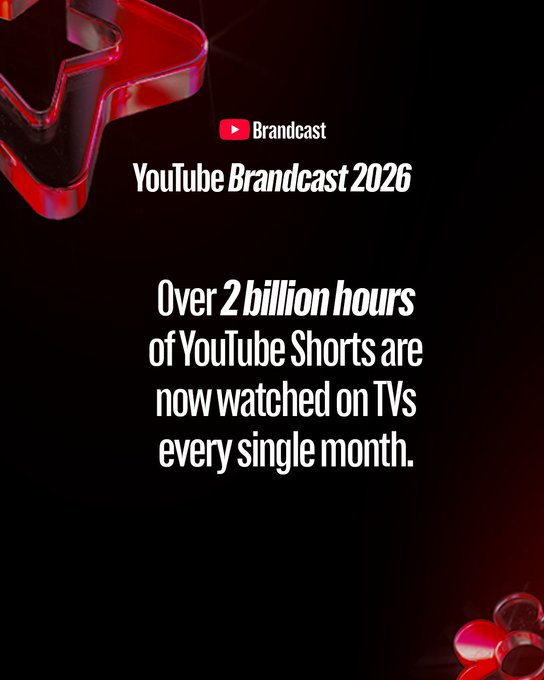
For years, short-form video has been treated as mobile-first by design. Vertical, fast, thumb-stopping content built for the small screen. But according to YouTube, that assumption is quickly changing.
The platform says viewers now watch more than 2 billion hours of YouTube Shorts on TVs every month, a number that feels almost absurd when you remember Shorts were originally designed for phones.
It’s another sign that the battle for the living room is no longer just about Netflix-style long-form entertainment. Increasingly, platforms want the TV to become an always-on feed of creator content, podcasts, clips, and algorithmically recommended videos.
“The living room is YouTube’s fastest-growing screen,” said Kurt Wilms, Senior Director of Product Management for YouTube on TV.
And the company is clearly optimizing around that shift.
YouTube has already started surfacing Shorts directly inside TV search results, while Google TV recently introduced a dedicated “Short videos for you” row designed to push even more snackable content onto the biggest screen in the house.
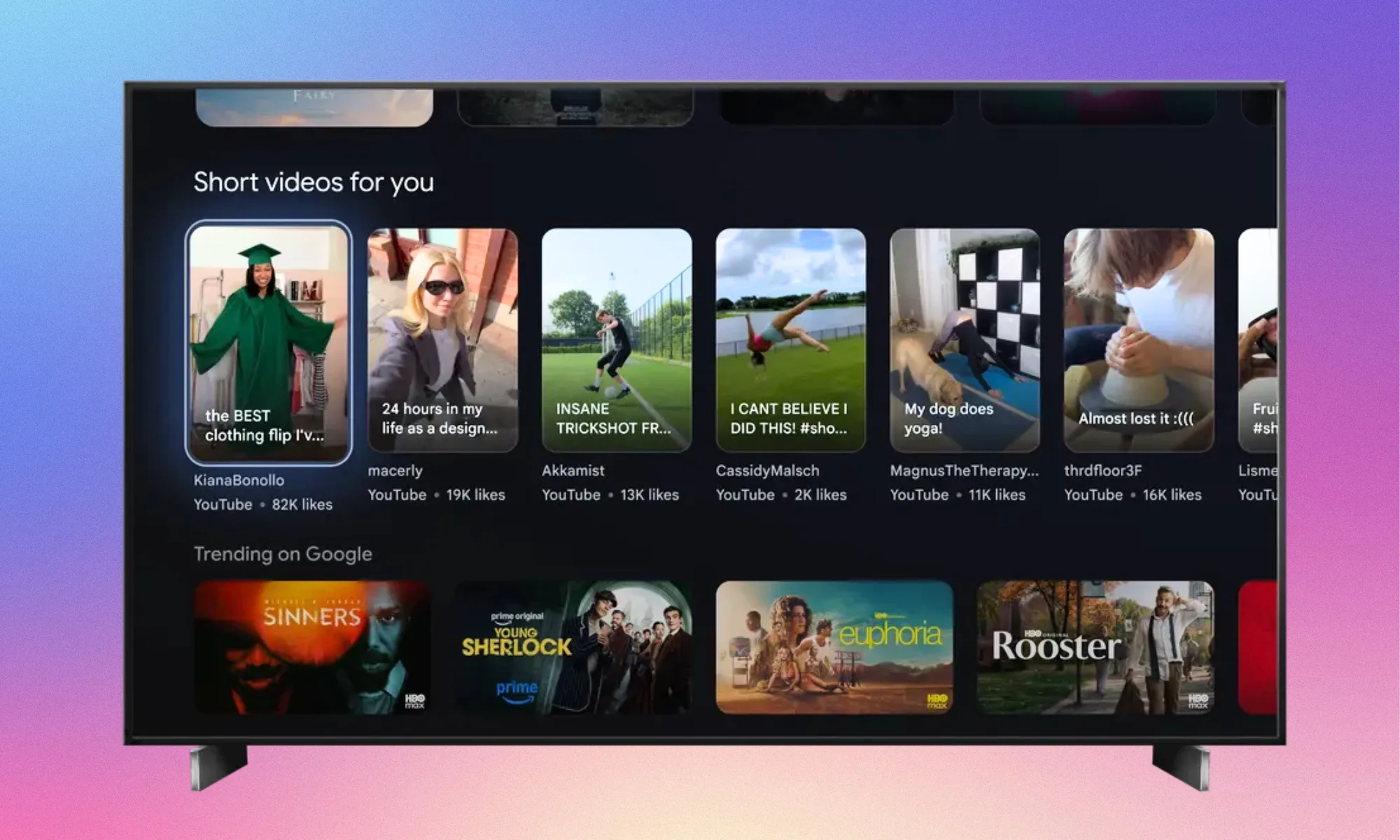
Which raises an interesting cultural shift: short-form content is no longer just a solitary mobile habit. It’s becoming passive, ambient entertainment, something people throw on in the background the same way they once did with cable television.
That evolution also explains why YouTube redesigned the Shorts TV experience to display comments beside the video instead of underneath it. On a phone, comments are secondary. On a TV, they become part of the viewing experience itself.
And Shorts aren’t the only format making the jump to the couch.
According to YouTube, viewers watched more than 700 million hours of podcasts per month on living room devices in 2025, up from 400 million in 2024. Platforms increasingly see video podcasts as the modern equivalent of daytime television: content you can actively watch, but also casually listen to while doing something else.
Even Netflix is leaning into the format, signing deals with companies like iHeartMedia, Barstool Sports, and Spotify to secure video podcast rights.
Ironically, the future of television may not look like television at all. It may look more like an endless feed.
Also Read:
Instagram Instants Shows What Happens When “Authentic” Gets Too Automatic
Snap Is Building The AR Ecosystem Before The Spectacles Moment Arrives
YouTube Wants Creator Shows To Become The New TV Upfront