


Some brands do not need to invent a new craving. They just need to move an old one into a new aisle.
Nutella is one of those brands.
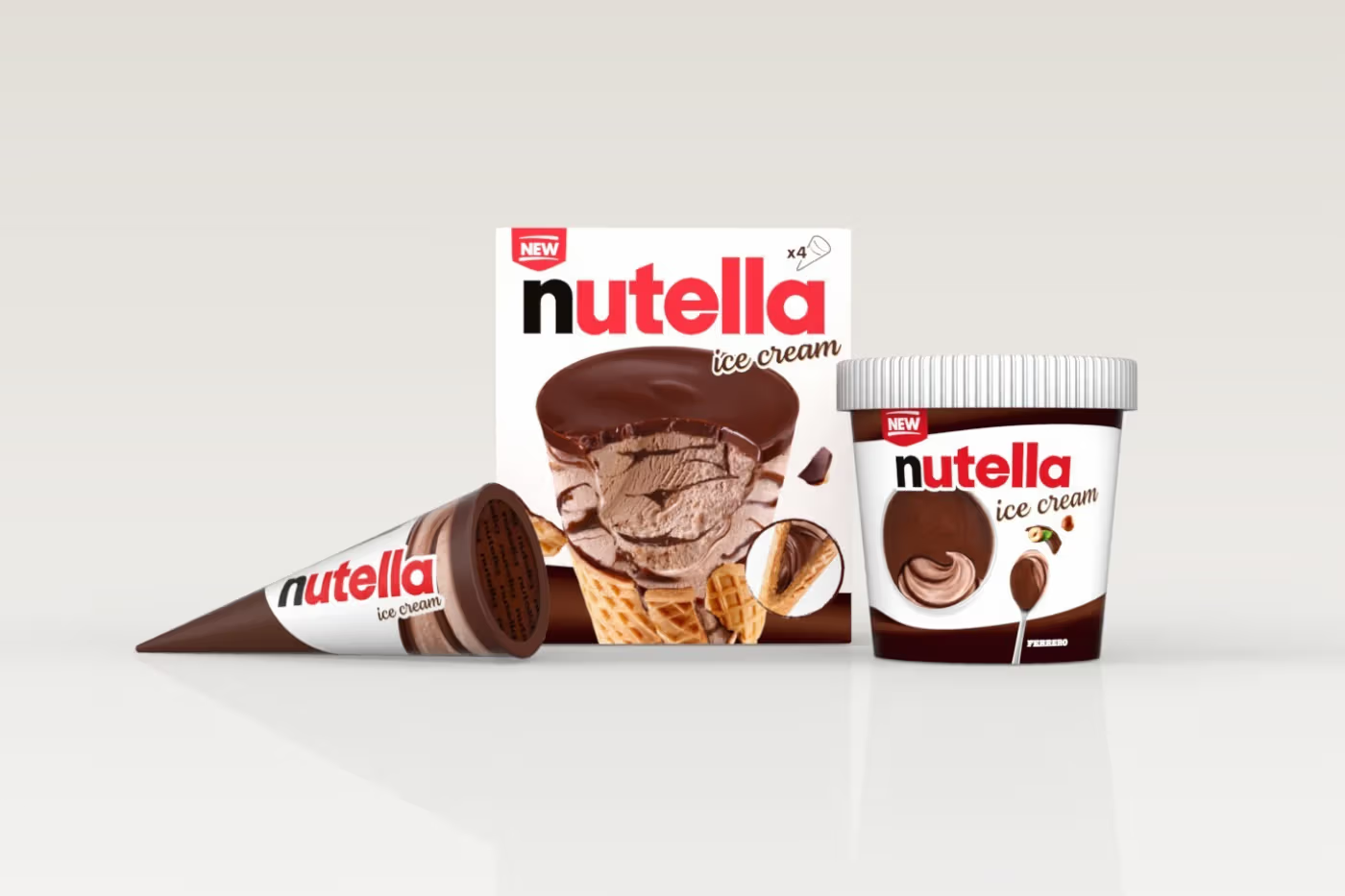
Wells Enterprises and Ferrero have launched Nutella Ice Cream nationwide in the U.S., bringing the hazelnut-cocoa spread into the freezer aisle in 14-ounce tubs and four-pack single-serve cones. The pitch is simple: this is not Nutella-inspired ice cream. It is ice cream made with real Nutella, with layers and swirls folded into the product.
That detail is doing more work than it seems.
From ingredient to occasion
Nutella has always lived slightly beyond its official use case. It is a spread, technically. But culturally, it has been a dessert shortcut, a breakfast loophole, a spoonable comfort object and a brand that people fold into crepes, doughnuts, milkshakes and home recipes without asking permission.
The ice cream launch formalizes behavior that already existed.
That is what makes it interesting from a brand perspective. Ferrero is not forcing Nutella into a random category. It is taking a ritual people already created around the product and turning it into a packaged retail moment.
In other words: the consumer did the concept testing.
The power of the real thing
Licensed flavor extensions can be dangerous territory. Too often, they promise a familiar brand and deliver an approximation: something that looks right on the shelf but feels slightly off in the bowl.
Nutella Ice Cream is clearly trying to avoid that trap by emphasizing the use of actual Nutella. That matters because the brand is not just a flavor profile. It is texture, memory, ritual and a very specific kind of indulgence.
If the product tastes like generic chocolate-hazelnut ice cream, the brand loses some magic. If it feels like Nutella changed form, the freezer aisle becomes an extension of the jar.
That is the difference between a flavor launch and a brand translation.
When grocery becomes culture
There is also a broader retail signal here. Grocery shelves have become a serious stage for cultural brands. Snacks, drinks, coffee, cereal, ice cream and pantry staples are no longer just functional categories. They are identity objects, social content, nostalgia triggers and limited-drop engines.
Nutella does not need sneaker-style scarcity to play in that world. Its advantage is familiarity. The brand already has emotional distribution. The ice cream simply creates a new way to access it.
The tub handles the home ritual. The cone handles the impulse moment. Together, they let Nutella stretch from pantry staple into frozen treat without abandoning the thing people already know.
That is the lesson for heritage food brands: the strongest extensions do not ask consumers to believe something new.
They give them a new format for something they already believe.
Nutella was never just sitting in the jar. It was waiting for another aisle.