


YouTube is testing a new way to make consistency feel more directly valuable to Shorts creators. The platform is inviting selected creators into a bonus program tied to posting frequency and performance, while also adding new incentives around shopping content. The shift matters because YouTube is connecting creator pay more tightly to the behaviors it wants to scale: regular publishing, product tagging and measurable commerce.
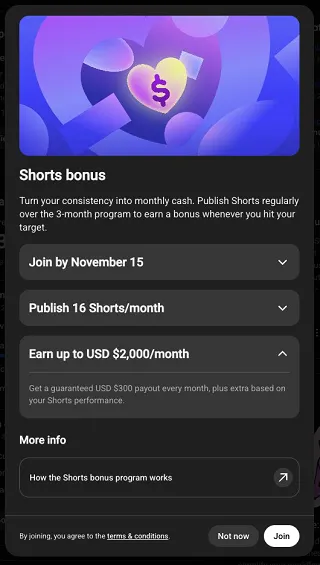
The details remain limited. Social Media Today reports that one example invitation asks creators to publish 16 public Shorts per month. Participants may also receive promotional payments based on what YouTube calls “valid, engaged Shorts views.” The test is reportedly open to invited creators in the U.S., U.K., Germany, Brazil, Japan and South Korea. There is currently no open application route, although YouTube Creator Liaison Rene Ritchie said more creators may be invited in the coming months.
YouTube is turning creator consistency into a monetization signal
The important detail is not simply that YouTube is offering another bonus. It is that the bonus is attached to a publishing rhythm. That gives the platform a direct way to encourage a more dependable supply of Shorts without changing the public recommendation system or promising every creator a new revenue stream.
The approach also creates a familiar platform tension. Creators gain another potential income source, but the reward is conditional on producing at a pace and under rules set by YouTube. Because the program is invitation-only and the requirements may vary by creator, it is too early to treat the test as a stable part of the Shorts economy.
Shopping incentives push Shorts closer to measurable commerce
YouTube is testing a similar logic in shopping. Eligible creators can reportedly find exclusive product offers in YouTube Studio, the Shopping Hub or Studio notifications. These offers can include bonus amounts, commission rates, active dates and creative suggestions. Creators can use their own approach, but must meet conditions such as tagging the participating product, disclosing paid promotion and keeping the video public for at least 30 days.
YouTube is also rolling out updated shopping analytics, including sales driven by content, improved product click and impression data, and seller breakdowns in advanced analytics. Together, the changes make creator content easier to evaluate as both audience programming and a sales channel.
For brands, that makes YouTube’s creator proposition more performance-oriented. For creators, it means the platform is rewarding not only attention, but repeatable output and trackable commercial action. The strategic consequence is clear: Shorts monetization is moving toward a system where consistency, engagement and commerce are measured together.