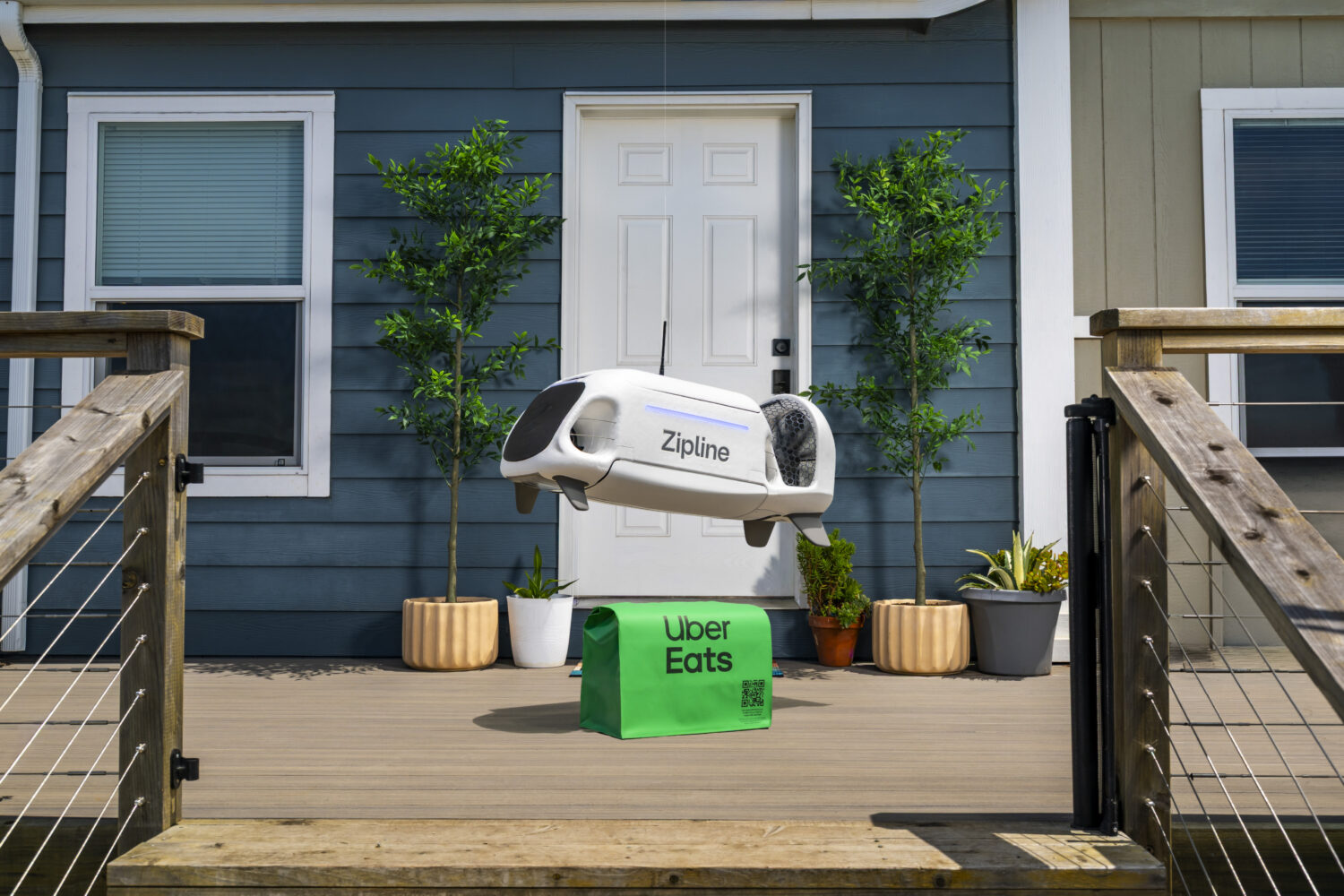
Uber is moving drone delivery back from pilot theater to platform math.
Uber is partnering with Zipline to begin airborne Uber Eats deliveries later this year. The deal includes an investment component, and the ambition is not small: the companies are reportedly aiming for one million daily drone deliveries by 2029.
That target is the real story. Drone delivery has spent years looking like a future-facing demo: impressive, photogenic, and usually limited enough to feel like a stunt. Uber and Zipline are framing it differently. This is not about proving that a burrito can fly. It is about whether drone delivery can become a repeatable part of a marketplace that already has consumer demand, merchant relationships, routing logic, and delivery expectations built in.
From novelty delivery to operating layer
Uber Eats gives Zipline access to something drone companies usually have to build around: everyday intent. People are already opening Uber Eats because they want something delivered now. If drones enter that flow, they do not need to create a new behavior from scratch. They only need to make an existing behavior faster, cheaper, or more reliable in the right use cases.
Zipline brings the other side of the equation: autonomous delivery infrastructure. The company has become one of the most visible names in drone logistics, and a partnership with Uber puts that infrastructure closer to mainstream consumer commerce. For Uber, the move gives Eats another way to attack the economics of short-distance delivery, where speed matters but human courier capacity, traffic, density, and cost still shape the experience.
The timeline also matters. A launch later this year gives the partnership a near-term test window, while the 2029 scale target shows the companies are talking about a network, not a one-city pilot. One million daily drone deliveries would not be a marketing add-on. It would require drones to become part of the normal delivery mix, with consumers barely thinking about the mode once the food arrives correctly.
The consumer experience has to disappear
The challenge is that delivery innovation only works when it becomes boring. Consumers do not want a logistics lesson when they order lunch. They want clear availability, predictable timing, safe drop-off, and no weird friction at the final handoff.
That is where the Uber layer could matter more than the drone itself. If the experience sits inside Uber Eats, the app can decide when drone delivery is available, how it is presented, what expectations are set, and how problems are handled. The drone becomes part of the service promise, not a separate technology pitch.
For restaurants and brands, the broader implication is not simply “put drones in the media plan.” It is that fulfillment is becoming part of brand experience. The speed, reliability, and drama of how something arrives can shape how the product is remembered. But only if the system works well enough that the technology fades into the background.
That is why this partnership is worth watching. If Uber and Zipline can move drone delivery from spectacle to scale, the competitive edge will not be the flying robot. It will be the platform that makes airborne delivery feel as normal as tapping “order.”
Also Read:
Google TV Freeplay Now Lets Viewers Pick What To Watch
Heinz Adds A Dial To Its Ketchup Lid For The Perfect Squeeze
Reddit Is Becoming The Place Shoppers Go To Check AI Recommendations