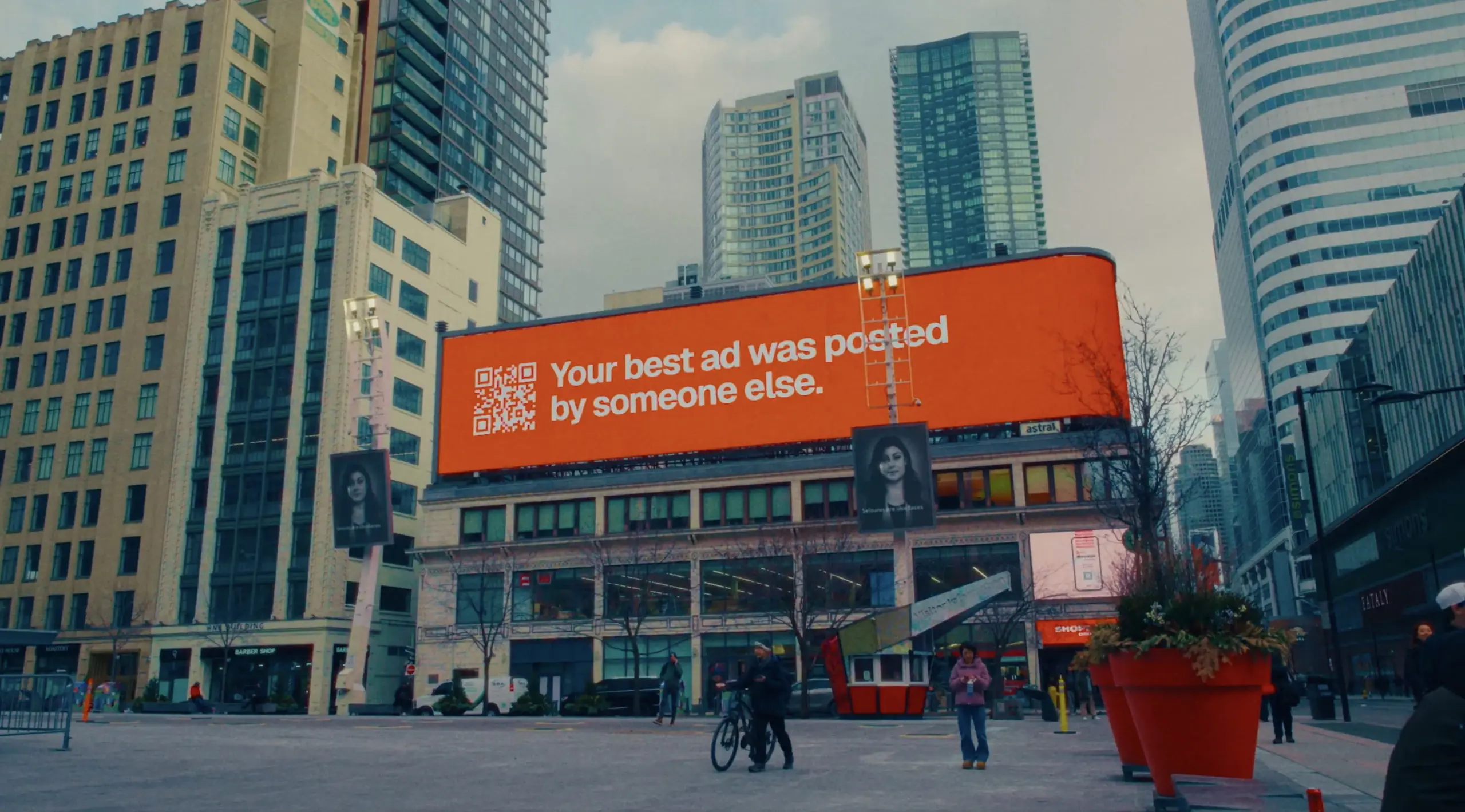
Can a billboard still compete with digital formats? That’s the provocative question raised by Content Rewards in a campaign designed to compare the effectiveness of traditional out-of-home advertising with social distribution.
Instead of debating it theoretically, the platform decided to test it in the real world, with the exact same budget.
A $5,000 experiment, two completely different worlds
To make its point, Content Rewards split a $5,000 budget across two activations.
First, a traditional billboard placement in a high-traffic area in Canada. Using cameras and AI, the brand tracked exposure and interaction.
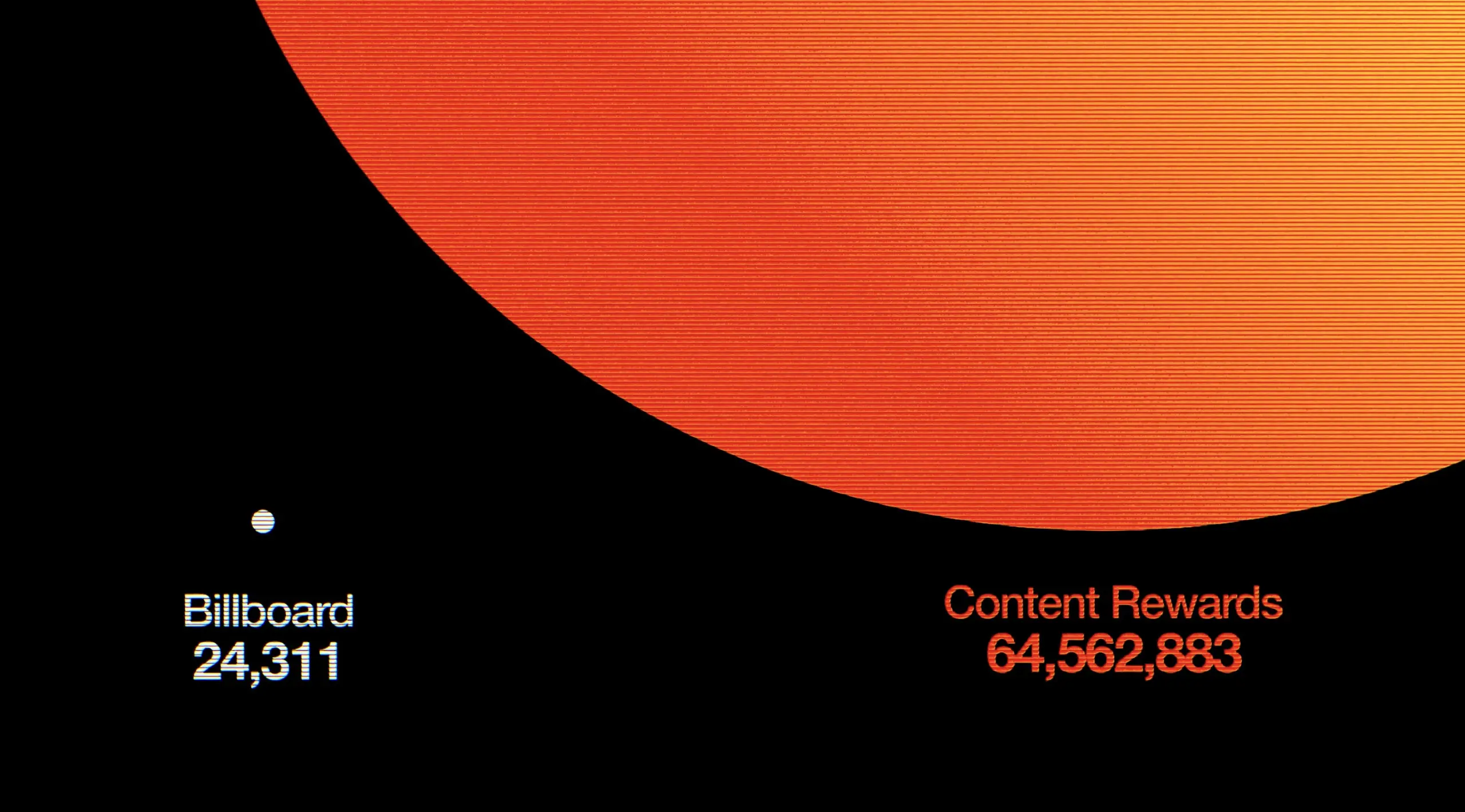
The result: 24,000 people saw the ad, but only 62 scanned the QR code.
A classic outcome for out-of-home: strong visibility, but limited immediate action.
Then came the digital side.
With the same $5,000 invested on its own platform, Content Rewards generated 64 million views and more than 11,000 clicks in just 24 hours.
On paper, the gap is massive. The brand claims a performance up to 2,500 times higher than the billboard.
A spectacular comparison… but a biased one
At first glance, the numbers feel almost absurd. But the comparison itself is where things get interesting.
Because this isn’t just a test of formats, it’s a comparison between two fundamentally different behaviors.
A billboard is passive. It captures attention in a physical space, often briefly, and builds memory over time.
Social content, on the other hand, meets users where they are already active. It’s designed for interaction, clicks, shares, engagement, and benefits from algorithmic amplification.
In other words, one format is built for awareness. The other is built for action.
More marketing stunt than universal truth
That’s what makes this campaign smart.
Rather than offering a neutral, apples-to-apples comparison, Content Rewards stages a contrast that naturally favors its own ecosystem. And in doing so, it creates a headline-worthy narrative.
Because the real takeaway isn’t that billboards are obsolete. It’s that distribution has changed.
Platforms and creators now offer a level of scale, speed, and measurable performance that physical media simply can’t match in the same way. But that doesn’t make them interchangeable.
What this says about marketing today
- This campaign reflects a broader shift in how brands think about media:
- Awareness vs. action is no longer the same conversation
- Scale is increasingly digital-first
- Performance is now expected, not optional
Billboards still have value, especially for presence, repetition, and cultural visibility. But when it comes to driving immediate engagement, digital formats have a structural advantage. And that’s exactly what Content Rewards wanted to show.
Also Read:
Reddit Plugs Into Hubspot To Bring Marketers Closer To Real Conversations
YouTube Will Hold Back On Ads During Livestream Peaks to “Protect the Vibe”
LinkedIn Might Be Silently Spying On You and Your Computer