Traditional camouflage is designed to help people blend into their surroundings.
Simon Weckert’s version does the exact opposite.
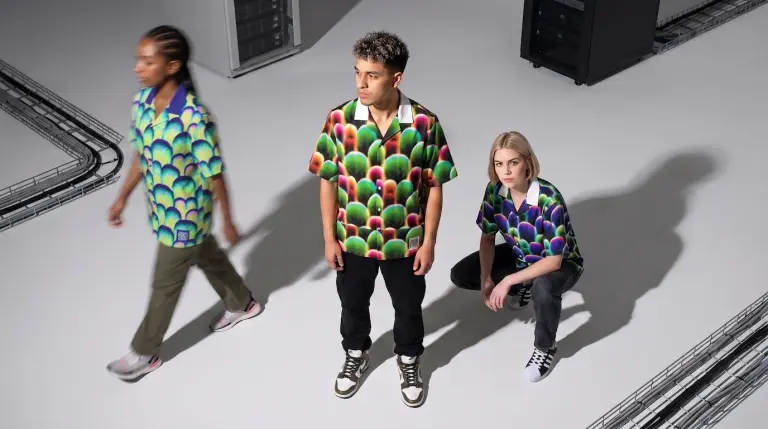
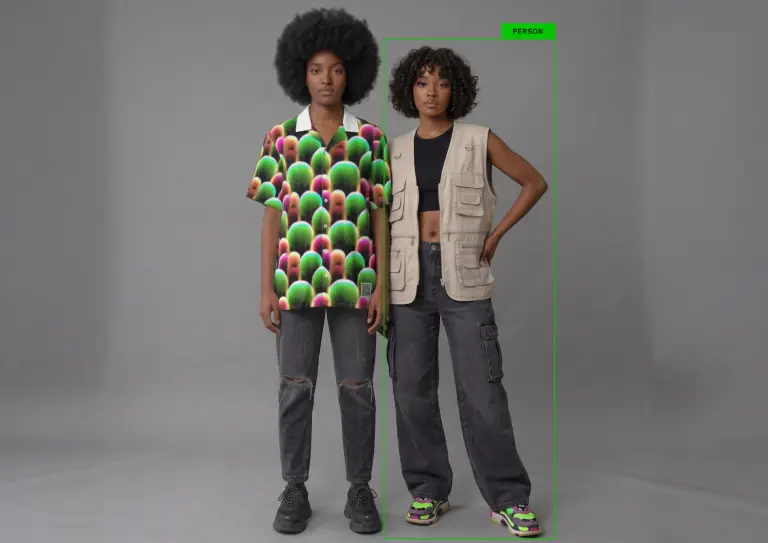
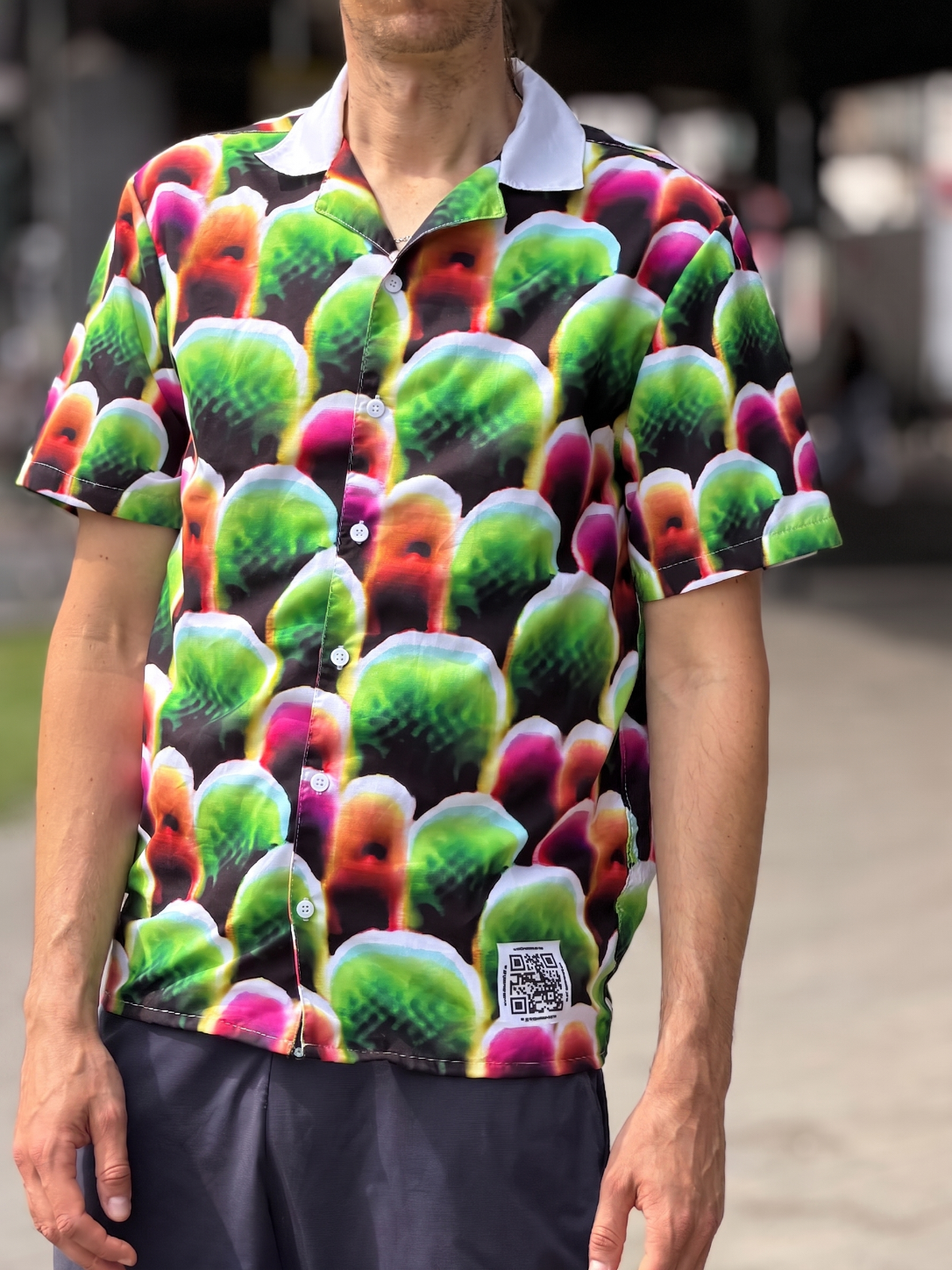
His Digital Camouflage shirt is covered in a psychedelic explosion of green, pink, red and black shapes that would be almost impossible for another person to ignore.
But to an AI camera, the person wearing it can disappear.
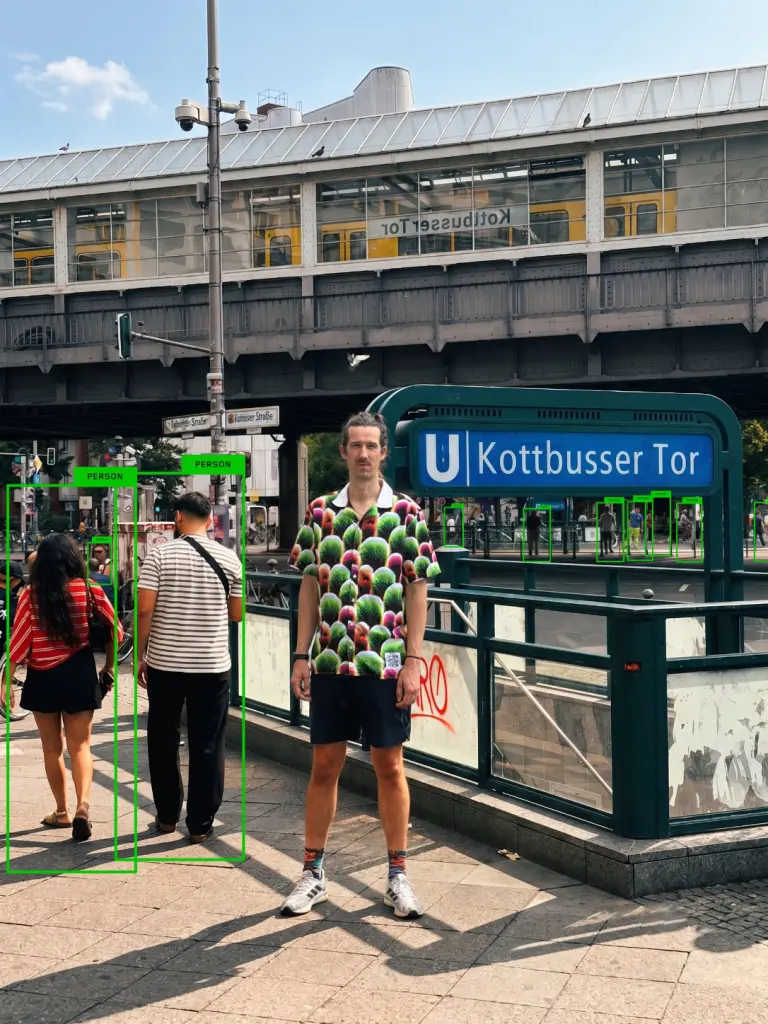
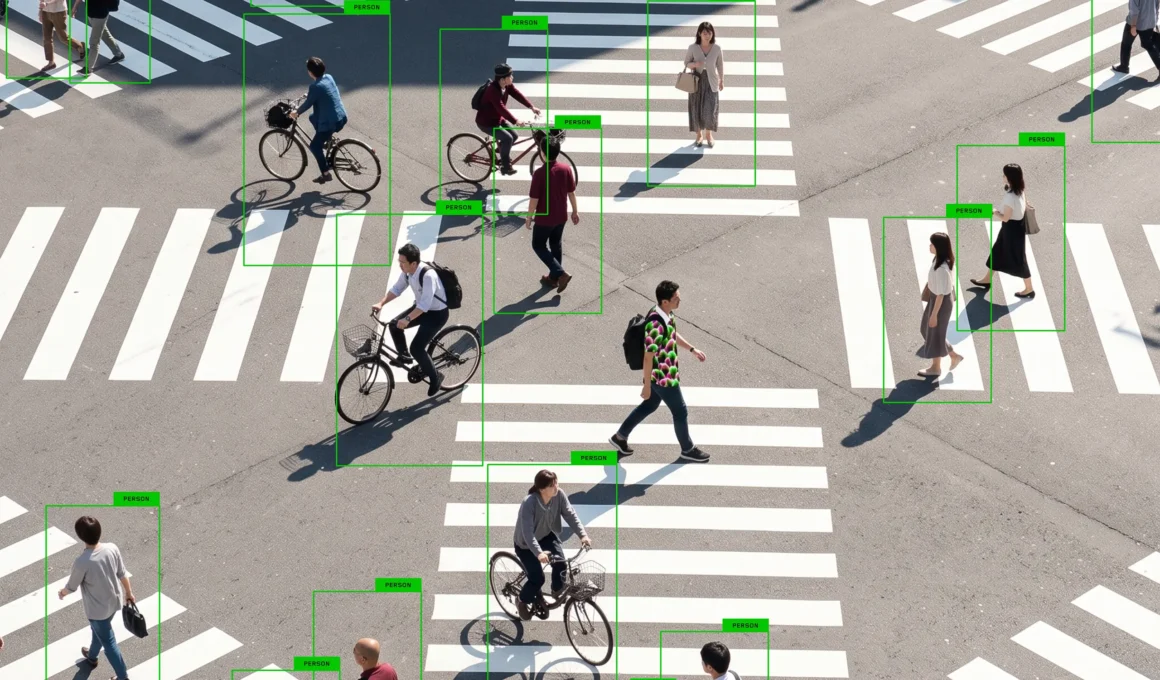
In Weckert’s demonstration, an open-source object-detection system draws green boxes around every pedestrian in view while repeatedly failing to recognize the person standing in the middle of the frame wearing the shirt.
It is not magic. It is an adversarial attack dressed as a very loud button-up.
AI Does Not See A Shirt The Way You Do
A human looking at Digital Camouflage sees an unusually colorful textile pattern.
A computer-vision system processes the same image as a collection of visual features and probabilities. It looks for combinations of shapes, edges, textures and proportions that its training has taught it to associate with a person.
Weckert’s pattern is designed to interfere with that process.
Instead of hiding the wearer by matching the background, it introduces visual information intended to reduce the model’s confidence that a human figure is present.
The technique is known as a physical adversarial attack: deliberately manipulating what a machine receives until it makes a mistake that remains obvious to a human observer.
In this case, the computer does not mistake the wearer for a chair, dog or traffic light. It simply fails to draw the “person” box at all.
The Whole Shirt Becomes The Attack Surface
Researchers have been experimenting with adversarial clothing for several years, but turning a successful digital pattern into something wearable creates a very physical problem.
A flat patch may confuse a detector when viewed directly from the front. The effect can collapse when the person turns, moves, covers part of the design or allows the fabric to fold.
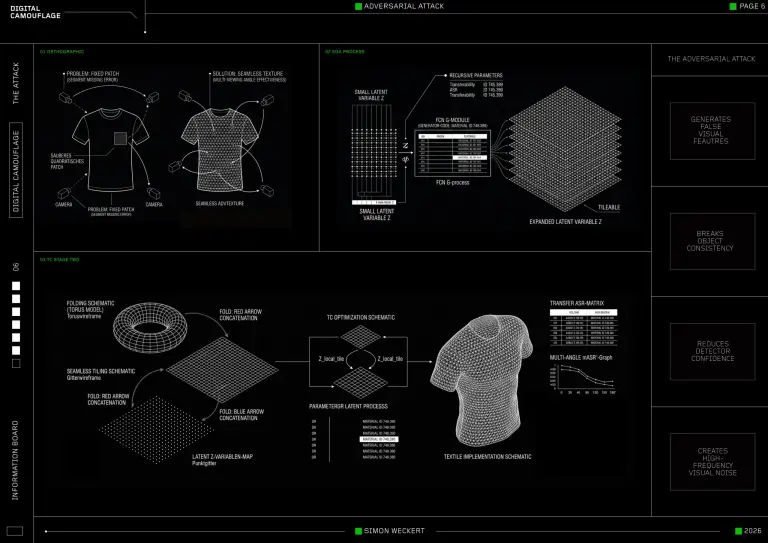
Digital Camouflage is based on research into a continuous system called Adversarial Texture, or AdvTexture.
The researchers behind the 2022 CVPR paper developed a generative method called Toroidal-Cropping-based Expandable Generative Attack, or TC-EGA. It produces a repeating pattern intended to retain its adversarial properties across different parts of a garment and from different viewing angles.
Instead of placing one special patch on the chest, the entire shirt becomes the attack surface.
The design continues across the fabric, seams and folds, giving the camera multiple opportunities to encounter the adversarial signal even when parts of the garment are obscured.
Weckert’s shirts are digitally printed on a fabric made from 65 percent recycled polyester and 35 percent polyester.
 Berlin Gives The Experiment A Bigger Meaning
Digital Camouflage arrives as Berlin expands the use of AI-assisted video surveillance in public spaces.
Around 30 cameras are being installed at Kottbusser Tor, the busy intersection in Berlin’s Kreuzberg district where Weckert documented the shirt in action.
The pilot is intended to analyze movement and flag potentially dangerous situations. Berlin officials say the system is focused on behavioral patterns rather than facial recognition, with additional locations expected to follow. Critics argue that identifying violence still requires software to analyze a much wider range of ordinary human behavior, from hugging and dancing to running and gesturing.
This Is Not An Invisibility Cloak
There is an important limitation.
Digital Camouflage has been demonstrated against YOLO, a widely used family of open-source object-detection models. Weckert does not claim that it will defeat every camera, surveillance platform or government system.
The camera still records the wearer. Other people can still see them. A different model, viewing angle, lighting condition or detection system may respond differently.
It should also not be confused with facial-recognition camouflage. The shirt targets the earlier task of detecting that a person is present, rather than obscuring or changing the wearer’s face.
Weckert describes the work as neither a tool for evading police nor a promise of anonymity.
The uncertainty is part of the point. Government surveillance systems are rarely available for independent testing, making it difficult for outsiders to know how reliable they are or how easily they can be confused.
If a familiar class of computer vision can be disrupted by printed fabric, the public deserves to understand how much authority is being handed to similar systems.
The Machine Is Now Part Of The Audience
Weckert has a history of turning the assumptions made by digital systems into physical performances. In 2020, he pulled 99 smartphones through Berlin in a handcart, convincing Google Maps that an empty street was experiencing a traffic jam.
Digital Camouflage applies the same thinking to computer vision.
For humans, the shirt is a bold fashion object. For a machine, it is a carefully constructed piece of visual misinformation.
That distinction points toward a strange new direction for design. Clothing, packaging, architecture and public art are no longer interpreted only by the people looking at them. Cameras, classifiers and automated systems are becoming another audience, with their own visual language and their own blind spots.
Camouflage once asked how someone could disappear into the environment. Digital Camouflage asks a more contemporary question: what does the algorithm need to misunderstand you?
Also read:
Google Home Can Now Use AI Camera Vision To Automate Your House
This Smart Glasses Detector Is Fast-Rising In The App Store
Meta’s Smart Glasses Are Winning The Market And Losing The Room