


Meta’s latest AI experiment on Instagram lasted two days.
The company has removed a new option that would have let people use other users’ public Instagram posts as references in AI-generated images. The problem was not image generation itself. It was consent, defaults, and the feeling that anyone’s public presence could suddenly become raw material for someone else’s prompt.
A default opt-in that went too far
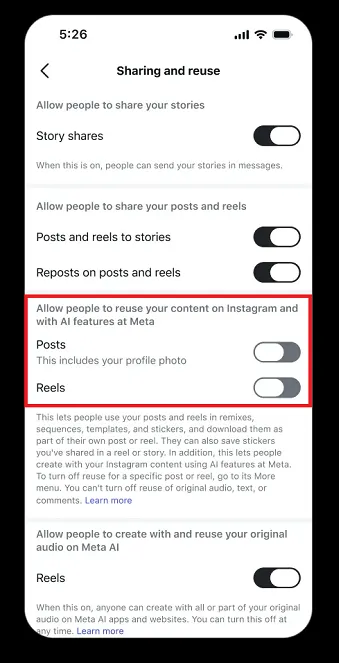
The feature was tied to Meta’s latest Muse Image model announcement, which the company positioned as its most advanced image and video generation tool to date. The Instagram-specific idea was simple, and immediately controversial: users could @mention public Instagram accounts during the creation process and integrate those accounts’ publicly posted content into AI depictions.
That alone would have raised eyebrows. But Meta also made the option available to all users by default, meaning people had to actively opt out if they did not want their public posts referenced in this way. In other words, silence became permission until a user found the setting and changed it.
The backlash was fast. Users objected to the potential for misuse, while Variety reported that talent agencies raised concerns that the feature could enable identity theft and other forms of misrepresentation, advising clients to opt out. For creators, actors, influencers, and anyone whose face or style is part of their work, the risk was obvious: a simple @mention could become a shortcut for synthetic imitation.
Meta then pulled the option. In a statement cited by Social Media Today, the company said its intent was to provide “a useful creative tool” while giving people control over whether their public content could be referenced, but added that it had “heard the feedback that this feature missed the mark,” and that it was “no longer available.”
The boundary Meta just found
The speed of the reversal matters. Meta did not spend weeks defending the feature or slowly adjusting the wording. It removed the option almost immediately, which suggests the company understood that this was not just another AI feature with a few rough edges.
It touched a deeper issue: people may accept AI tools inside platforms like Meta AI, but they are far less comfortable when their identity, creative output, or public posts can be pulled into someone else’s generated media by default.
That distinction is going to shape the next phase of social AI. Platforms want AI creation to feel native, fast, and socially connected. But social content is not the same as a stock image library. Instagram posts carry identity, context, relationships, reputation, and sometimes commercial value. Treating them as prompt inputs changes the meaning of public posting.
For brands and creators, the lesson is practical: AI permissions are now part of reputation management. It will no longer be enough to know where content is published; teams will need to know how platforms allow that content to be referenced, remixed, labeled, or blocked.
Meta’s removal does not mean AI remixing disappears from Instagram forever. It does mean the default has shifted. If platforms want people to let their content feed creative AI tools, they will need to make consent visible before the backlash, not after it.