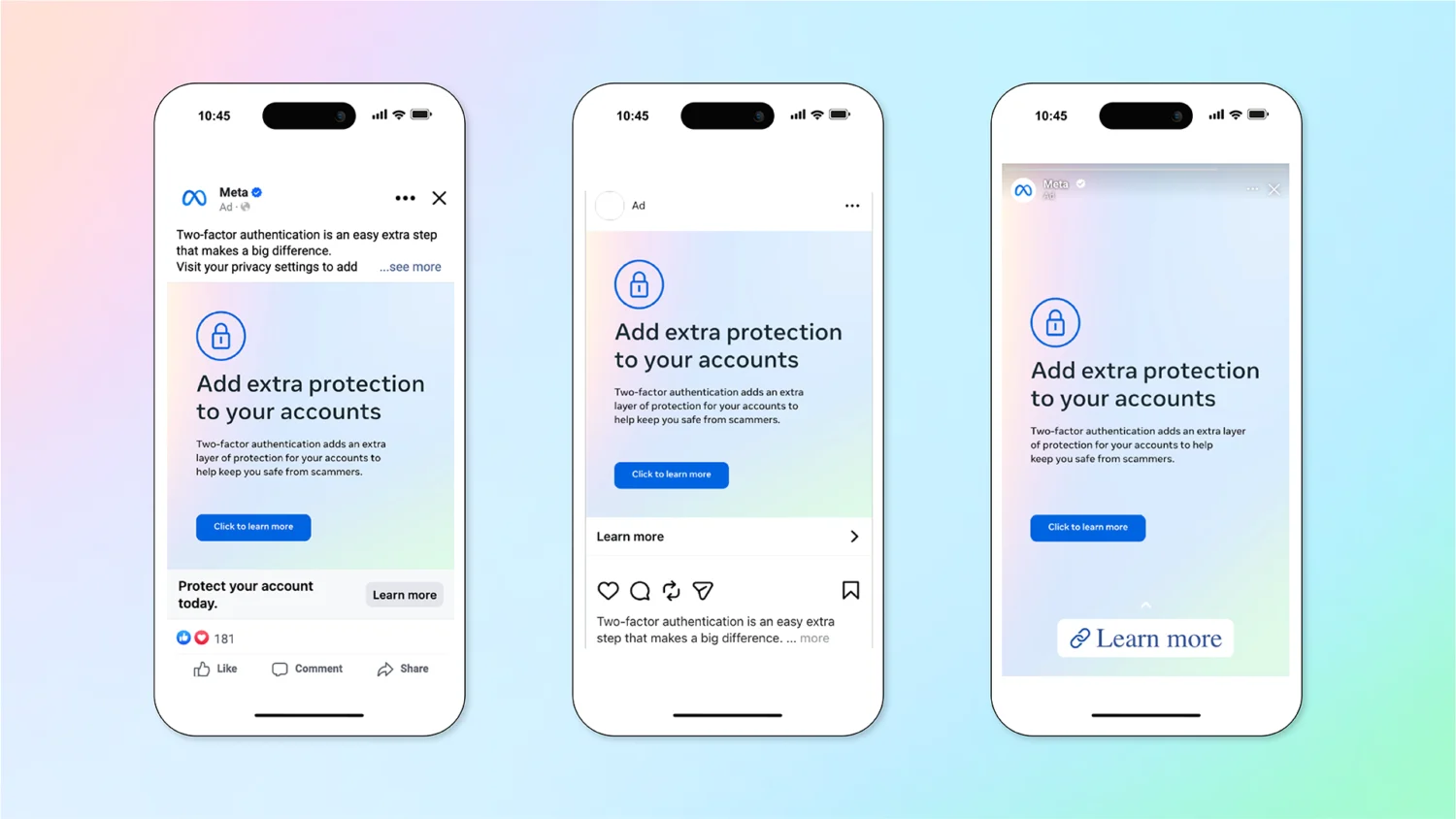
Meta is treating scam prevention as a behavior problem, not just a product problem. Its One Step Ahead campaign combines safety education with practical account protections across Facebook and Instagram in 18 Asia-Pacific markets.
Since launching in May 2026, the campaign has reached more than 303 million people, generated over 1.3 billion impressions and driven 1.2 million clicks to information about safer accounts. That scale matters, but the more interesting move is how Meta is trying to make safety advice feel usable and locally credible.
Safety advice works better when it feels close to home
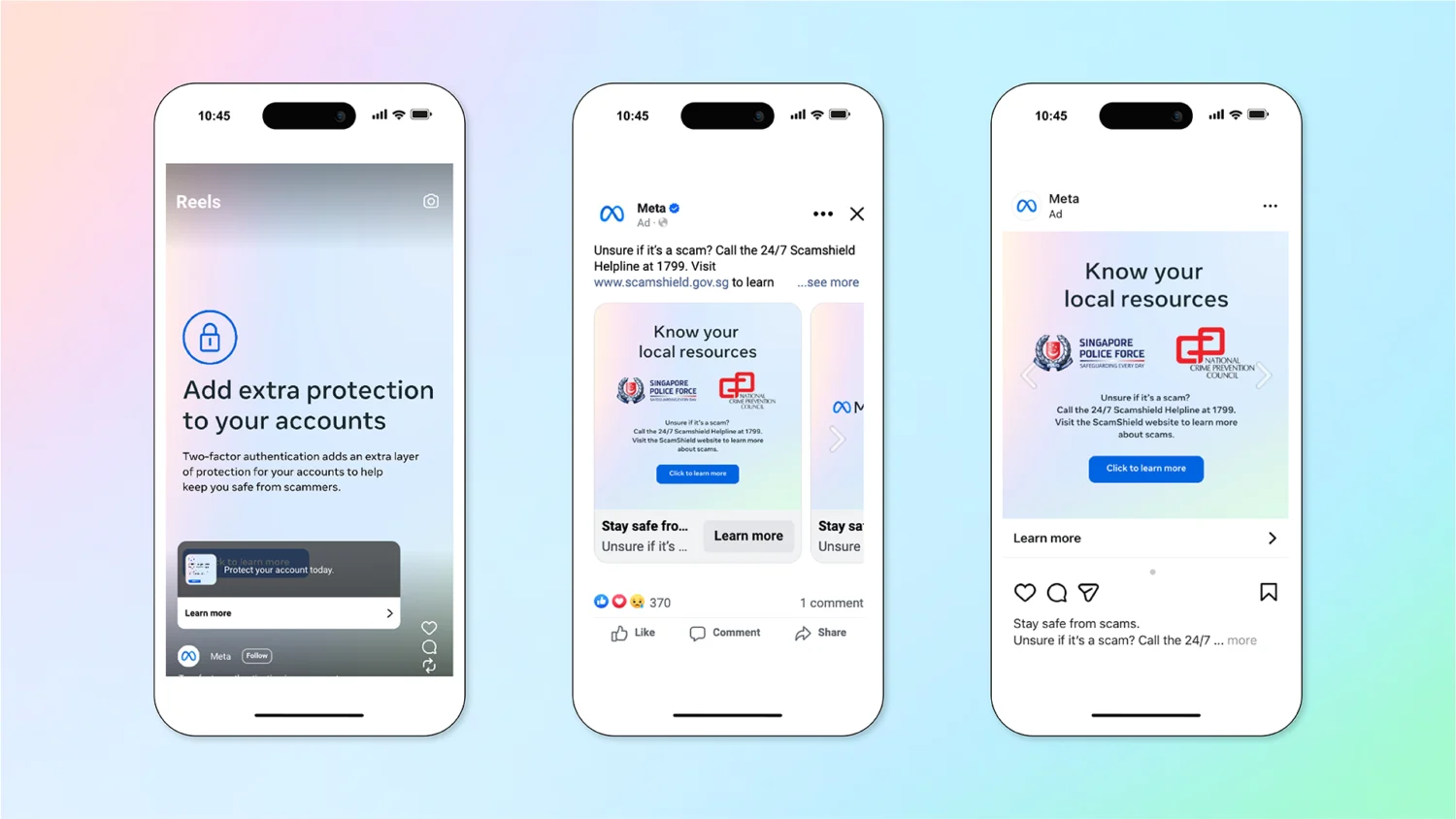
Meta built the campaign with more than 25 government agencies, law-enforcement bodies and safety organizations across the region. Its “Know Your Local Resources” element connected people with reporting and support organizations in their own countries, reaching more than 27.4 million people across 14 markets.
That local layer is doing work that a generic platform warning cannot. Scam advice is easier to act on when it comes from an organization people already recognize, and when it points to the reporting process that actually applies in their country. Meta is effectively borrowing trust from institutions outside its own apps.
The campaign also promotes tools including two-factor authentication, passkeys, Security Checkup, Privacy Checkup, WhatsApp’s Linked Device Warning and WhatsApp group privacy settings. The list is practical rather than futuristic. It focuses on small steps that reduce the damage caused by stolen passwords, suspicious logins or unauthorized account linking.
The platform is becoming part of the safety education system
Meta says the campaign will continue throughout 2026, with more locally tailored resources and partnerships planned. That turns the initiative from a one-off awareness push into an ongoing layer around the company’s products.
There is a clear strategic implication for platforms and brands: trust cannot be repaired only through interface controls. People need to understand what a warning means, know which action to take and believe the source giving them that advice. Meta’s campaign suggests that safety education is becoming part of the product experience, even when it happens through advertising and partnerships rather than inside the settings menu.
For marketers, the lesson is less about copying a public-safety campaign than recognizing the value of trusted distribution. When the behavior is high-stakes and confusing, the most effective message may be the one that connects a platform feature to a local institution people already know.
Also Read: