


LinkedIn’s latest posting advice looks, at first, like another reminder to be consistent. Post often. Ask better questions. Reply quickly. Nothing too surprising there.
But the more interesting signal is what now sits behind that advice: LinkedIn content is not only being optimized for the feed. It is increasingly being shaped for AI systems that may read, reference, and surface posts far beyond the original scroll.
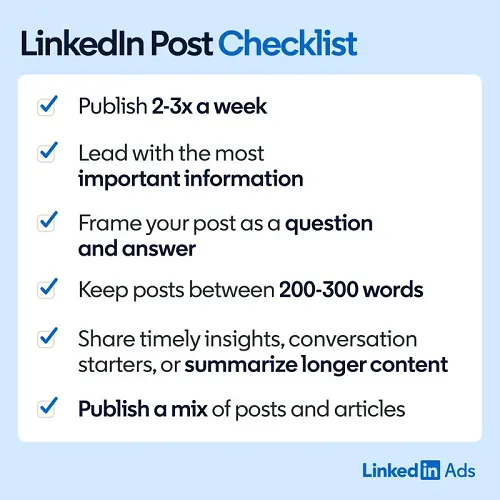
LinkedIn has shared a new checklist for effective posting, aimed at both creators and brands, alongside guidance on how posts can become more useful for AI chatbot citations.
The new LinkedIn checklist is built around consistency
LinkedIn’s baseline advice is clear: creators and brands should aim for two to three posts per week, and each update should include a question that encourages discussion. The platform is also putting renewed weight on regularity, saying that consistency is one of the biggest drivers of reach because posting regularly signals that an account is an active, valuable contributor.
That is the feed logic LinkedIn has been training users to understand for years. Activity creates signals. Signals create distribution. Distribution creates more activity.
But the details matter. LinkedIn is also advising users to write longer updates when they want to maximize interest, to engage with comments within the first hour after posting, and to repurpose top-performing posts into new formats.
In other words, the platform is not just rewarding the post itself. It is rewarding the behavior around the post. A good LinkedIn update is now a piece of content, a conversation starter, and a source of follow-up material.
For brands, that makes the platform feel less like a place to drop announcements and more like a place to operate a visible point of view. The post is the beginning. The comment section and the reuse plan are part of the format.
Now the first line matters even more
The AI angle makes this more interesting. LinkedIn VP of Marketing Davang Shah recently shared advice on making LinkedIn posts easier for large language models to understand and potentially cite.
One specific detail stands out: LinkedIn uses the first line of a post to generate its URL. Shah’s advice is to avoid starting with generic hashtags like #socialmedia, because that can create weaker URLs and dilute the keyword signal. Instead, the first sentence should be clean, strong, and keyword-led.
That changes the job of the opening line. It still needs to stop a human reader in the feed. But it also has to describe the post clearly enough for machines, search systems, and citation layers to understand what the content is about.
Shah also recommends clear formatting, short paragraphs, and lists or numbered sequences where useful. He also points to the importance of engagement signals in the first 24 hours, especially high-quality comments that add to the discussion.
This is where LinkedIn starts to look different from other social platforms. A post can be timely, personal, and conversational, but it can also become a structured professional artifact. Something discoverable. Something quotable. Something an AI tool may use as context.
The practical shift is small but important: creators and brands should stop treating LinkedIn posts as disposable updates. The best posts now need a clear opening, a readable structure, and a conversation worth preserving. The strategic consequence is that LinkedIn is turning professional posting into a public knowledge layer, and the accounts that write clearly may be the ones AI finds easiest to trust.
And keep in mind, LinkedIn wants you to maximize AI visibility.