The Laughing Cow has been smiling for more than a century. So what happens when one of the world’s most recognizable brand mascots suddenly stops laughing?
People notice.
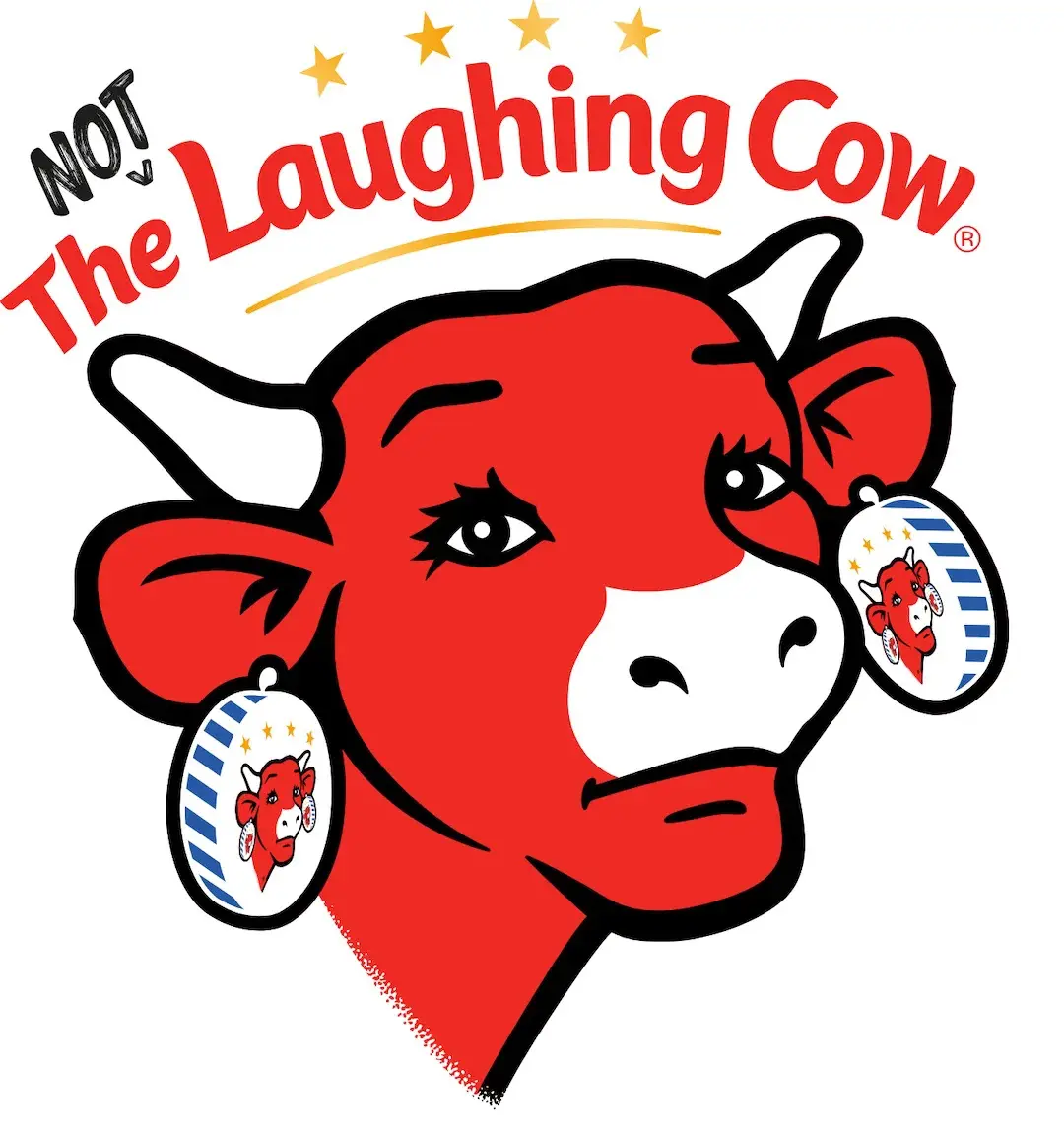
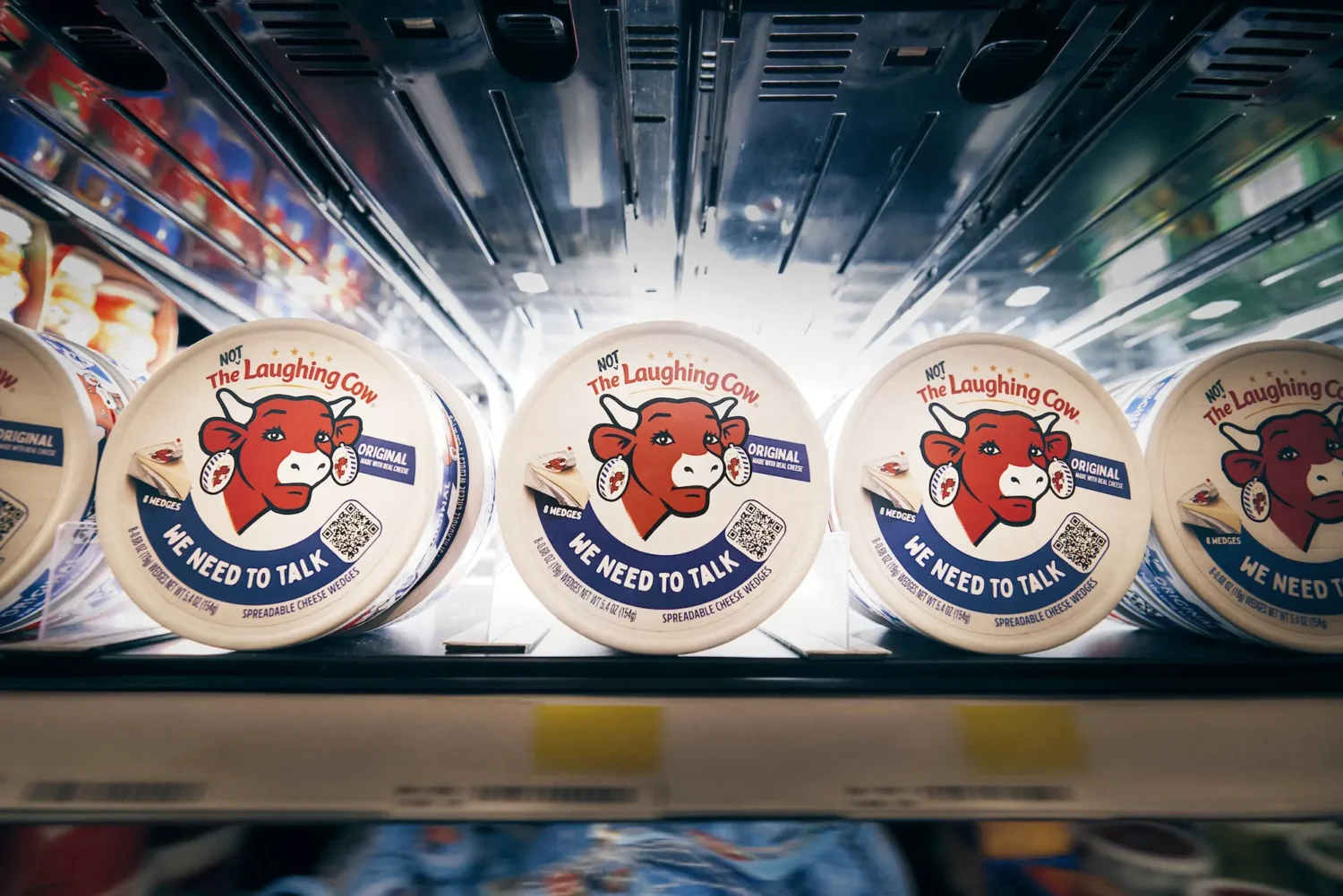
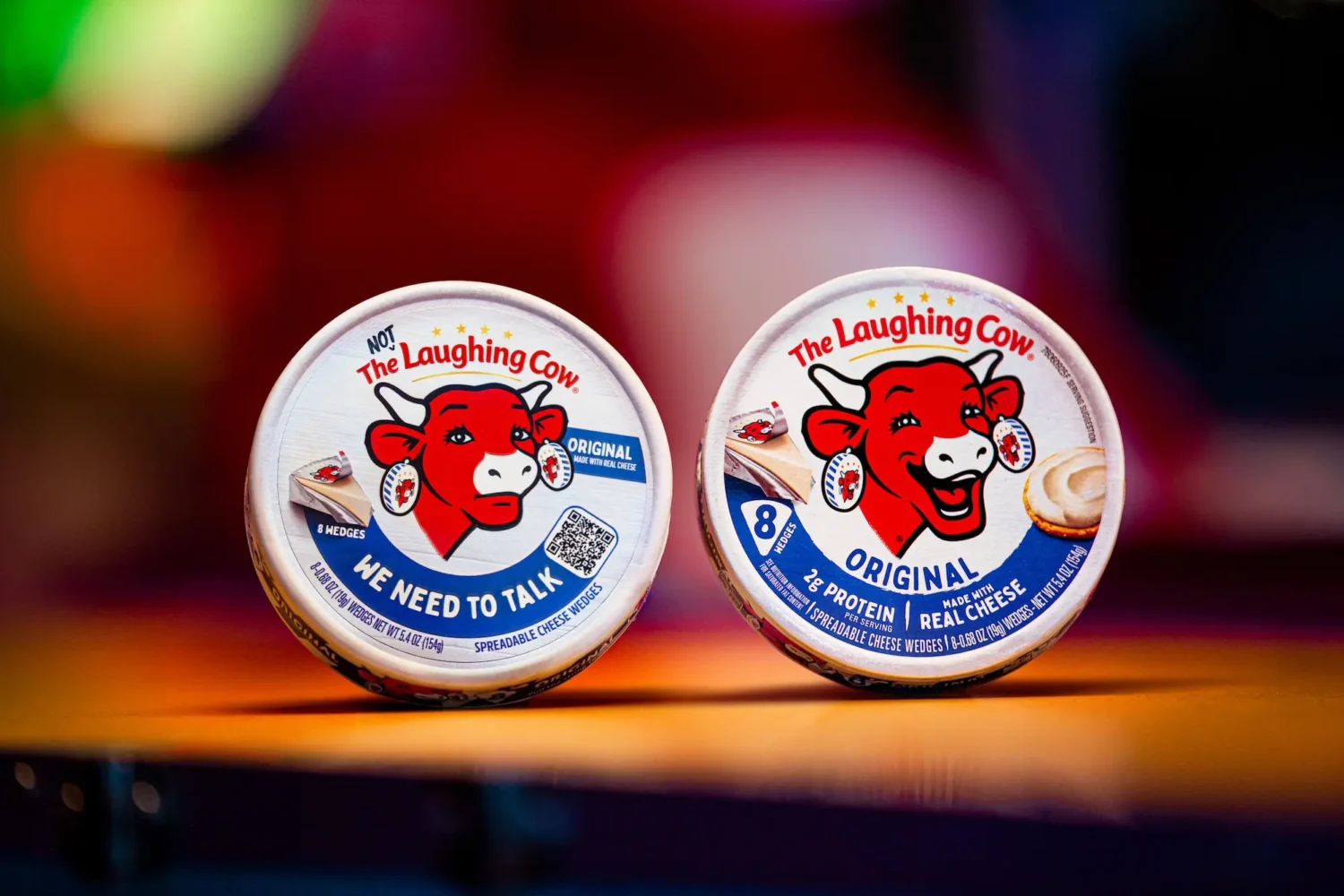
Bel Brands USA has launched The Not Laughing Cow, a campaign that temporarily removes the famous smile from its iconic red cow. Select packages of its Creamy Original cheese wedges now feature a noticeably serious-looking mascot, accompanied by a mysterious message: “We need to talk.”
There is no new product, no announced change to the cheese itself and, so far, no explanation for the missing smile. Instead, Bel has turned one of its strongest brand assets into the beginning of a mystery.
When Removing A Brand Asset Becomes The Creative Idea
Most brands spend enormous amounts of time and money building distinctive visual assets. Once established, the conventional wisdom is to protect them, repeat them and make sure they appear consistently everywhere.
The Laughing Cow is doing almost the opposite.
Created in France in 1921, the brand has spent more than a century building recognition around its smiling red mascot. The illustration, its distinctive earrings and its instantly recognizable expression have become central to the brand’s identity.
Now Bel is temporarily removing the one feature people most associate with the character.
The result is surprisingly effective. The cow is still red. The packaging is still recognizable. The product is exactly where consumers expect to find it. But something is clearly wrong.
By changing just one element, Bel creates an immediate reason to look again at something shoppers have probably stopped consciously noticing.
Turning 4,700 Stores Into A Mystery Campaign
The campaign extends well beyond redesigned packaging.
According to reporting by Creapills, the special packages are appearing in more than 4,700 stores across the United States. Each features a QR code directing shoppers to TheNotLaughingCow.com, where the mystery continues through dedicated campaign content.
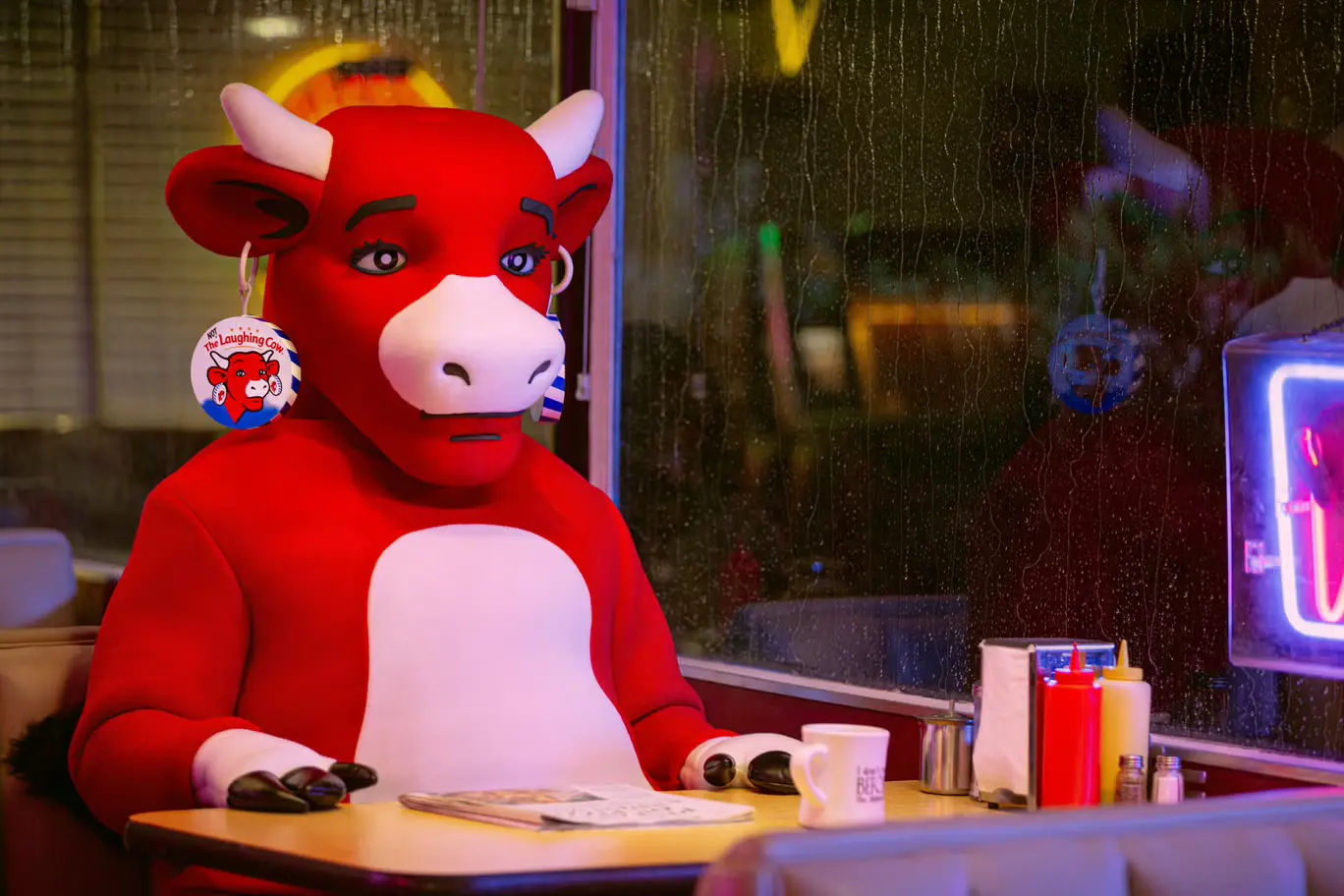
The brand has also released videos showing its normally cheerful mascot looking distinctly miserable. In one, she sits alone in a diner. In another, she appears dejected on a playground swing.
Rather than immediately revealing why the cow has stopped laughing, Bel is inviting people to follow the story and speculate about what might have happened.
It is a simple but effective way to connect physical packaging, social content and digital participation.
The supermarket shelf becomes the first encounter. The QR code creates the next interaction, while the unanswered question gives people something to discuss and share.
Bel has effectively turned a familiar packaging detail into a campaign that unfolds across multiple channels.
The Brand Code Is Doing All The Work
There is something particularly interesting about the creative restraint behind this campaign.
Bel has not introduced a new mascot, invented an elaborate fictional universe or created an unexpected collaboration. It has simply changed the expression of a character consumers have known for generations.
And the entire idea depends on that existing familiarity.
A relatively unknown brand could put a serious-looking cow on its packaging tomorrow and nobody would necessarily notice. For The Laughing Cow, the absence of a smile becomes an immediate disruption because the brand has spent over 100 years making that smile meaningful.
This is what happens when a distinctive brand asset becomes strong enough to carry an entire creative idea.
The campaign also demonstrates how brands can create new stories without continually inventing new visual identities. Sometimes, changing the way people experience an established asset is more interesting than introducing another one.
What Is The Laughing Cow Trying To Tell Us?
There is still one important unanswered question: why has the cow stopped laughing?
Creapills suggests the campaign could be connected to World Mental Health Day on October 10. The serious expression, the imagery of an apparently unhappy mascot and the invitation to talk would certainly be consistent with that interpretation.
However, Bel has not confirmed the campaign’s underlying message. Its official announcement deliberately leaves the mystery unresolved, promising that the mascot will explain herself when she is ready.
Whatever the eventual reveal, it will be important to how the campaign is ultimately judged. The creative idea has successfully established an intriguing question. The answer will need to justify the attention it generates.
For now, Bel has achieved something brands rarely manage: making consumers question a visual identity they have seen thousands of times.
After more than a century of using a smile to communicate joy, The Laughing Cow has discovered that removing it can communicate something entirely different.
Sometimes, the strongest use of a brand asset is knowing when to take it away.
Also Read: