


For nearly 25 years, a small crocodile has been hiding on the side of every pair of Crocs.
Now, he finally has a name, a personality and a pair of shoes of his own.
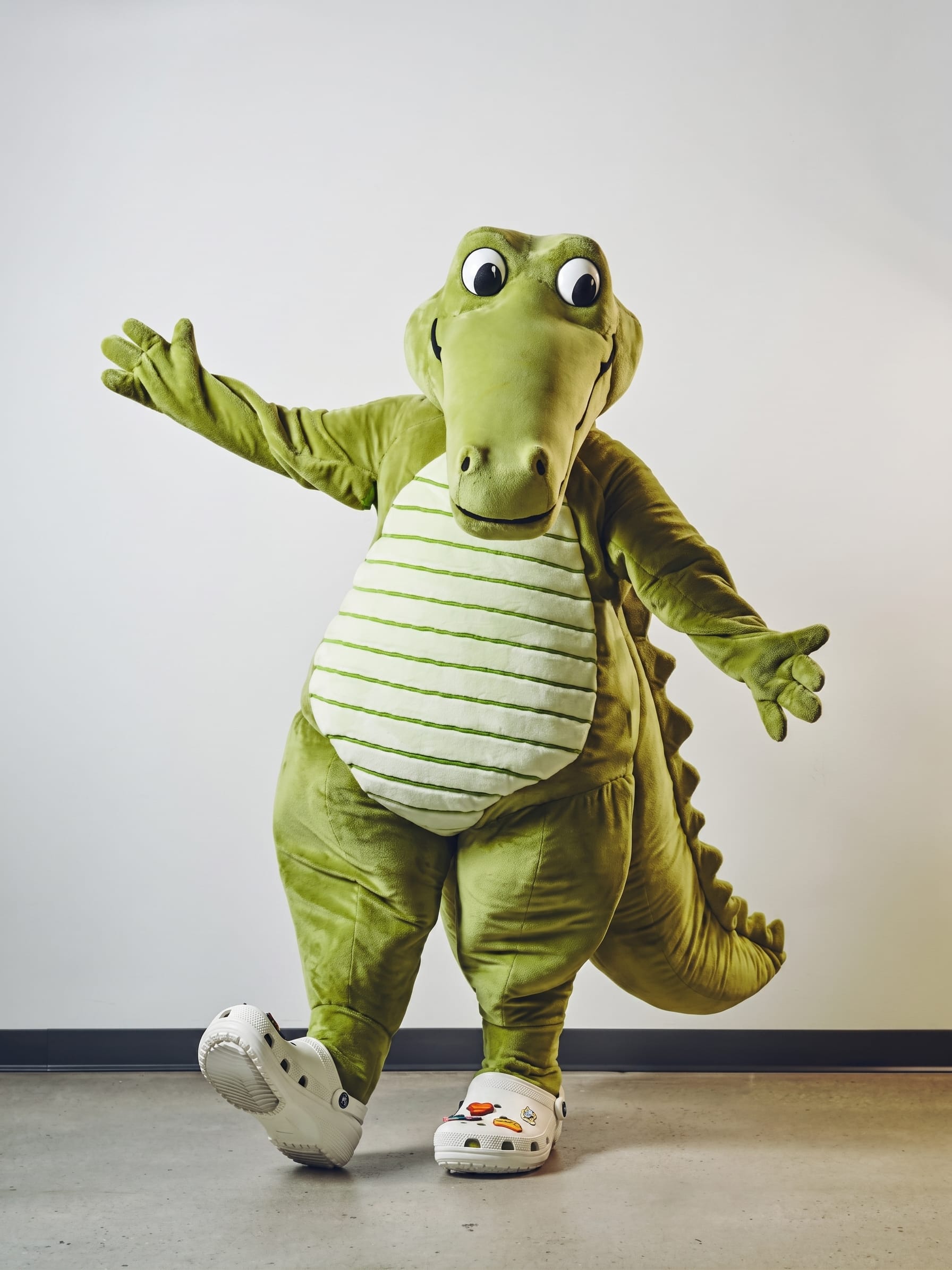
Crocs has introduced Niles, a six-foot-tall crocodile mascot inspired by the character that has appeared in the brand’s identity since its first shoes were sold in 2002.
The mascot wears a pair of white Crocs decorated with Jibbitz charms, naturally, and is being positioned as a permanent character within the brand rather than the face of a single campaign.
Before revealing him, Crocs spent a month leaving clues across its channels. A three-foot egg appeared in the background of TikTok Shop livestreams, while smaller references were hidden inside the brand’s social identities.
The teasing eventually led to a 24-hour countdown and Niles’ live hatching across Crocs’ social channels.

A Mascot With A Day Job
Crocs is treating Niles more like a sitcom character than a conventional advertising mascot.
He has his own personality, interests, ambitions and flaws. He also does not speak, allowing his physical comedy and slightly awkward behavior to work across different countries and languages.
An original weekly microseries filmed at Crocs headquarters follows Niles as he attempts to navigate office life alongside real employees.
In one of his first appearances, Niles bursts from his egg and celebrates, only to discover that he has hatched before the official countdown has finished. Embarrassed, he attempts to put the egg back together and wait.
That small joke immediately gives him more personality than a static character placed beside a product. Niles can make mistakes, enter new situations and develop relationships with the people around him.
He can also appear in social videos, at physical events or eventually within entertainment and product extensions without needing to be reinvented every time.

Crocs Is Building Something It Owns
Crocs has become exceptionally good at using collaborations to enter different corners of culture. Its clogs have been redesigned with everyone from LEGO and Microsoft to M&M’s, Nintendo and major fashion labels.
Those partnerships create excitement, but the cultural property ultimately belongs to somebody else.
Niles gives Crocs a character it completely controls.
The brand can decide what he believes, where he appears, how his personality evolves and which stories he enters. Unlike a celebrity spokesperson or licensed character, he can remain with Crocs for years.
Crocs CMO Carly Gomez describes Niles as a long-term investment in scalable intellectual property that can grow alongside the brand and its community. The company is already planning to use him across content, experiences, entertainment and potential future brand extensions.
That distinction matters. Crocs has not created another campaign asset. It has created a possible storytelling platform.
The Smartest Brand Assets May Already Exist
Mascots are enjoying renewed attention as brands search for recognizable characters that can survive fragmented feeds, participate in internet culture and build emotional familiarity over time.
Duolingo has provided the clearest modern example, transforming its green owl into a chaotic social personality capable of generating stories, memes and real-world appearances.
But what makes Niles particularly smart is that Crocs did not invent him from nothing.
The crocodile was already embedded in the company’s visual identity. The original clog was designed with a silhouette resembling a crocodile’s snout, while the character has appeared on the shoe’s circular rivet since the brand’s earliest days.
Crocs simply took something people had already seen and gave it a larger role.
That continuity makes Niles feel less like a marketing addition and more like a part of the brand that was waiting to be discovered.
As Crocs approaches its 25th anniversary in 2027, Niles gives the company a character capable of connecting its history to whatever comes next.
Sometimes a brand does not need another collaboration, spokesperson or newly invented symbol.
Sometimes the next big idea has been hiding on the product all along.