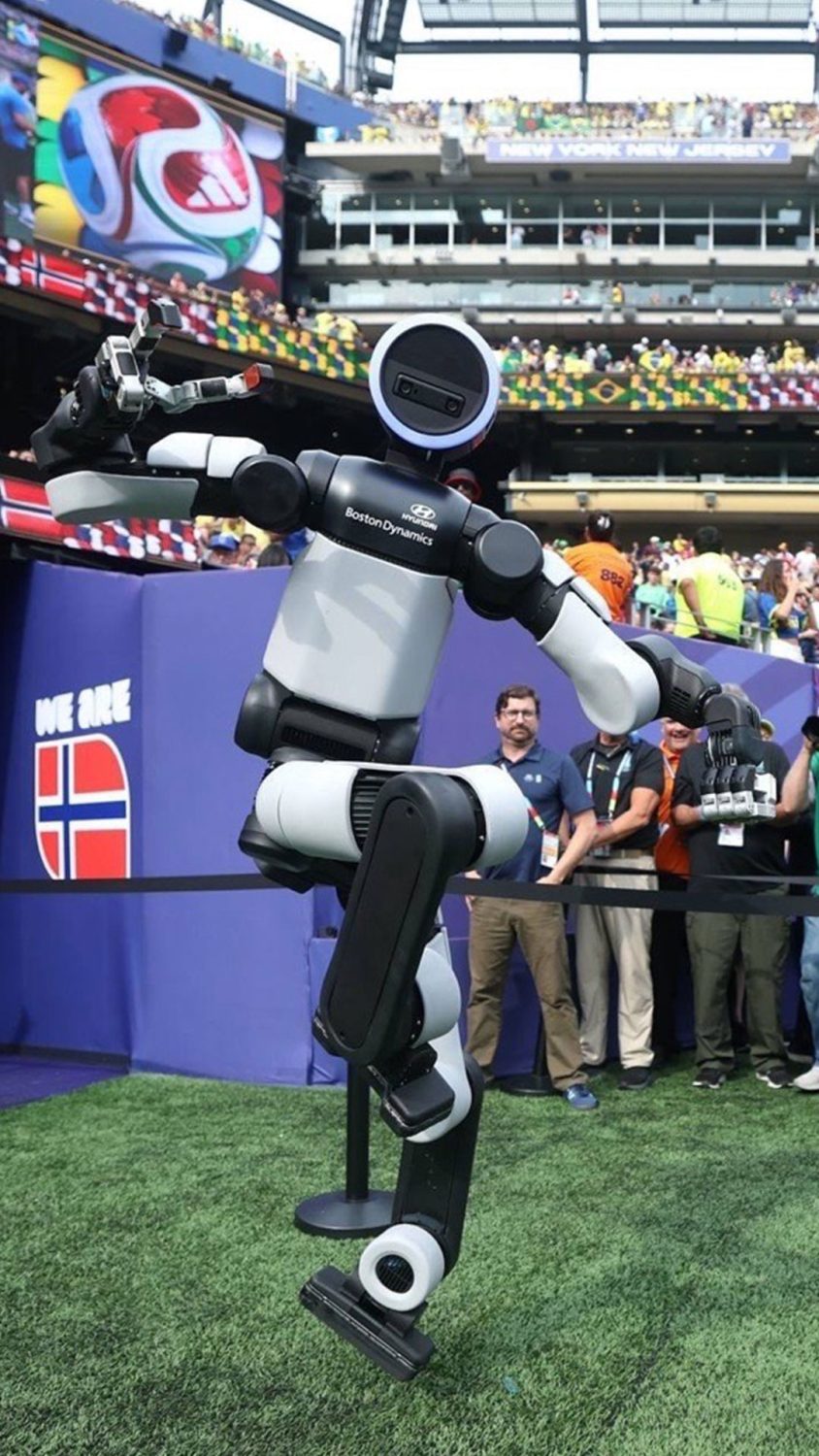
Hyundai did not bring robotics to the FIFA World Cup 2026 as a concept. It brought it onto the pitch.
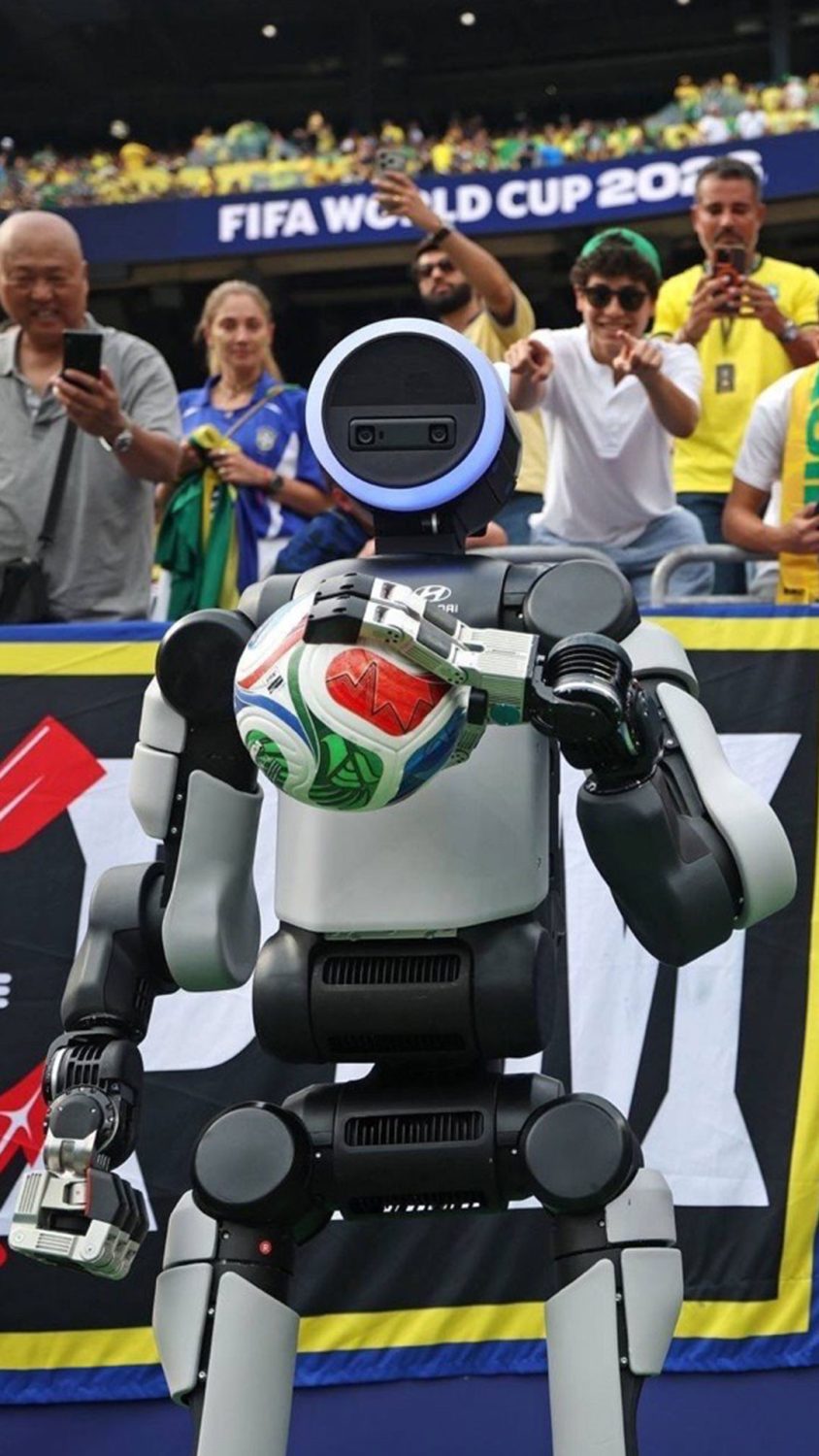
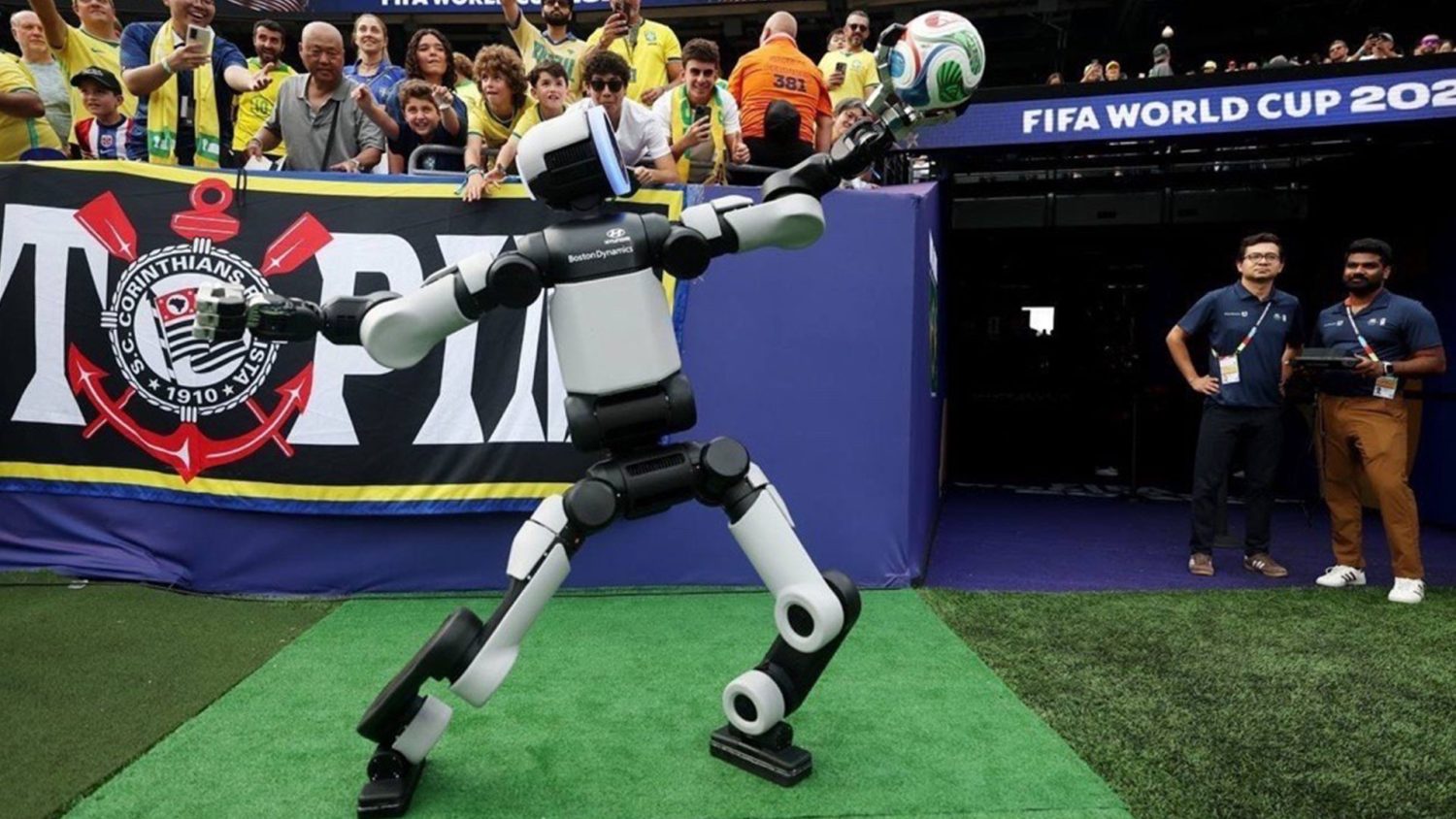
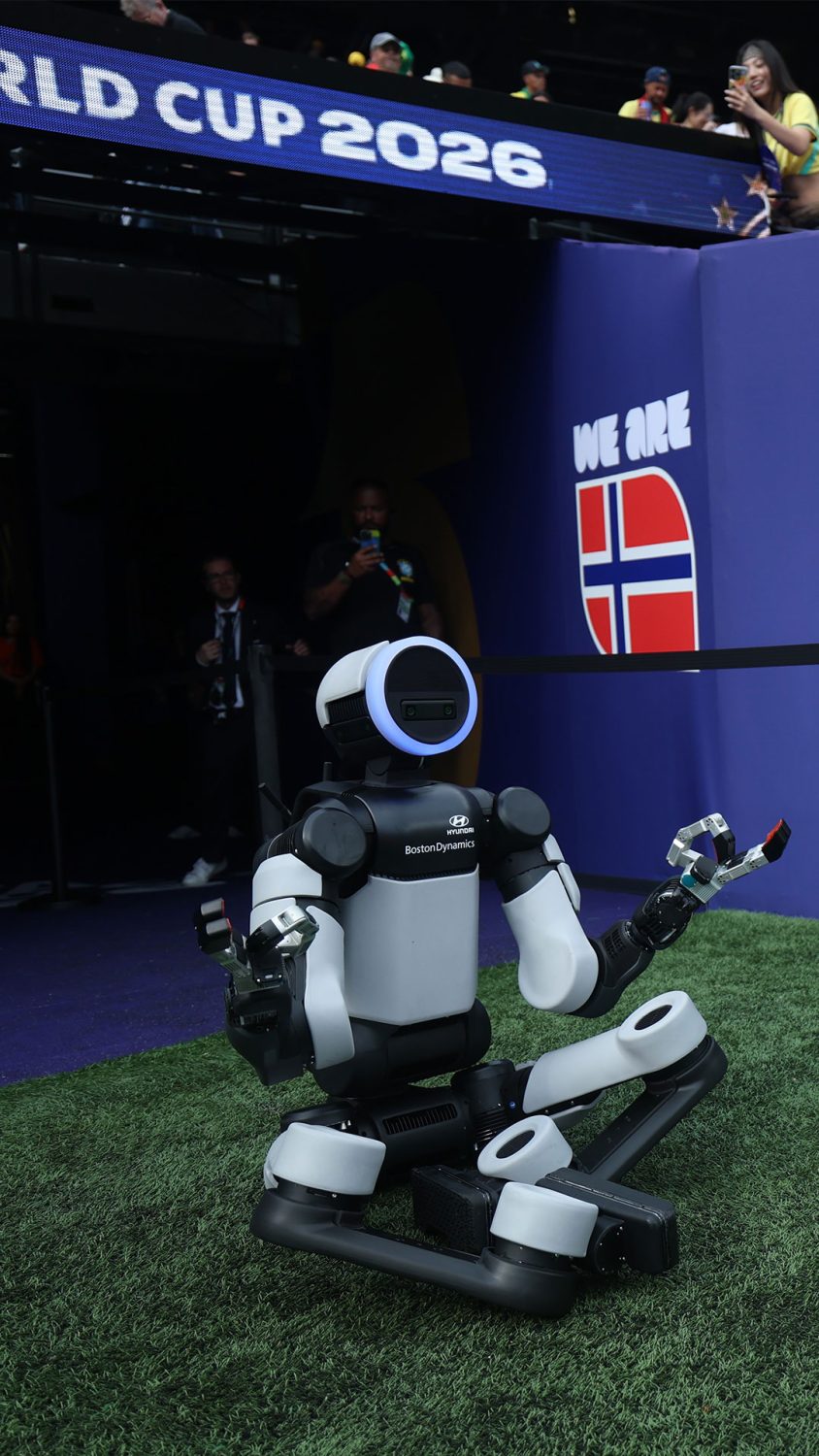
During the Round of 16 match at New York/New Jersey Stadium, Hyundai Motor Company showcased Atlas, the humanoid robot developed by Boston Dynamics, during a live match environment for the first time. As the tournament’s Official Robotics Partner, Hyundai used the moment for what it describes as the first-ever robotics-powered halftime activation on football’s biggest stage.
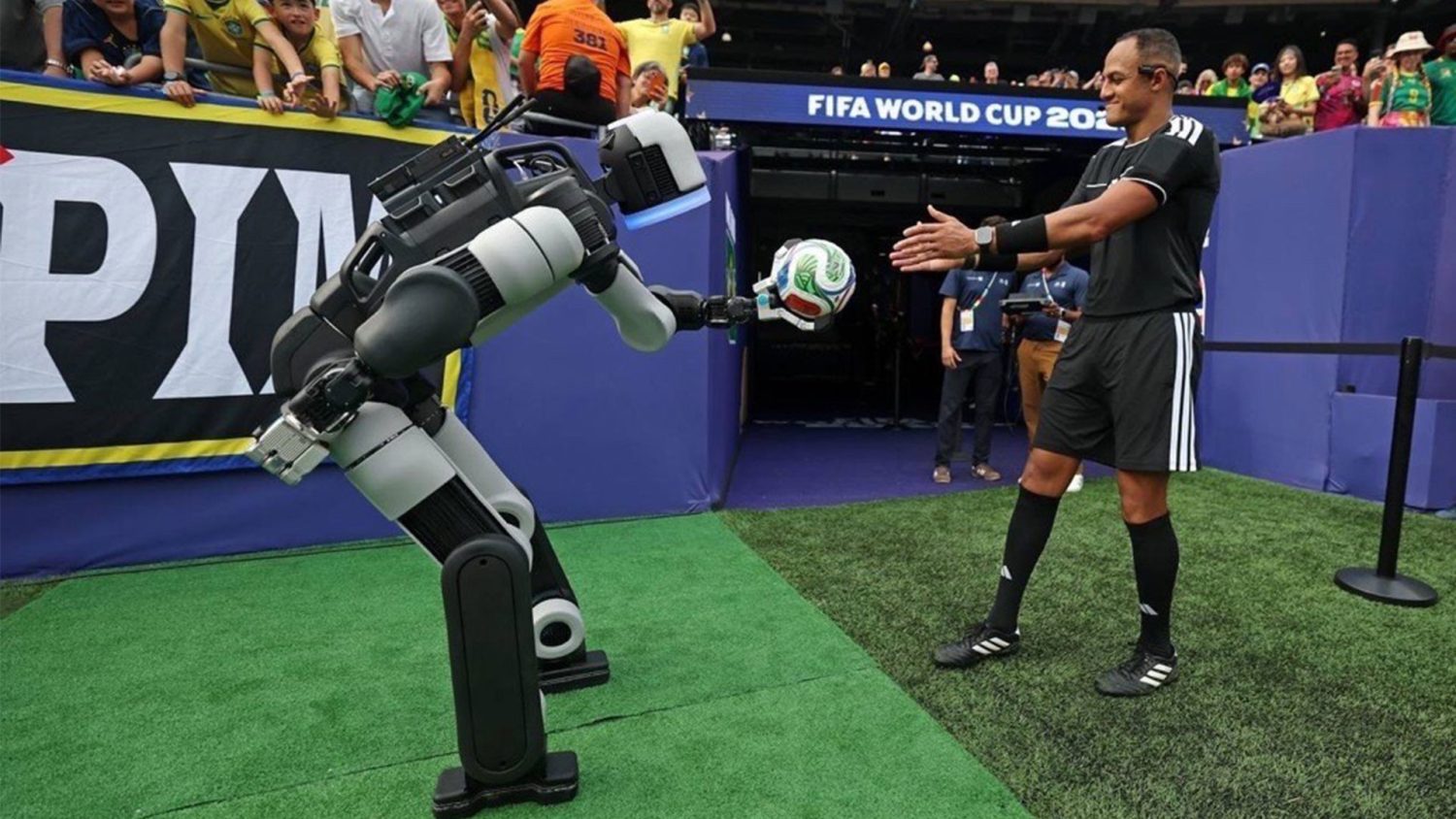
The robot did not just stand there as a futuristic prop. Atlas performed football-inspired goal celebrations and delivered the ceremonial match ball to the referee. Hyundai says the activation also marked the first public demonstration of the real-world movement capabilities of the production version of Atlas, which was first introduced at CES 2026.
That matters because the stage was the message. A humanoid robot moving in a controlled demo is one thing. A humanoid robot performing inside the time pressure, choreography, cameras, crowds, and unpredictability of a live World Cup match is something else entirely.
From tech demo to cultural performance
The smart part of the activation is that Hyundai did not try to explain every layer of the machine first. It made the machine legible through football behavior.
Goal celebrations are instantly readable. A match ball handoff is instantly understandable. Both gave Atlas a role that a global audience could process without needing to care about robotics vocabulary. The more technical story was still there: Hyundai’s announcement points to Retargeting Technology, Reinforcement Learning, and Whole-Body Control as part of how Atlas translated football-inspired movement into a live performance. But the audience saw the outcome first.
That is a useful reminder for any brand working with advanced technology. The public does not adopt a future because it has impressive architecture. It pays attention when the future shows up inside a behavior people already understand.
Hyundai also extended the activation beyond the stadium with “The Training Ground,” a documentary-style film about Atlas’ World Cup preparation, released across its social channels on July 7. That turns the halftime moment into more than a stunt. It gives the brand a second layer of content: not just the reveal, but the making-of, the training, and the attempt to humanize the machine without pretending it is human.
The pitch became the proof
For Hyundai, this is a brand move as much as a robotics milestone. The company has been pushing its “Progress for Humanity” positioning for years, but a live World Cup activation gives that line a very different kind of proof point. It is not a keynote slide. It is a robot walking into one of the most emotionally loaded media environments on the planet.
There is risk in that, too. Live sport is unforgiving. Every pause, misstep, or awkward moment is amplified. But that is also why the activation lands: Hyundai and Boston Dynamics chose a stage where the performance could not feel hidden, edited, or overly protected.
The bigger implication is not that robots are suddenly ready to become halftime regulars. It is that advanced technology is moving into mass culture through performance, entertainment, and branded moments before it becomes ordinary infrastructure. Hyundai’s World Cup play shows how a complex technical capability can become a simple cultural image: Atlas, on the pitch, doing the thing.
For brands, that is the strategic consequence. If the technology is hard to explain, put it in a moment people already know how to read.
Also Read:
Snapchat Turns Ads Into Conversations With AI Sponsored Snaps
LinkedIn Is Using AI To Rethink How Your Feed Actually Works
Instagram Adds “AI Creator” Labels to Boost Transparency