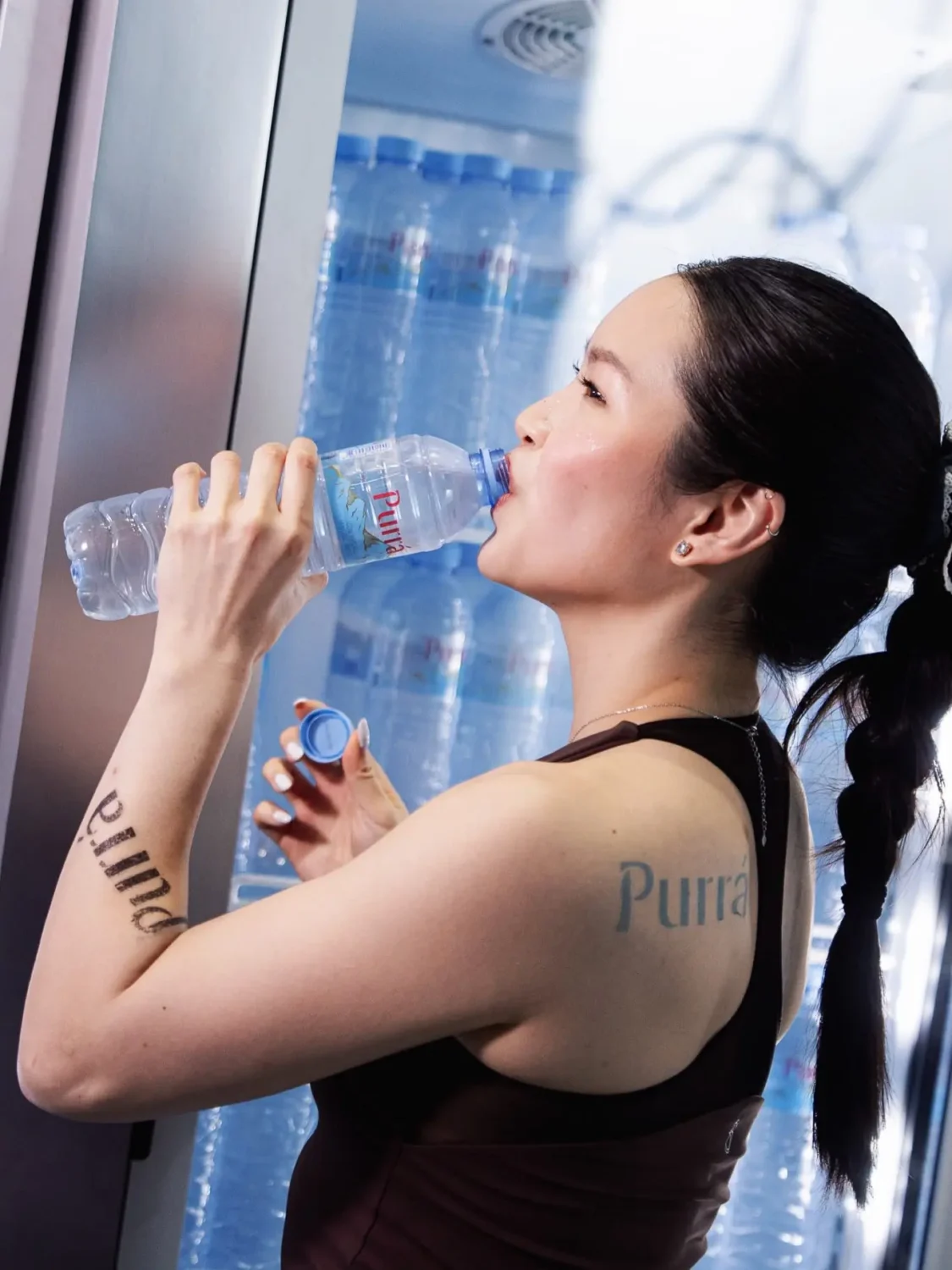
Most water brands arrive at fitness events with bottles, branded refrigerators and hydration stations. Purra Mineral Water decided its product should play a more active role.
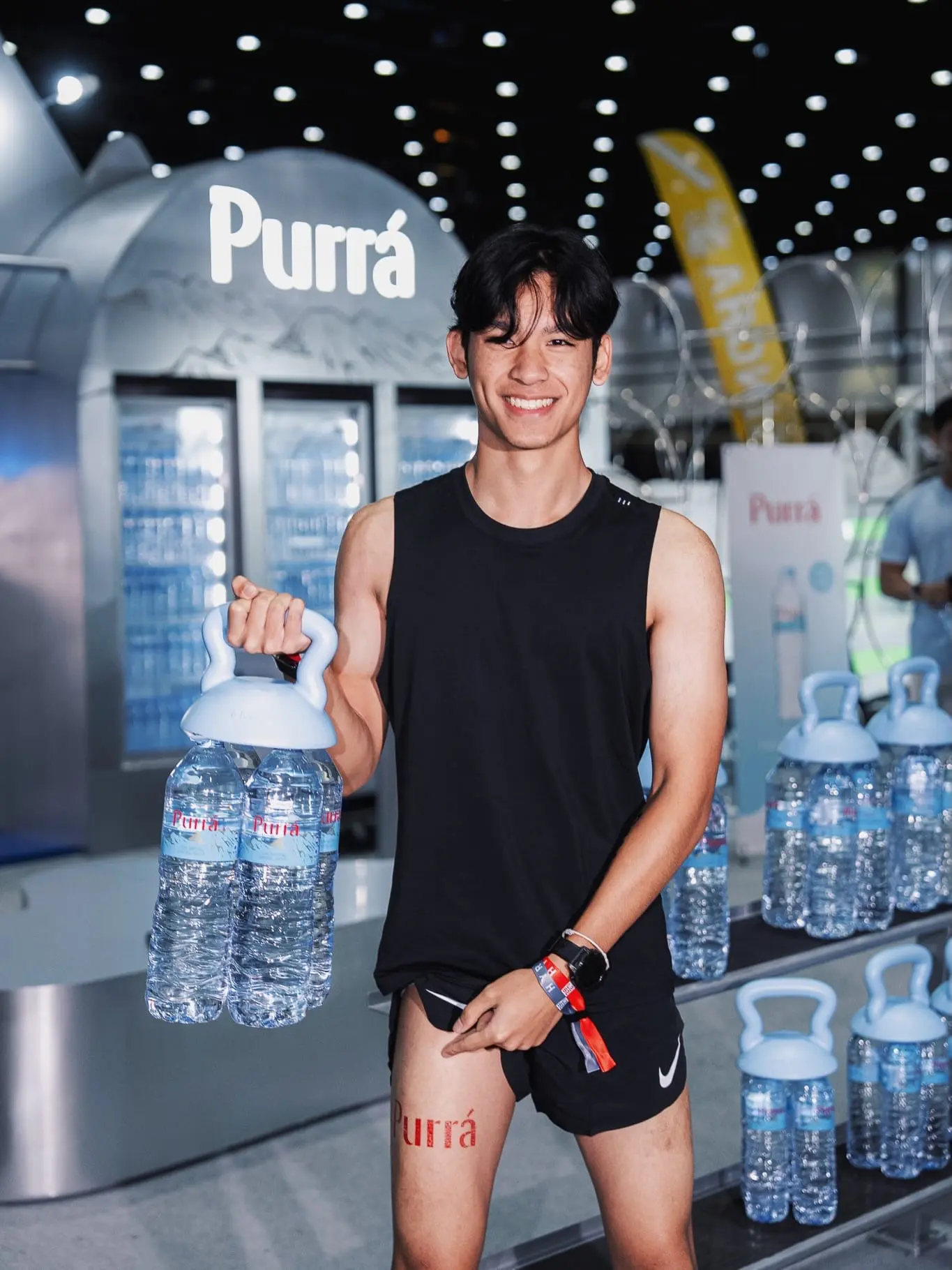
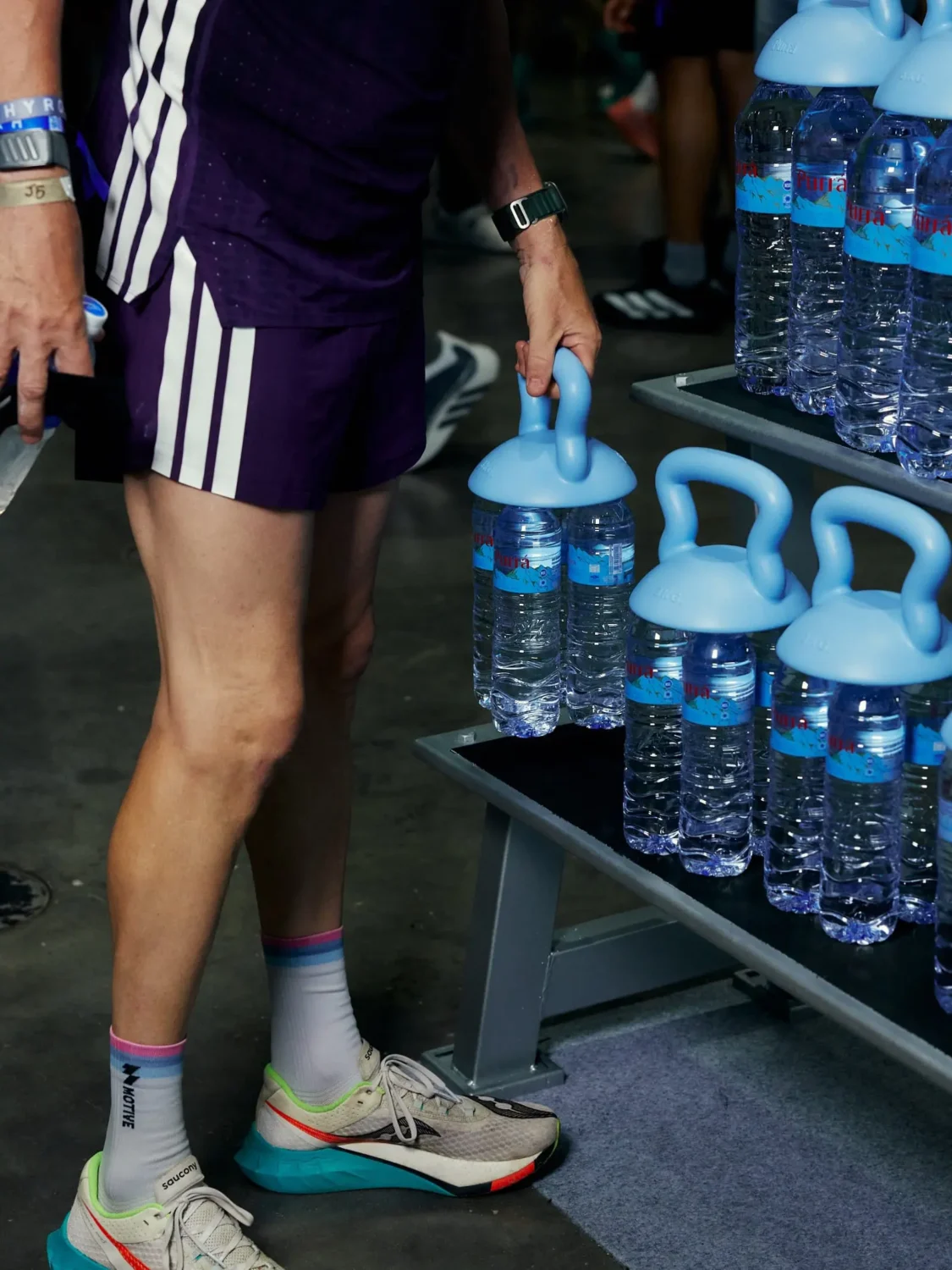
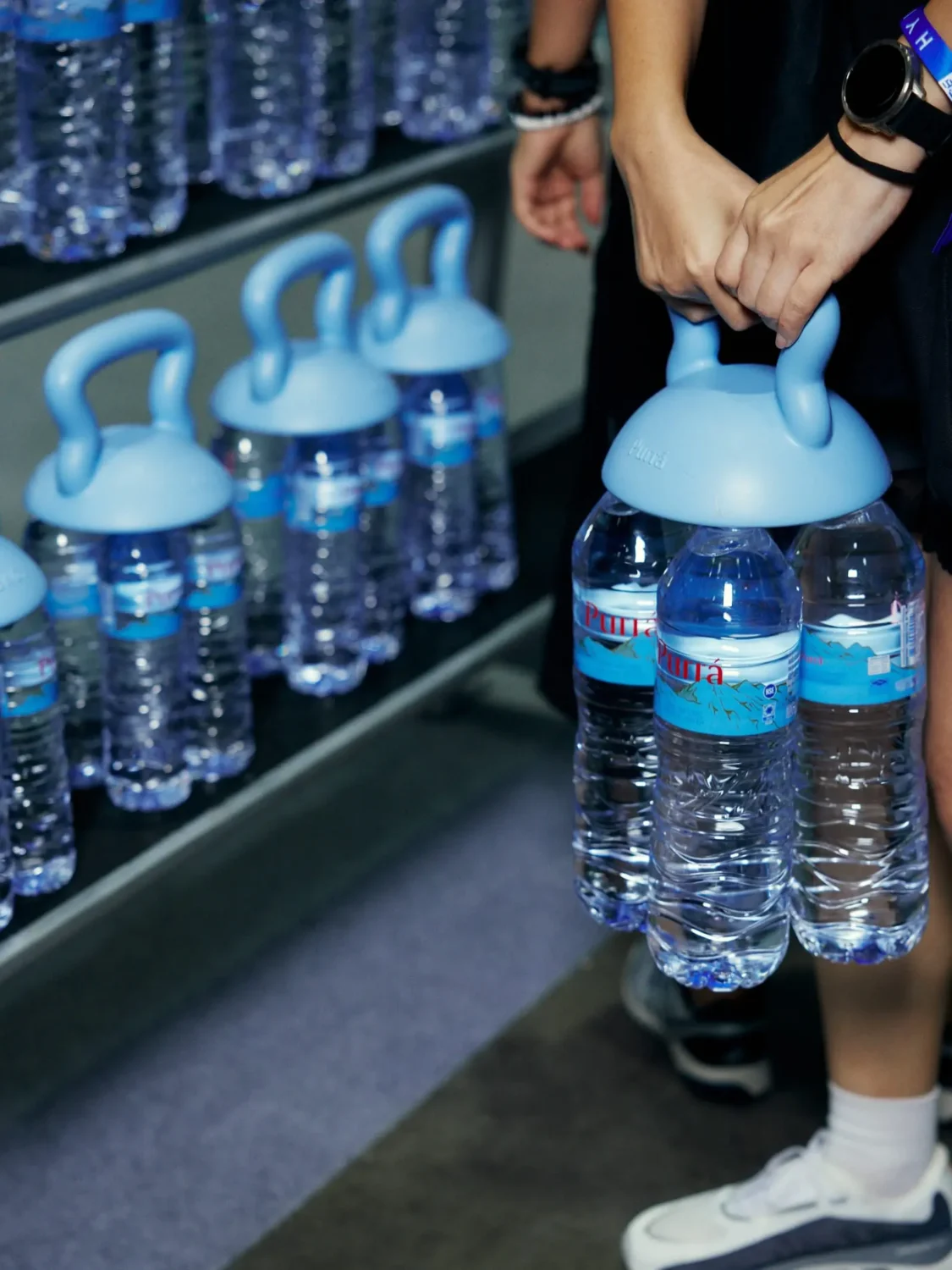
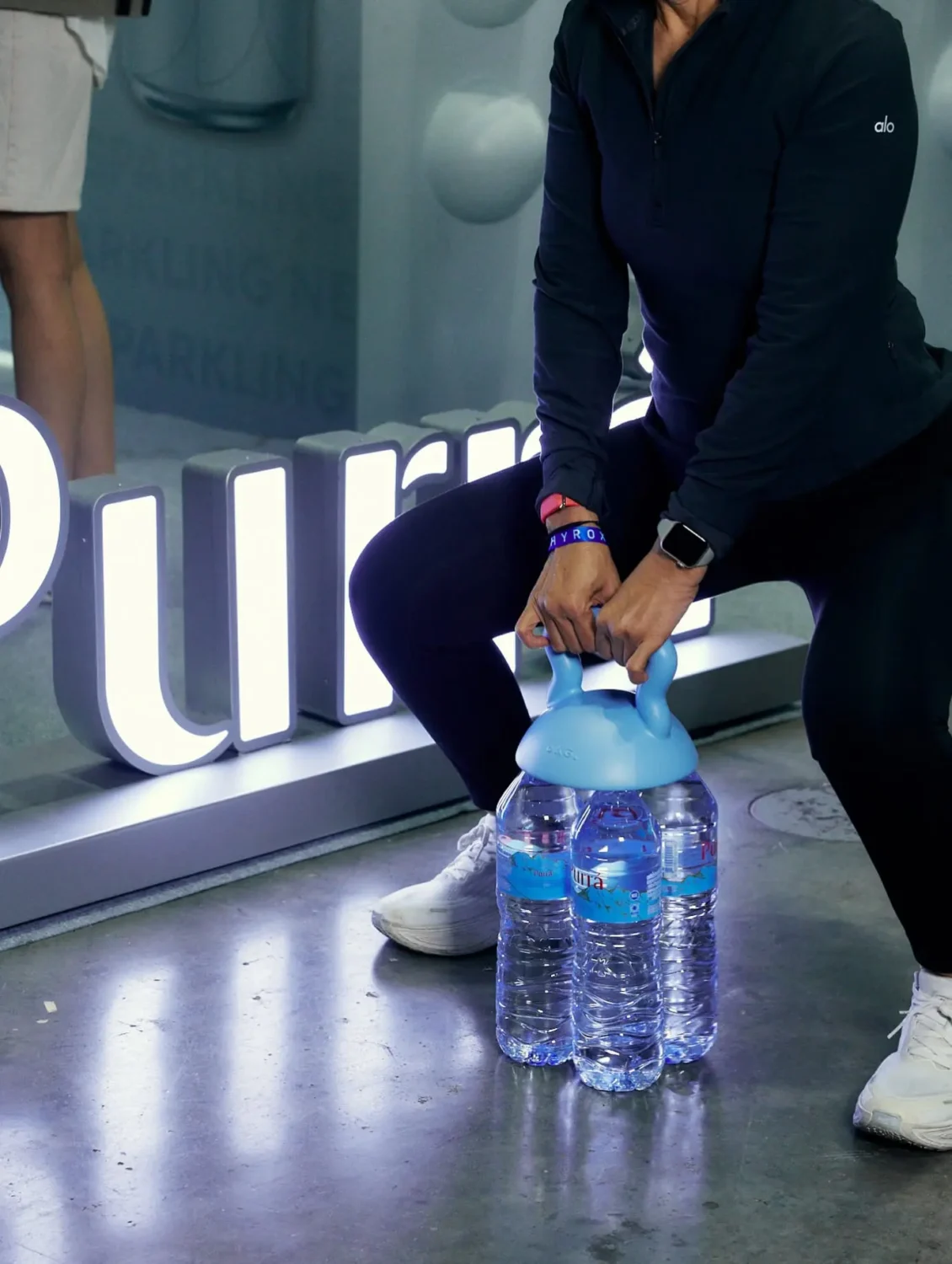
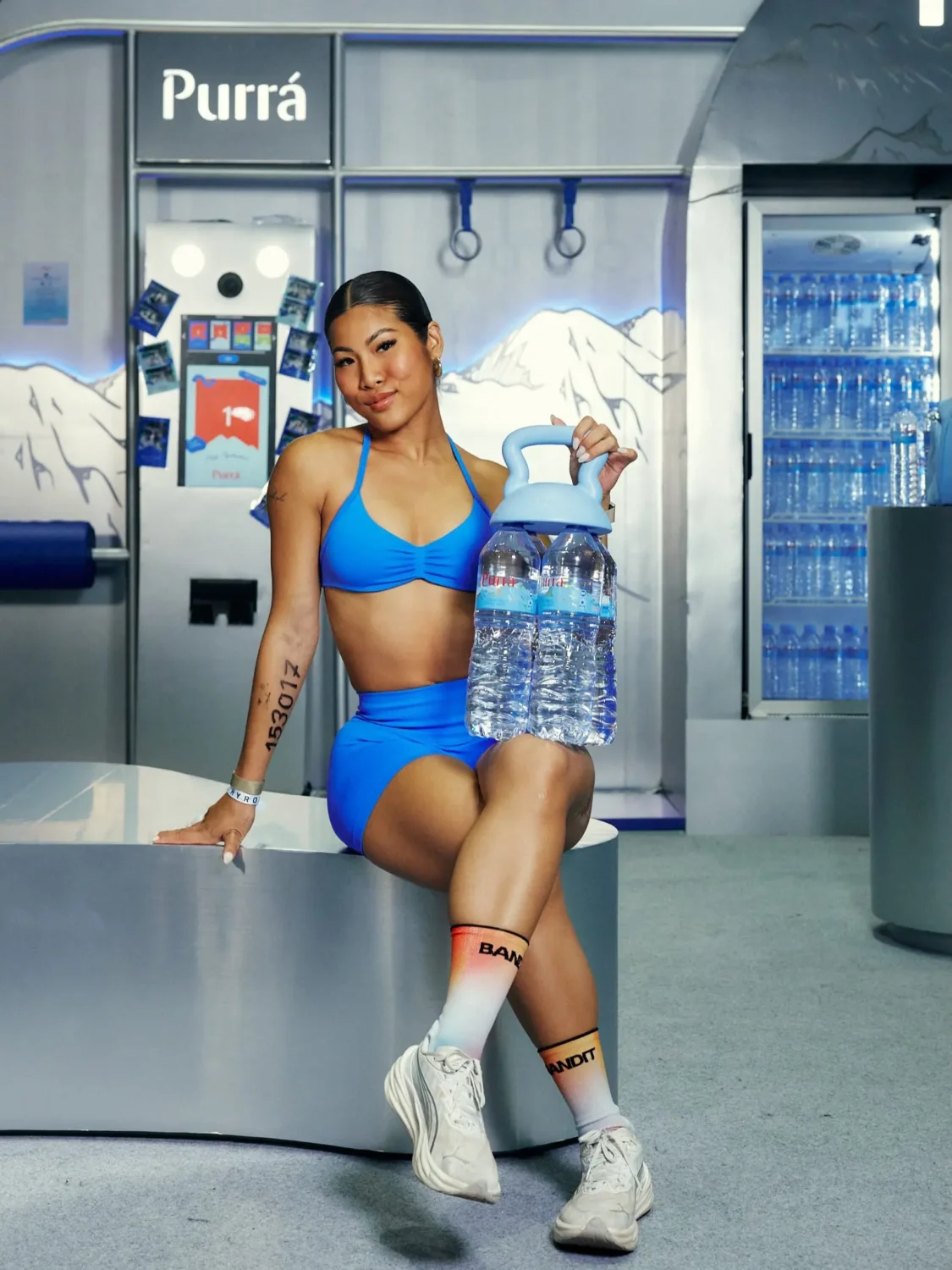
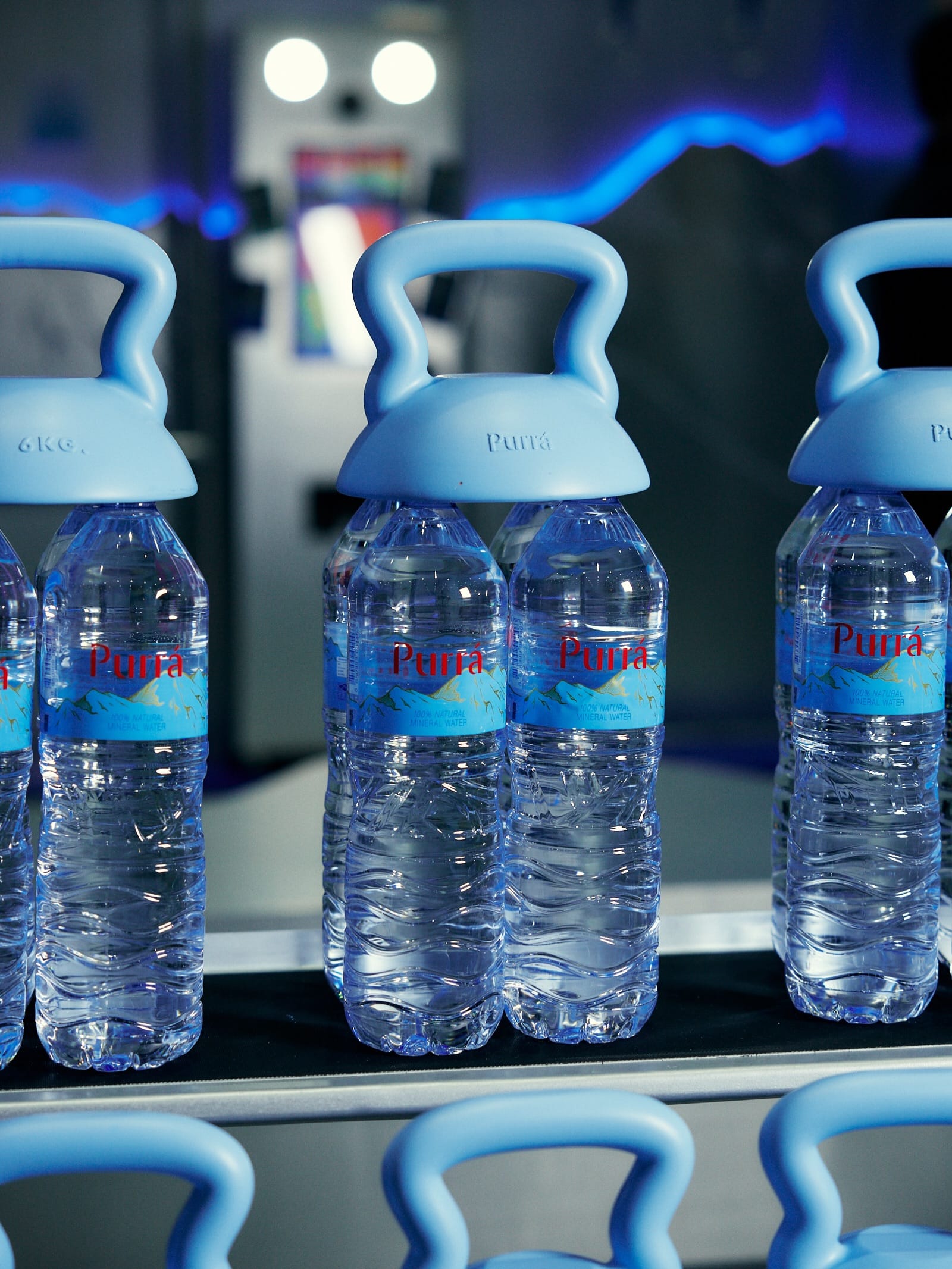
At HYROX Bangkok, the Thai water brand introduced the Purra Kettlebell, a functional piece of training equipment built around four of its own bottles.
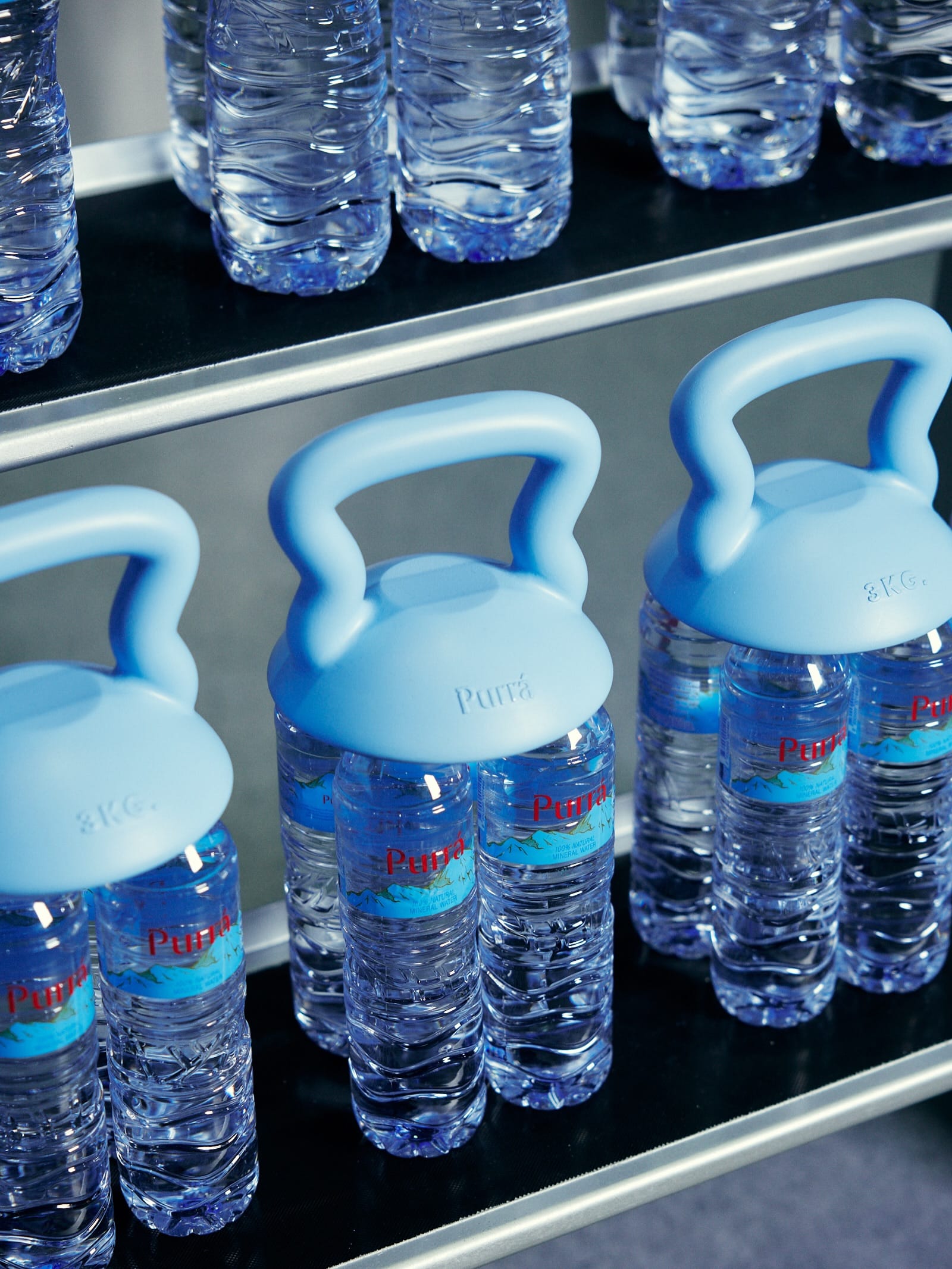
The design consists of a molded blue frame with an ergonomic handle and locking system. Four Purra bottles slot into the frame, creating a kettlebell with a weight that can be adjusted from 3 kg to 6 kg according to how much water each bottle contains.
It is a simple idea, but an unusually effective one: the water is no longer something athletes reach for after exercising. It becomes part of the exercise itself.
The Bottle Becomes The Equipment
The concept borrows from aqua bags, which use water to create adjustable resistance and instability during training. Purra translates that principle into the much more familiar shape of a kettlebell.
That familiar form matters. People do not need an explanation before understanding how the object should be used.
During HYROX Bangkok, athletes and visitors could test the Purra Kettlebell through squats, swings and loaded carries. As the event’s hydration partner, Purra could easily have settled for visibility around the competition. Instead, it created something people could physically interact with.
The sponsorship became an activity, not simply a logo placement.
Brand Utility That Explains Itself
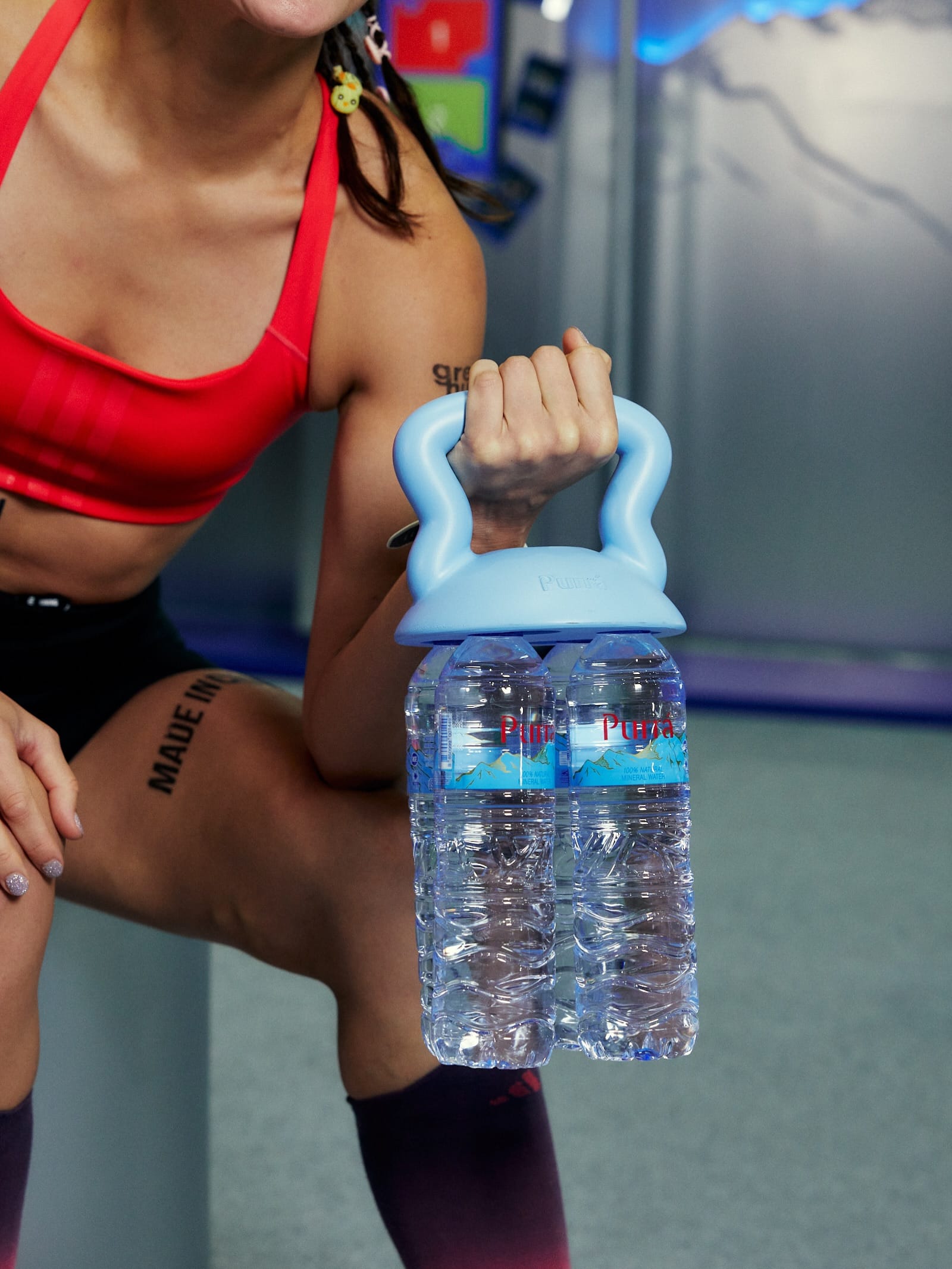
The execution also works exceptionally well as social content because the complete idea can be understood in a single image.
Four water bottles. One handle. Instant kettlebell.
Purra had fewer than 7,000 Instagram followers when the campaign launched, yet the introductory post reportedly attracted more than 30,000 likes within 24 hours.
That response suggests the idea travelled beyond the audience already following the brand. It also demonstrates the value of building an activation around an object that is visually unusual but immediately legible.
There is no complicated mechanic to explain, no app to download and no lengthy campaign film required before the audience understands the joke.
When Sponsorship Becomes Participation
The broader strategic lesson is about the difference between appearing around a cultural behavior and actively participating in it.
Traditional sponsorship asks where a brand’s logo can be placed. Purra asked what useful role its product could play.
That shift turns the product into the media, the experience and the visual hook at the same time. It also makes the association with fitness feel more credible. Purra is not simply claiming a connection to active lifestyles. People are literally training with its bottles.
Could It Become A Real Product?
The reaction has already created interest beyond the original activation. After viewers asked where they could buy the kettlebell, Purra suggested that a wider release could eventually happen.
That is not yet a confirmed commercial launch, but the demand points toward another interesting possibility. The strongest experiential ideas do not always have to disappear when the event ends. Sometimes they can evolve into genuine products.
Purra did not invent water-based resistance training. It found a brand-specific way to transform a familiar product into a useful and highly shareable object.
The same water provides resistance during the workout and hydration when it is over. That is brand utility in its most literal form.
Also read:
Mountain Dew Proves You Can’t Play Without “DEW”
Nike Imagines A Pop-Up Football Stadium That Can Be Installed Almost Anywhere
Guinness Turns Beer Mats Into Selfie Frames For Match Day