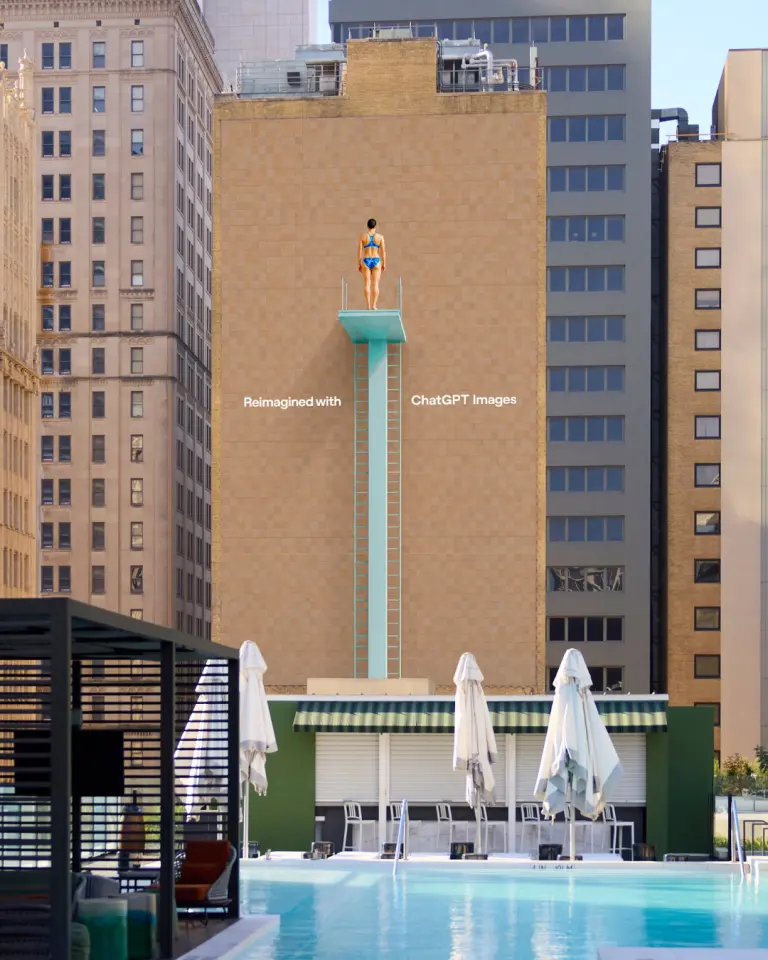
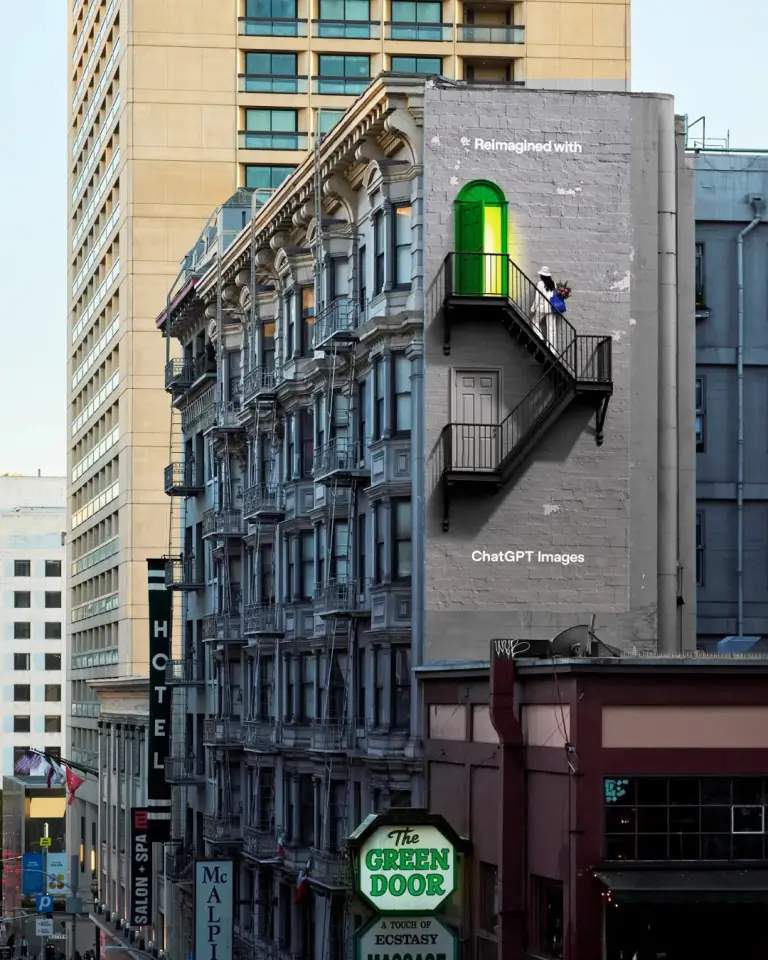
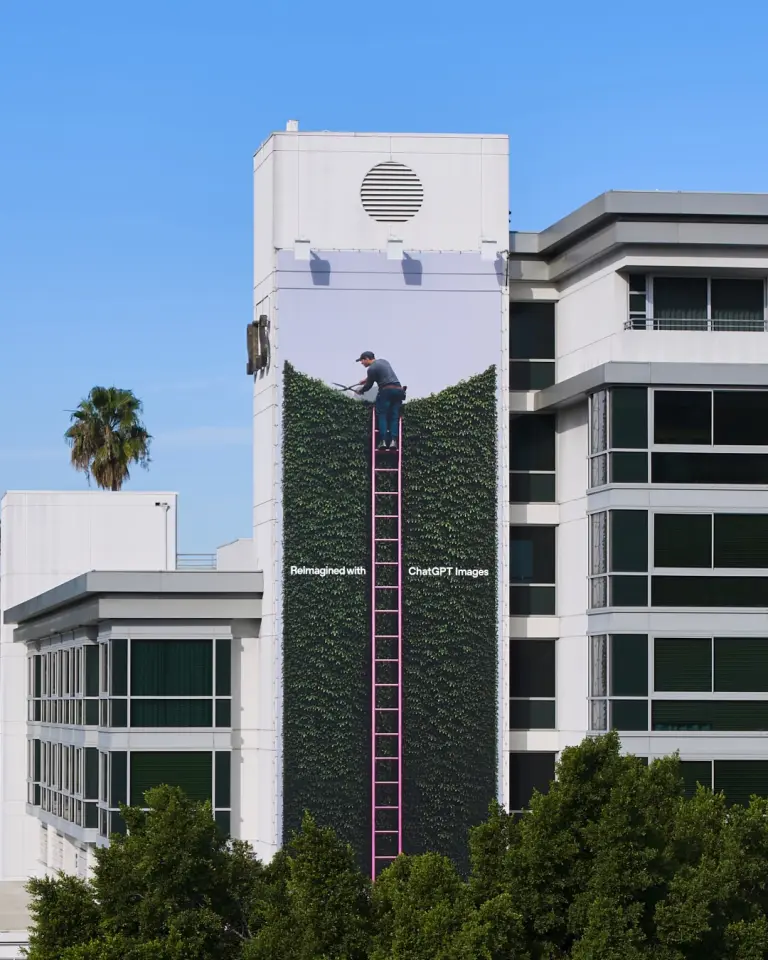
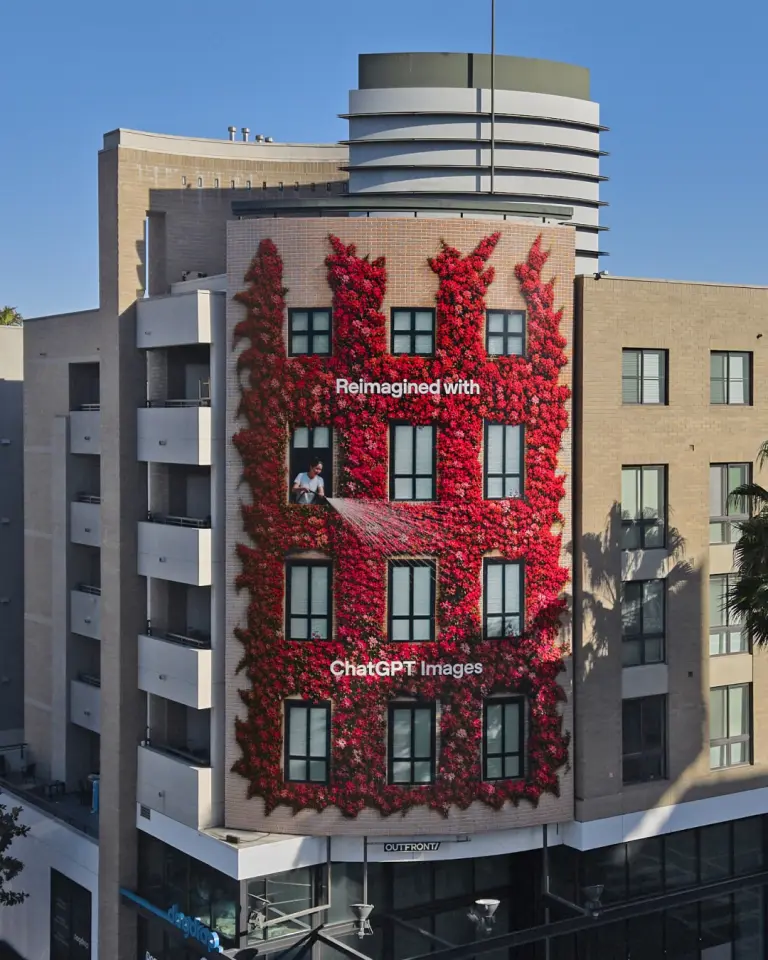
OpenAI is turning ordinary American buildings into giant optical illusions, with a new outdoor advertising campaign that makes rooftops bloom, octopuses invade walls, and entire buildings appear to exist underwater.
The second wave of Reimagined with ChatGPT Images, unveiled November 19, features 16 billboards across eight U.S. cities, each designed specifically for the location where it appears.
And rather than simply displaying impressive AI-generated imagery, the campaign makes the architecture itself part of the creative idea.
When buildings become part of the illusion
Each execution transforms an ordinary advertising space into something completely unexpected.
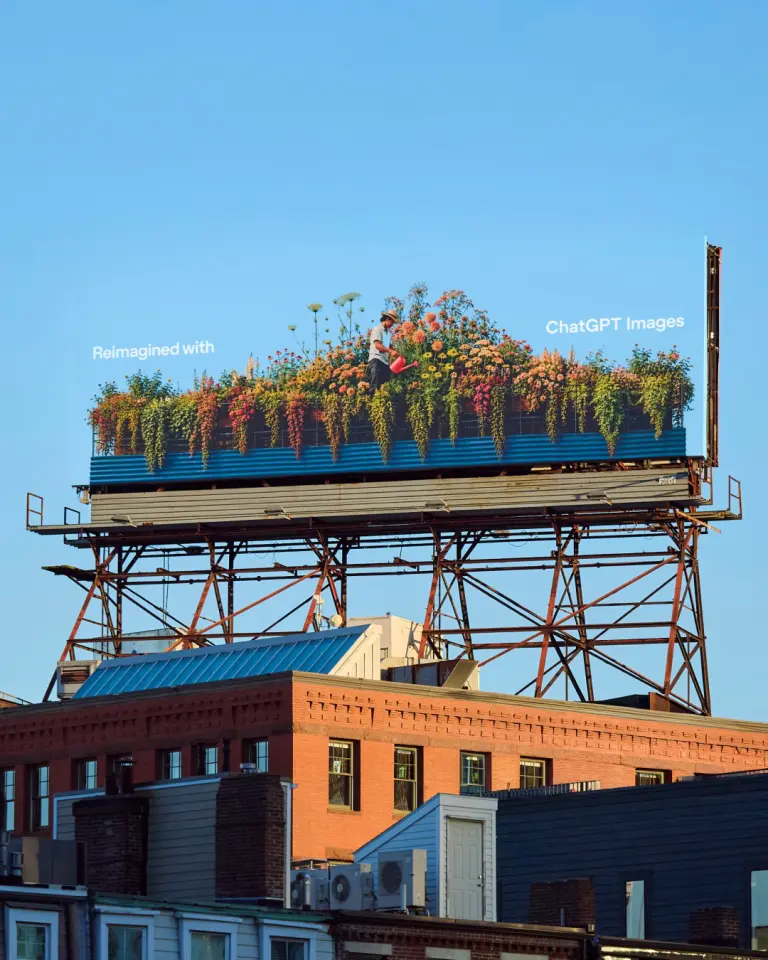
In Boston, a rooftop billboard becomes an overflowing garden, with flowers and greenery spilling over its edges.
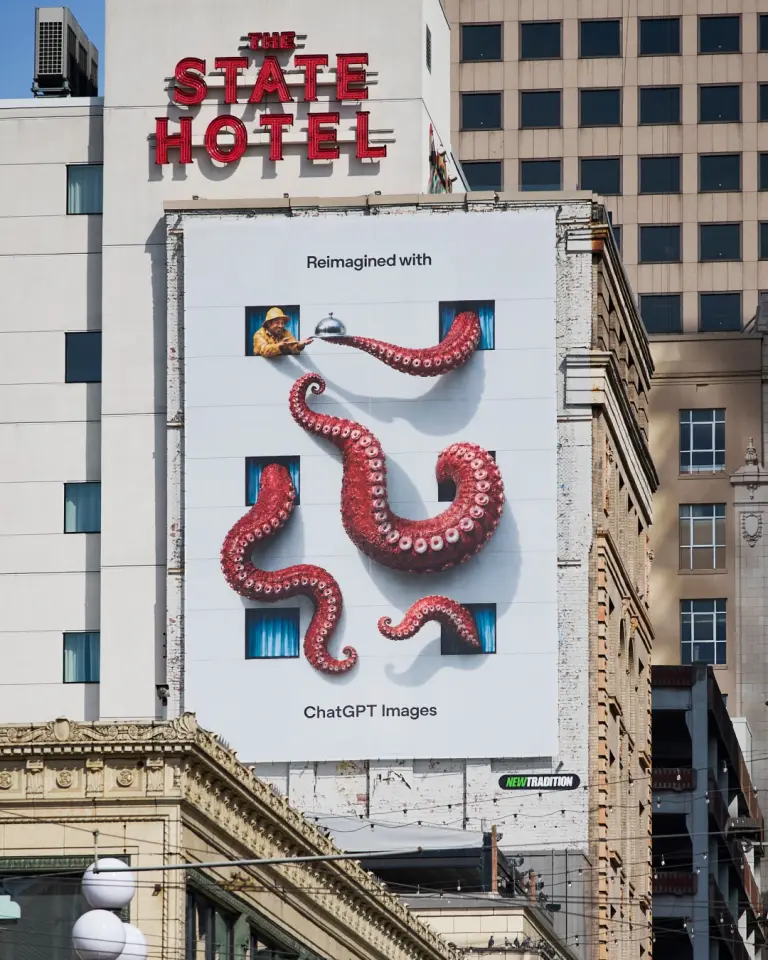
In Seattle, giant octopus tentacles appear to burst through windows, turning the side of a building into an enormous underwater encounter.
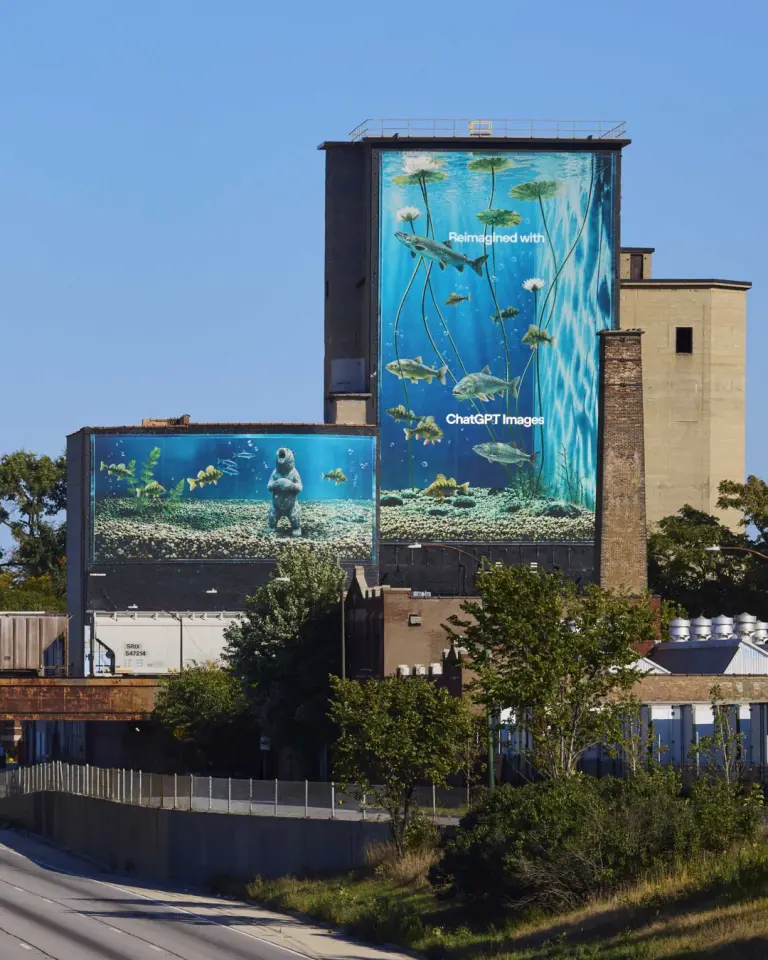
Chicago gets an entire aquatic world stretching across multiple walls, complete with fish, underwater plants, and submerged figures.
Meanwhile, in New York City, a long brick wall becomes a side-scrolling video game, with pixelated characters, a health bar, and bursts of fire.
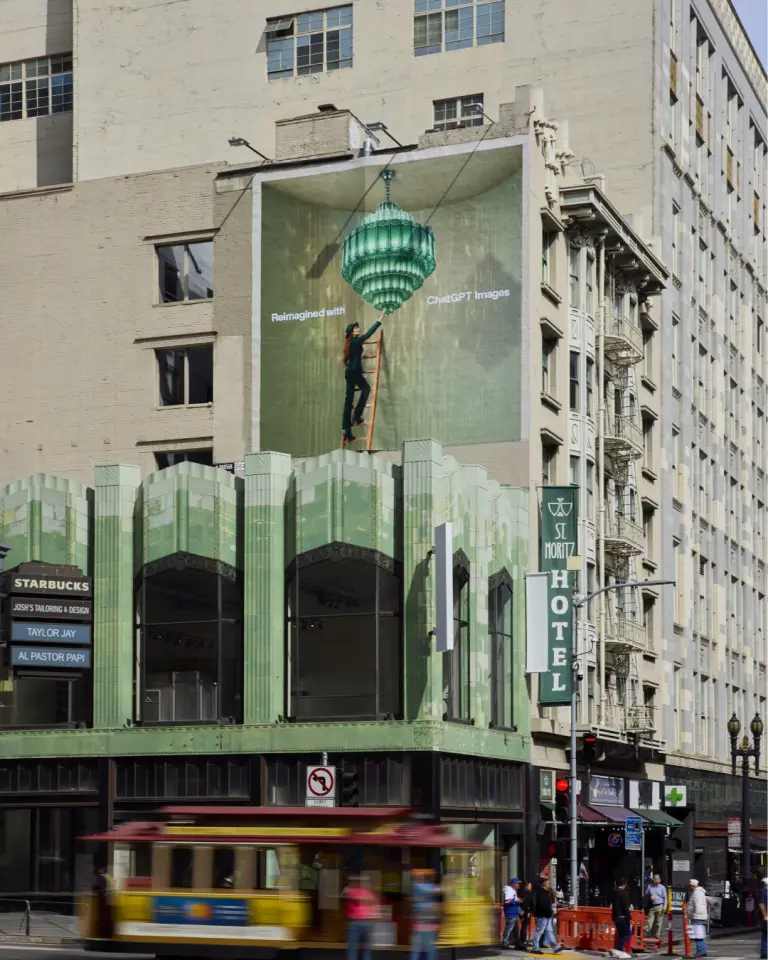
And in San Francisco, a massive green chandelier appears inside a building facade, complete with a tiny human figure on a ladder emphasizing its impossible scale.
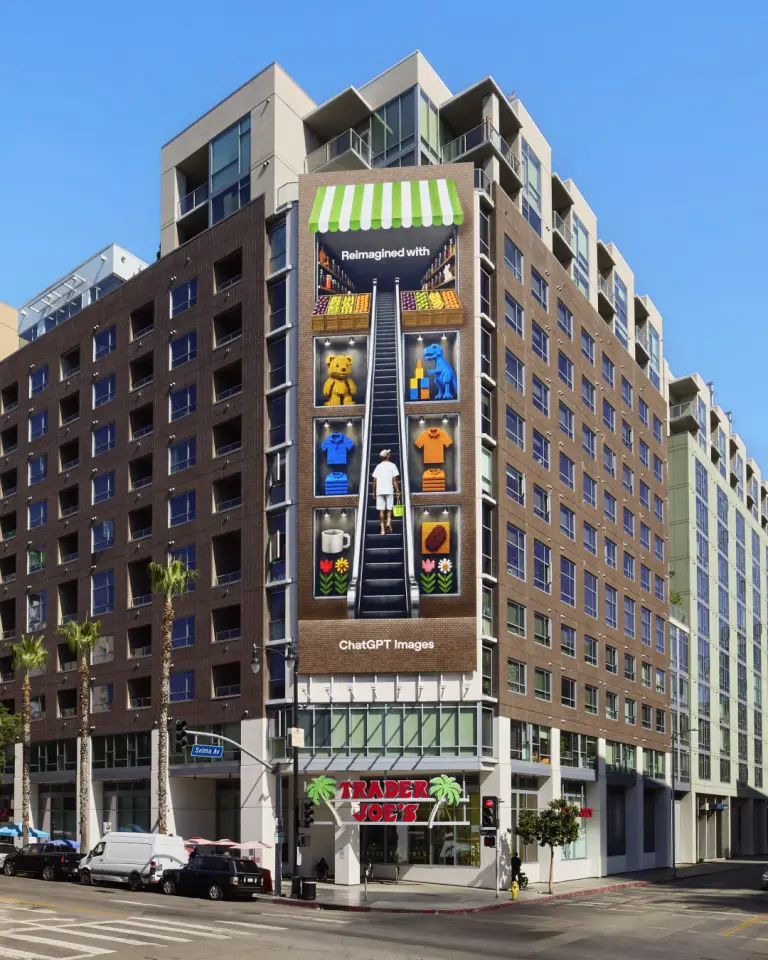
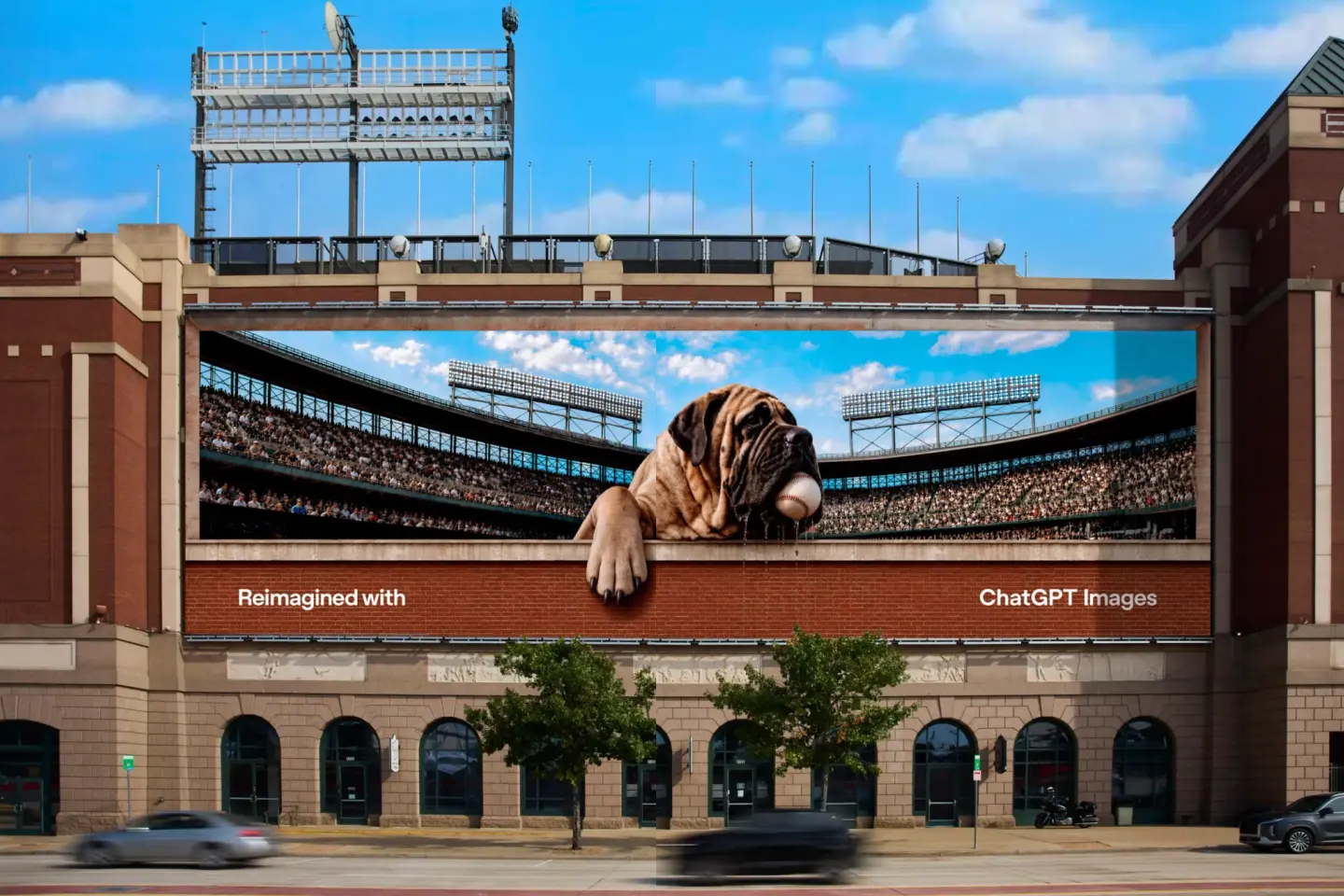
The campaign also extends to Dallas, Atlanta, and Los Angeles, with equally imaginative executions.
Each image carries the same signature: Reimagined with ChatGPT Images. But the execution changes completely from one location to another.
AI-generated, but driven by creative thinking
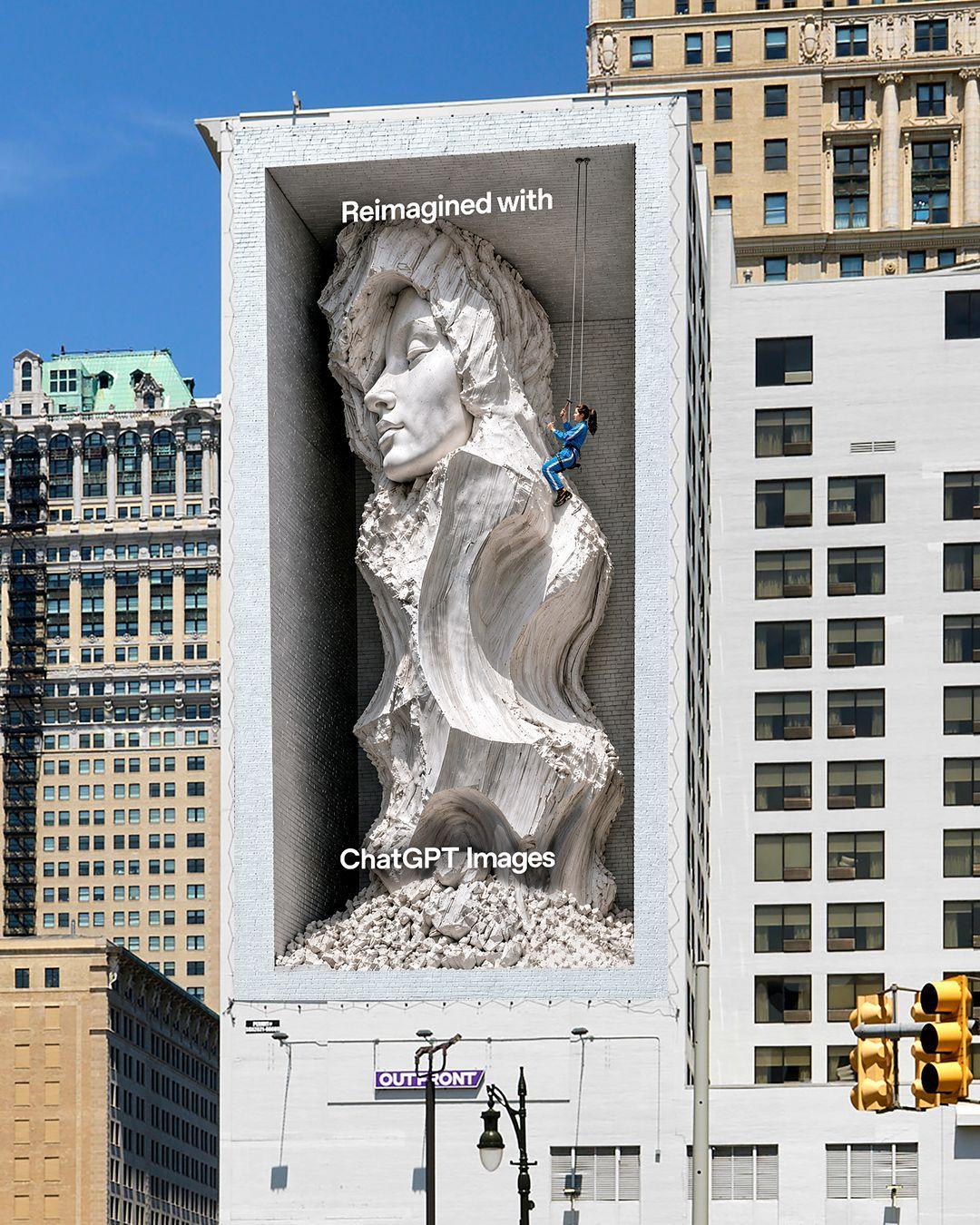
What’s particularly interesting about this campaign is that the technology isn’t really the creative idea. The idea is the relationship between the image and the physical space it occupies.
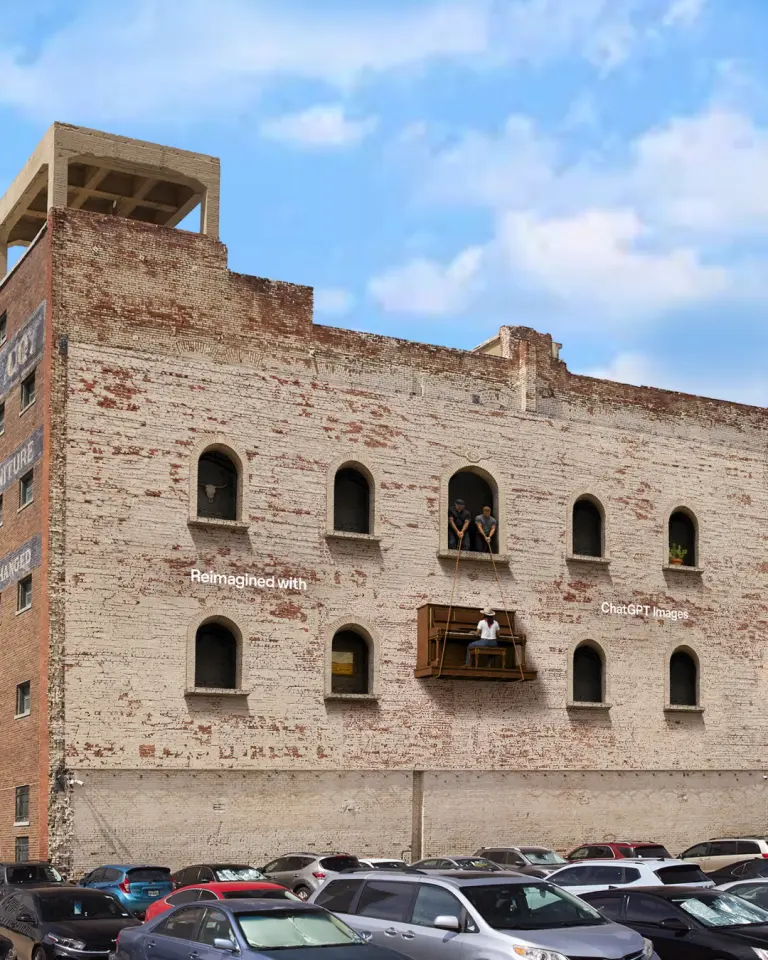
A giant octopus might be visually impressive on a screen. But when its tentacles appear to emerge from the windows of an actual building, the surrounding architecture becomes part of the illusion. The same goes for a garden that appears to grow out of a rooftop or an enormous object seemingly embedded in a wall.
OpenAI isn’t simply asking people to admire what AI can generate. It’s inviting them to reconsider something familiar.
And that’s a much more compelling demonstration of creativity than another gallery of beautiful AI images.
The campaign also builds on OpenAI’s earlier outdoor work, which brought similar architectural illusions to American cities earlier this year.
The best AI advertising still needs a great idea
There’s something refreshing about seeing AI-generated imagery used this way. Much of the conversation around generative AI focuses on how quickly it can produce content and how much creative production it can automate. But these billboards demonstrate something different.
The creative opportunity begins with observing the real world, understanding the physical environment, and imagining how it could become something else.
The technology helps bring that imagination to life.
And because every execution is tied to a specific place, the work feels designed rather than simply generated.
It’s a useful reminder for an industry increasingly obsessed with AI production capabilities.
AI can generate a thousand impossible images. The creative skill is knowing which one belongs on that wall.
Also Read: