


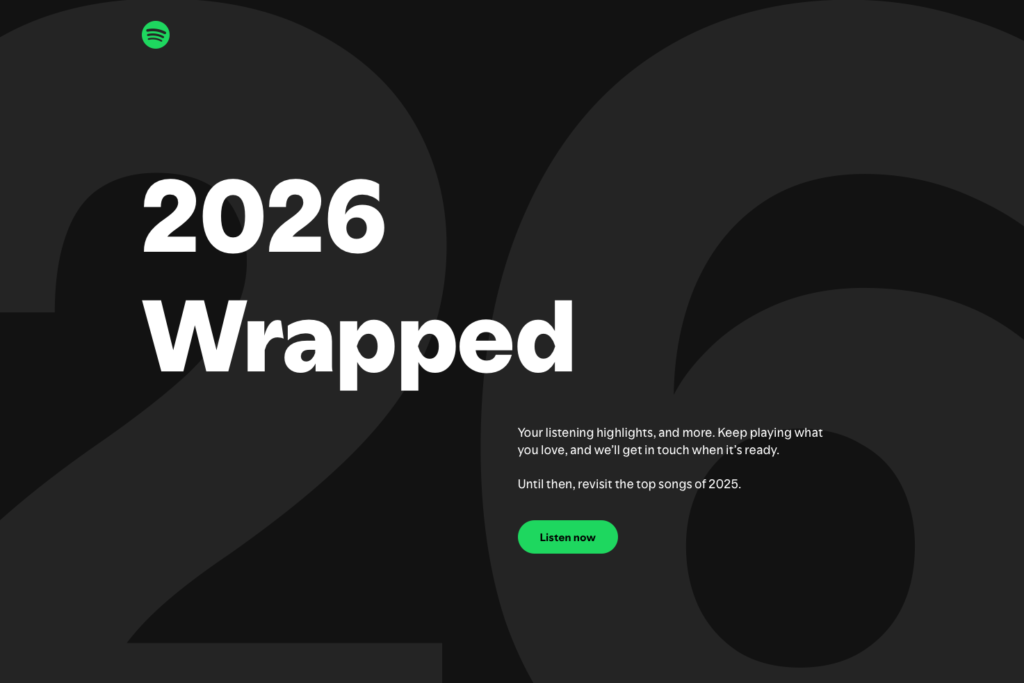
Spotify Wrapped 2026 is almost here, and millions of people are about to find out what their listening habits say about them.
Or, more accurately, what they want those habits to say.
Spotify hasn’t confirmed the release date for this year’s Wrapped, but the company is already encouraging users to prepare their accounts. And this time, there’s something interesting: listeners have more control over which songs and playlists influence their annual recap.
Because apparently, not every song we listen to deserves to become part of our public musical identity.
Your music taste, now with an edit button
Spotify has introduced new controls that allow users to exclude individual tracks and entire playlists from their taste profiles.
That means the sleep sounds you play every night, the songs your friends hijacked your account with, or that embarrassing track you’ve somehow listened to 200 times don’t necessarily have to shape your recommendations or Wrapped results.
Users can open a song or playlist, tap the three-dot menu, and select “Exclude from your taste profile.”
The option can also be reversed.
Spotify has introduced another control specifically for families, allowing parents to prevent children’s music from influencing their recommendations and Wrapped.
It’s a welcome feature for anyone whose musical identity has slowly been replaced by Baby Shark.
And it’s a meaningful change to how Spotify thinks about personalization.
Wrapped has become bigger than music
Spotify Wrapped started as a simple way to summarize listening habits. Today, it’s one of the internet’s biggest annual social rituals.
In 2025, Wrapped attracted more than 300 million engaged users and generated over 630 million social media shares globally, according to Spotify.
That’s an extraordinary amount of attention for something built almost entirely from data people have already given the platform.
But that’s the genius of Wrapped.
Spotify doesn’t simply tell us what we listened to. It packages our behavior into something we can show other people.
Our top artists become personality traits. Our favorite genres become cultural credentials. Our listening minutes become a strange form of bragging rights.
And every December, Instagram Stories and TikTok feeds turn into an enormous collective conversation about music taste.
It’s personalization transformed into social currency.
What happens when we can curate our own reflection?
Spotify’s new controls introduce an interesting tension into that experience.
On one hand, they make Wrapped more accurate. Listening to children’s music or falling asleep to rain sounds doesn’t necessarily represent someone’s musical preferences.
On the other, they give people the opportunity to shape the version of themselves that Spotify presents back to them. And that’s fascinating.
We’ve become so accustomed to algorithms interpreting our behavior that we’re now asking for greater control over what those interpretations mean.
Spotify is effectively acknowledging that listening behavior and personal identity aren’t always the same thing.
For marketers, there’s a bigger lesson here. Personalization becomes more valuable when people have some control over the story their data tells.
Wrapped 2026 hasn’t arrived yet. But its most interesting development might already be here.
If Wrapped is supposed to show us who we were this year, what happens when we get to choose which parts of ourselves it remembers?