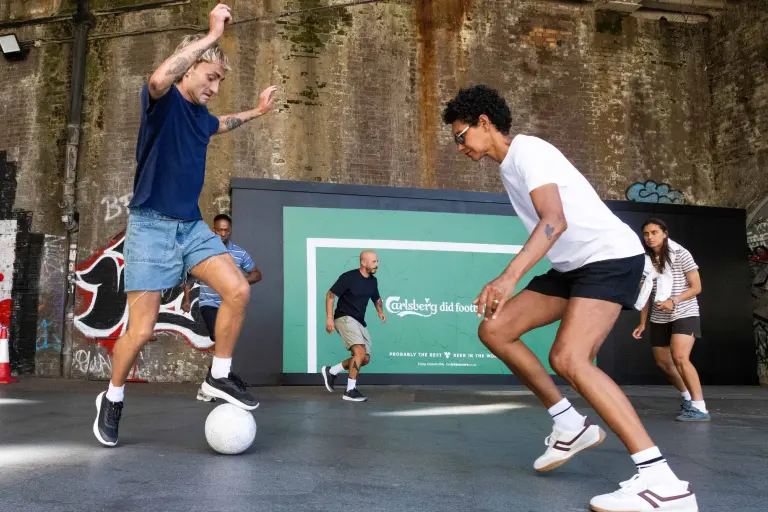
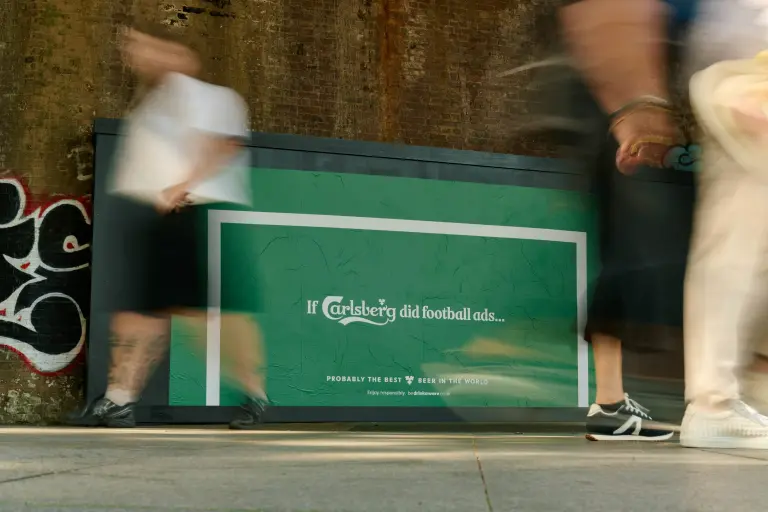
People may be watching more football than ever, but they are playing less of it. Carlsberg is tackling that contradiction with “Goal Posters”, a new outdoor campaign that turns ordinary city walls into makeshift football goals.
Created by Fold7, the activation also marks the return of the brand’s iconic “If Carlsberg Did…” platform. This time, instead of imagining the perfect football ad, Carlsberg has created one people can actually play with.
When Outdoor Advertising Becomes a Playing Field
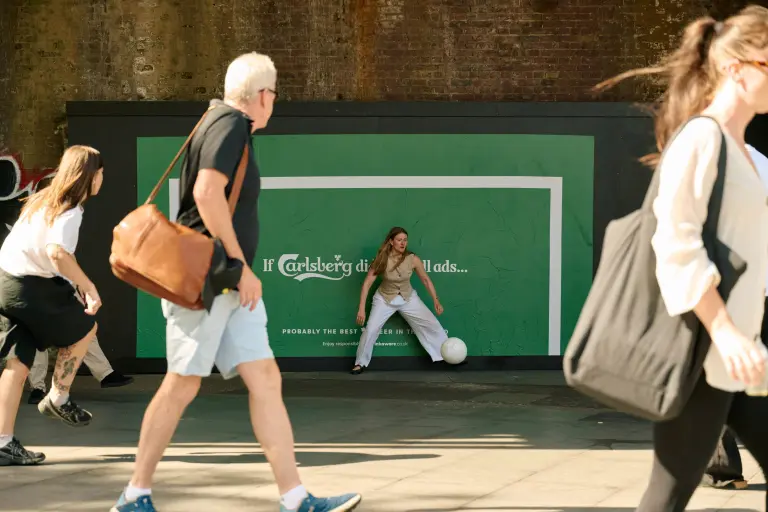
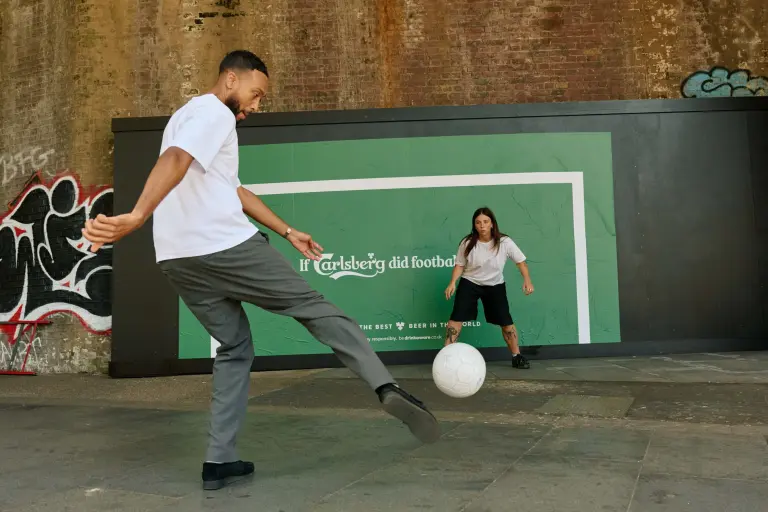
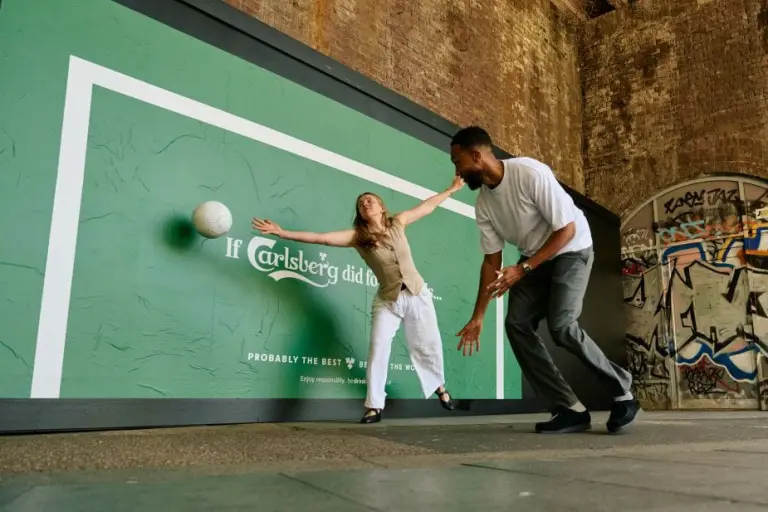
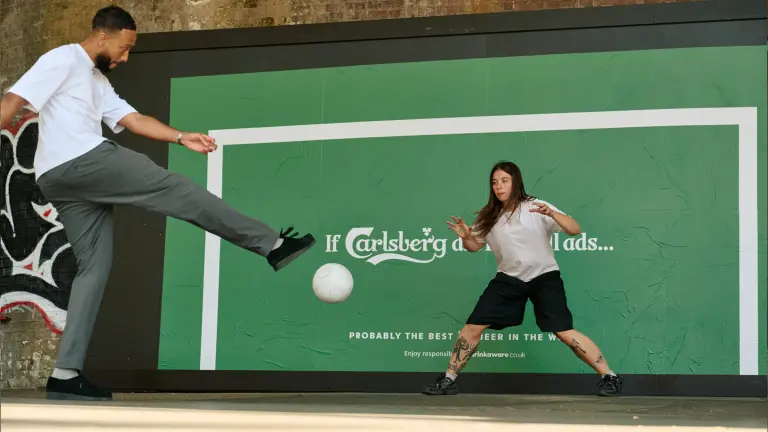
The idea is deliberately simple. Each poster features the outline of a white football goal against Carlsberg’s signature green background.
Placed directly onto a wall, the poster instantly transforms an otherwise unremarkable urban space into a place where people can kick a ball around. All that is needed is a football and a couple of friends.
Rather than using outdoor advertising as something people simply look at, Carlsberg turns the media placement itself into an invitation to participate. The poster does not just advertise football. It becomes part of the game.
People Are Watching Football, But Playing Less
The campaign is based on research commissioned by Carlsberg in the UK. According to the brand, 75% of adults plan to watch football this summer, yet one in three has not kicked a ball in six months or more.
The main barriers include a lack of time, cited by 44% of respondents, not having anyone to play with, cited by 39%, and a lack of available space, mentioned by 16%.
Goal Posters are designed to remove some of those obstacles with the smallest possible intervention. There is no need to book a pitch, organize a full team or bring specialist equipment. A wall, a poster and a ball are enough.
The Return of “If Carlsberg Did…”
The campaign also brings back one of the most recognizable lines in Carlsberg’s advertising history.
For years, “If Carlsberg Did…” imagined how the brand might create the best apartments, parties, holidays or everyday experiences.
With Goal Posters, the platform takes on a slightly different role. Under the line “If Carlsberg did football ads…”, the brand is no longer simply imagining a better piece of advertising. It is turning the ad itself into something useful.
The approach also cuts against the usual formula of high-budget football marketing built around famous players, cinematic films and major sponsorship moments.
There are no stars here, no elaborate production and no oversized spectacle. The entertainment is created by the people who stop and play.
From Brand Promise To Brand Utility
Behind the joke sits a broader strategic shift. Carlsberg is a five-year partner of UEFA men’s and women’s national team football, including UEFA Euro 2028, and is repositioning its historic platform around a more functional idea of brand utility.
Instead of using “If Carlsberg Did…” only as shorthand for “the best,” the brand is increasingly using it to identify barriers between people and football, then finding simple ways to remove them.
The Goal Posters effectively become temporary pieces of public sports infrastructure, placed directly in the spaces where people live, move and socialize.
The campaign extends beyond the posters themselves. Content creators and members of the public have taken part in informal kickabouts in front of the installations, while a social and VOD film contrasts city spaces that feel hostile to football with the simple joy of playing again.
The first Goal Posters appeared at Sutton Walk and Shoreditch Tunnels in London, as well as Bridge Street in Manchester. Two further UK activations are also planned for later this summer.
It is a small idea, but that is exactly what makes it work. At a time when football advertising is often defined by scale, Carlsberg has created something far more direct: an ad that gives people a reason to stop watching and start playing.
Also Read:
Corona Turns Sunset Shadows Into Giant Bottles On City Streets
Heinz Hides a Ketchup Bottle Inside a Heineken Six-Pack
Heineken Helps American Fans Speak Soccer This Summer