There’s a quiet shift happening in social media. For years, platforms have been optimized for one thing: attention. Infinite scroll, algorithmic feeds, dopamine loops, all designed to keep you exactly where you are, doing absolutely nothing else.
Now, a new wave of platforms is trying to flip that logic on its head.
Enter Bond, a newly launched social app that claims its goal isn’t to keep you scrolling, but to get you off your phone entirely.
That alone sounds almost contradictory. A social platform… that wants less of your time?
But that’s exactly the pitch.
Social media, without the feed
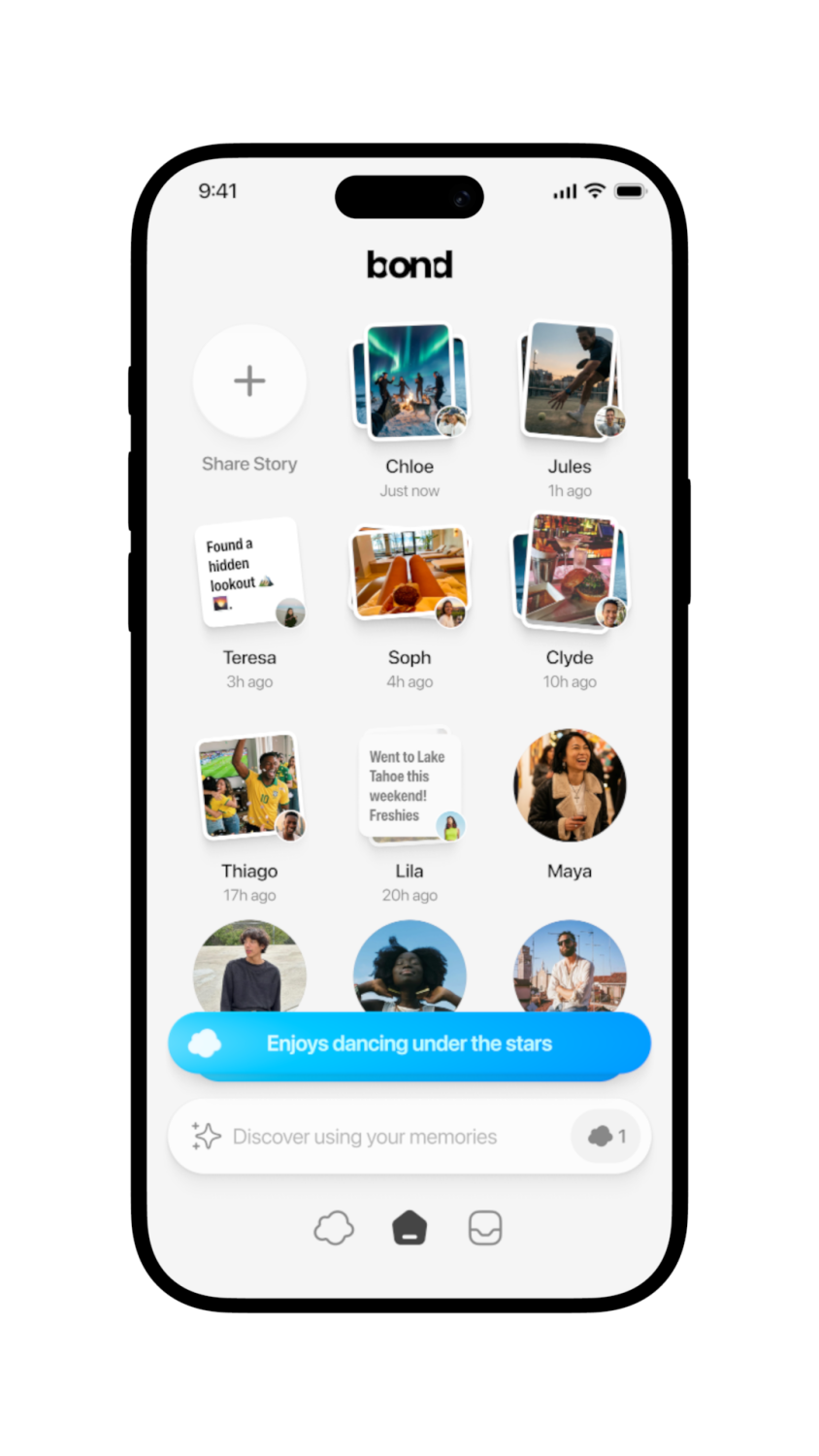
At first glance, Bond looks familiar. You can post updates, share photos, videos, even audio, what the platform calls “memories.” It feels like a stripped-down Instagram. But then you notice what’s missing: there’s no feed.
Instead of an endless stream of content, profiles exist more like clusters. You tap into someone’s world, not a global algorithm.
Stories still exist, but they disappear publicly after 24 hours and live on privately in your own archive.
It’s less about broadcasting, more about documenting.
And that distinction matters. Because Bond isn’t trying to compete on content. It’s trying to compete on behavior.
The AI that nudges you offline
Where things get interesting is what happens after you post.
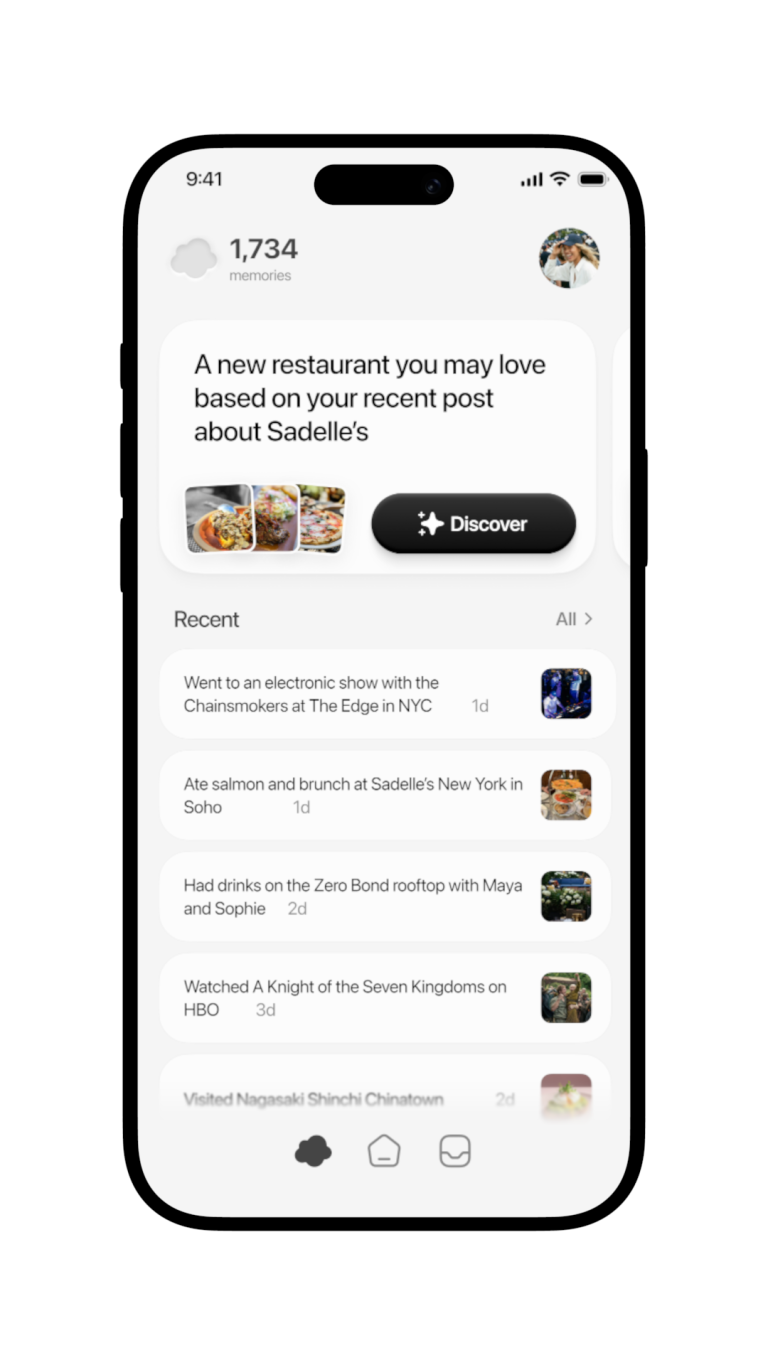
Bond’s AI learns from your “memories,” what you eat, where you go, what you enjoy, and turns that into real-world recommendations. Not in a generic “people also liked this” way, but in a hyper-personalized, context-driven way.
Post about pho a few times? It might suggest a nearby Vietnamese spot. Mention live music? It could point you to a concert happening next week.
The more you share, the better it gets.
Which creates a very different loop than traditional social media:
Post → scroll → repeat becomes Live → post → go do more
It’s still a loop. But the output is real life, not more content.
Anti-doomscrolling… or just a smarter version of it?
Bond positions itself as an antidote to doomscrolling, a tool for escaping the “bed rot” culture that has become synonymous with modern social media.
But there’s an interesting tension here. Because the platform still relies on the same core mechanic: data.
The more you share, the more valuable the system becomes. Not just for you, but potentially for everyone else too.
In fact, Bond’s long-term monetization strategy leans heavily into that idea.
Monetizing your memories
Unlike traditional platforms, Bond says it doesn’t plan to rely on ads. Instead, it’s exploring a model where users can license their own data, essentially selling their “memories” to companies training AI systems.
It’s a bold proposition: your daily life as training data.
On paper, it aligns with a growing sentiment, especially among Gen Z, that personal data is transactional. If platforms are going to use it, why shouldn’t users get paid?
But it also raises familiar questions: Who really controls the data? How transparent is the system? And what happens when “authentic memories” become optimized for value?
Because the moment memories become monetizable, they risk becoming performative again, just in a different way.
Bond isn’t just another social app. It’s part of a broader cultural correction. We’re seeing platforms like Pinterest position themselves as inspiration engines rather than attention traps. Tools that push you outward instead of pulling you deeper in.
Bond takes that idea further by embedding it into the product itself. Not just “get inspired and log off,” but: “Give us your data, and we’ll tell you what to do next in real life.”
It’s a fascinating trade.
Also Read:
WhatsApp Is Testing A Premium Subscription But It’s Mostly About Aesthetics
Instagram Is Giving More Users More Control Over Their Feed
Spotify Now Sells Real Books in the US and UK