


WhatsApp is turning AI disclosure into an admin workflow.
The platform is testing a new way for Channel admins to label AI-generated posts, specifically photos and videos, before they reach followers. The feature is designed to help audiences understand when media in a Channel has been created or altered with AI, rather than leaving that judgment to the viewer.
That distinction matters. This is not being framed as an AI detector. It is not a punishment system. And it is not, at least for now, a universal label across every WhatsApp message. The test is aimed at WhatsApp Channels, the one-to-many broadcast format where admins publish updates to followers at scale.
In other words, WhatsApp is putting the disclosure moment closer to the person posting the content. If an admin shares an AI-generated image or video, the product flow can make that context visible before the post becomes part of someone’s feed-like Channel experience.
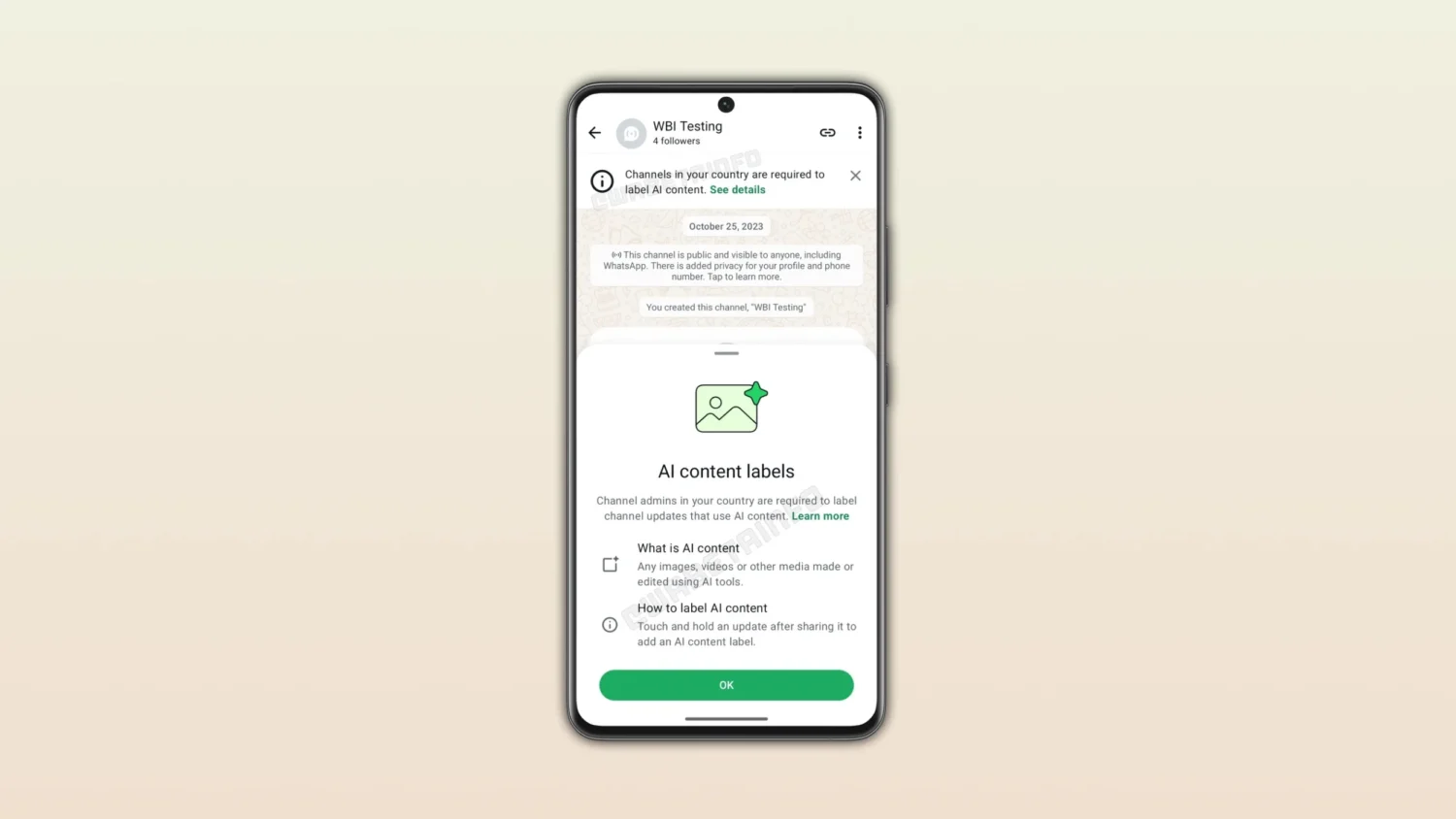
A small label for a much bigger trust problem
The feature is simple, but the behavior it targets is not. AI-generated media is becoming easier to make, easier to circulate, and harder to assess at speed. On a messaging platform built around trust, forwarded content, and private social graphs, that creates a very specific problem: people do not always need a forensic answer, but they do need context.
Channels make that problem more visible. Unlike regular chats, Channels are built for broadcast. They can be used by creators, publishers, public figures, organizations, and brands to reach large audiences without turning the experience into a public comment thread. That makes them useful, but it also means media posted there can carry more authority than a random forwarded image.
Labeling AI-generated photos and videos gives WhatsApp a way to preserve the usefulness of synthetic media without pretending the audience will always spot it. It also shifts responsibility from the viewer to the publisher. The admin knows what they are posting. The follower should not have to guess.
This fits a broader pattern for WhatsApp, which has been slowly adding features around how people actually use the app, not just how messaging apps used to be defined. As we wrote when looking at how WhatsApp’s newer features are increasingly shaped around real-life habits, the app keeps expanding into the everyday spaces where communication, coordination, and media consumption overlap.
Channels are becoming a trust surface
The interesting part is not that WhatsApp wants labels. Everyone wants labels now. The interesting part is where WhatsApp is putting them.
By focusing on Channel admins, WhatsApp is treating broadcast posts as a distinct trust surface. That is different from labeling every AI-assisted message between friends, which would be messy, invasive, and probably impossible to enforce at scale. Channels are cleaner: fewer publishers, bigger audiences, higher stakes.
For creators and brands using Channels, this is a reminder that AI content will increasingly come with presentation rules. A generated campaign image, a synthetic product visual, or an edited video might still perform well, but the context around it will become part of the content itself.
The strategic consequence is clear: as AI media becomes normal, platforms will compete not only on creation tools, but on the trust mechanics that make synthetic content safe enough to distribute at scale.