


Threads is no longer treating Meta AI as something that only appears in public conversations. Meta is rolling out its AI assistant inside Threads DMs, giving users a private place to ask questions, share posts, and keep the conversation going without leaving the app.
That changes the role of AI on Threads. Until now, users in select markets could already interact with Meta AI in public posts, in a way that looked closer to how people can call on Grok inside X. The new integration moves that behavior into direct messages, where the assistant becomes less of a public reply object and more of a private companion layer.
Meta AI moves from public replies to private context
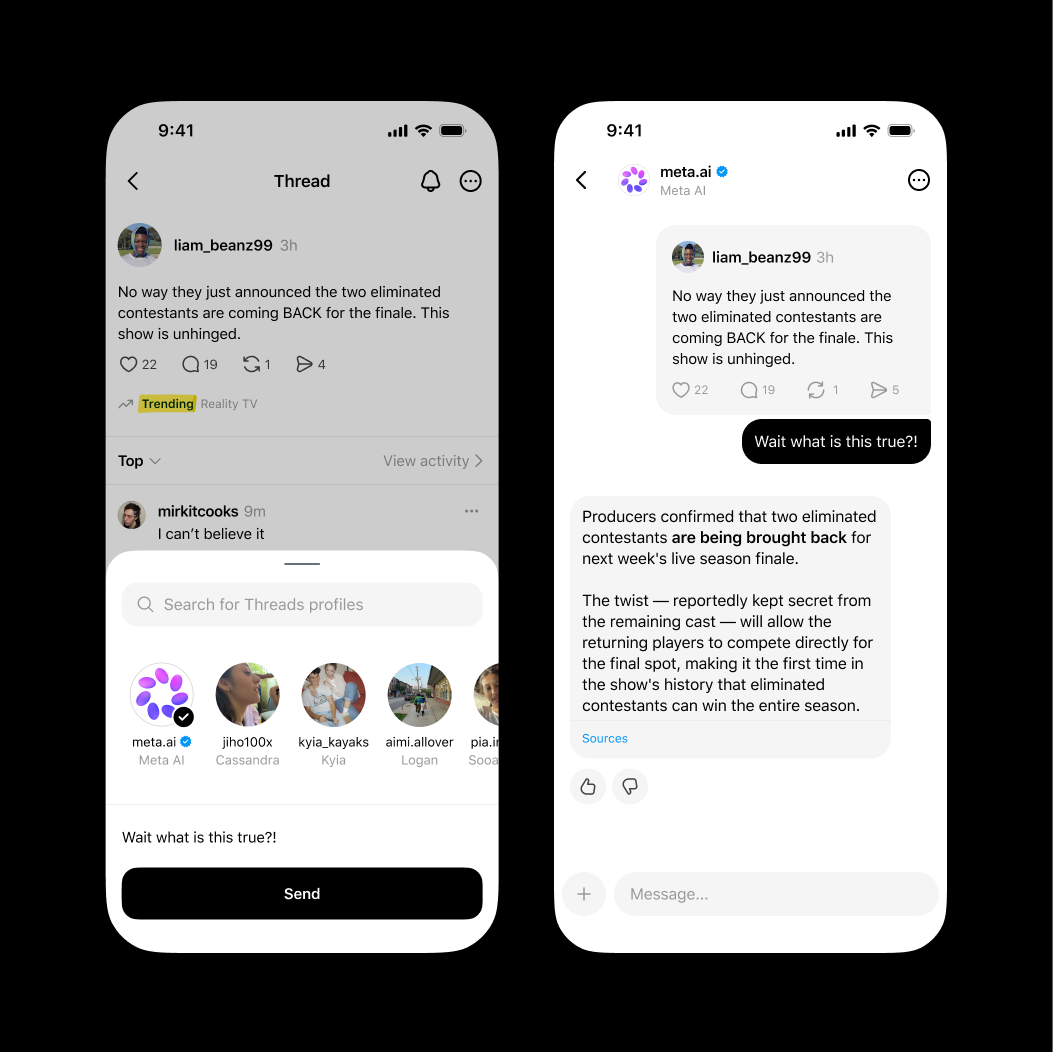
The update is rolling out globally starting Monday, according to Meta. Inside Threads DMs, users can share Threads posts, images, links, and videos directly with Meta AI. They can also ask follow-up questions and go deeper on a topic, turning a post or piece of media into the start of a private AI thread.
That is a very different interaction from seeing an AI account respond in a feed. A public AI reply can feel like another post competing for attention. A DM assistant is closer to a utility: something you summon when a topic, link, or image needs explanation, context, or recommendation.
Meta has already put Meta AI inside DMs on Facebook, Instagram, and WhatsApp, so Threads is now catching up with the rest of the company’s messaging surfaces. Threads has also been moving deeper into Meta’s shared product stack in other ways, including parental supervision controls. The pattern is clear: Threads may have launched as an X rival, but Meta is steadily making it behave more like part of a broader Meta system.
Threads becomes a place to ask, not just react
The strategic goal is not subtle. By making Meta AI easier to access inside Threads, Meta gives users one less reason to jump to ChatGPT, Gemini, or another third-party assistant when they want to understand something they found in the app.
That matters because Threads is still defining what kind of platform it wants to be. If it is only a public conversation app, it competes on posts, replies, and real-time attention. If it also becomes a place where users can privately ask for explanations, recommendations, and context, it starts competing on the moment after discovery too.
Meta is still being careful with AI in the public feed. The company says it continues to test Meta AI in Threads public feeds in a handful of global markets and is considering feedback before expanding more broadly. Users who want to see fewer Meta AI replies can mute @meta.ai, use “Not interested” on a Meta AI post, or hide Meta AI replies that appear on their own posts.
Those controls matter. AI in a DM feels invited. AI in a feed can quickly feel imposed. Meta’s challenge is to make the assistant useful enough that people choose to bring it into conversations, without turning Threads into another surface where AI feels unavoidable.
For creators and brands, the immediate shift is small but important: more questions about posts, links, products, and cultural moments may now happen inside the app, in private, with Meta AI helping shape the next click or decision. For Threads, the competitive edge may come from whether users ask the app instead of leaving it.