Spotify’s next workout feature is not just another running playlist. It is trying to understand the run itself.
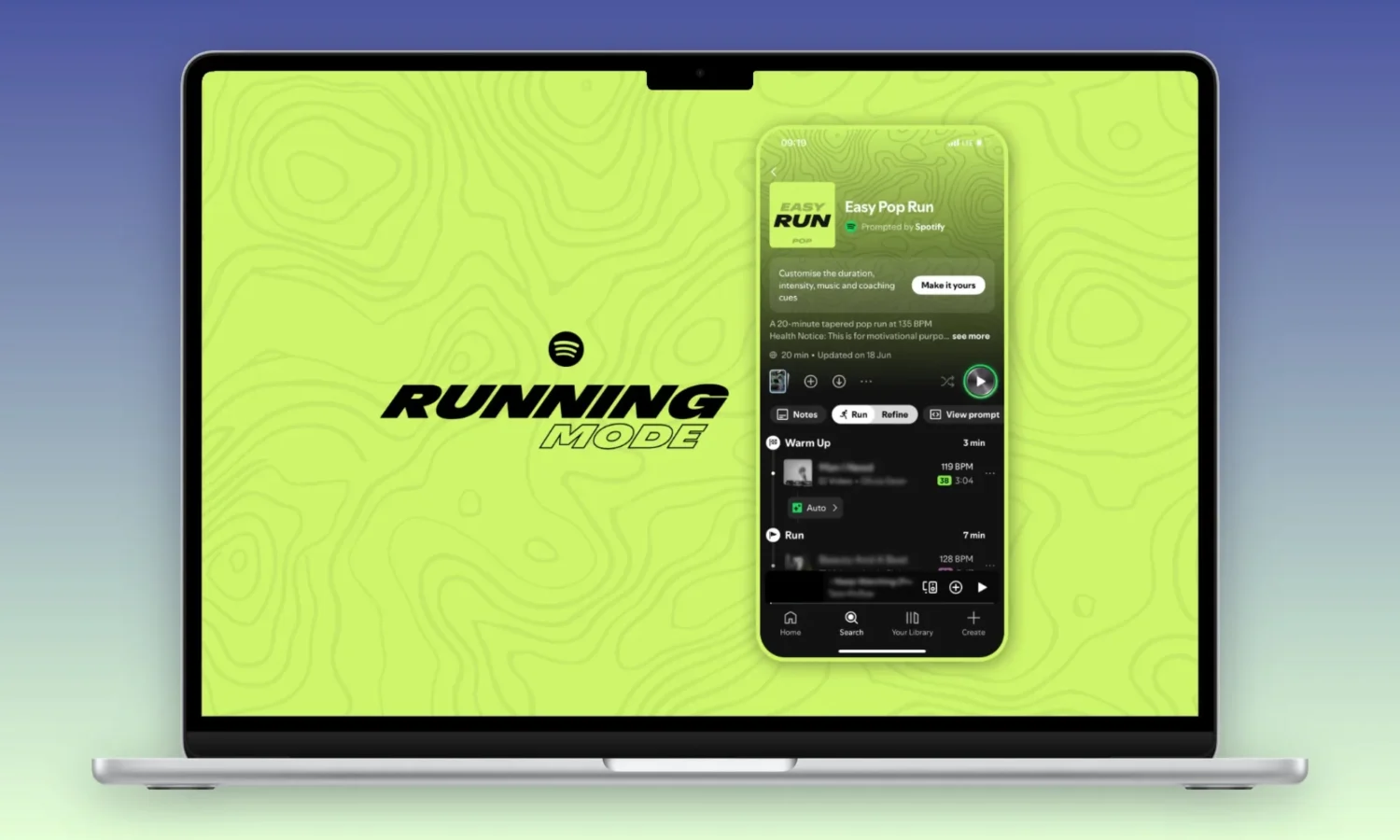
Spotify’s new Running Mode creates personalized workout soundtracks based on the way someone trains. Instead of asking users to pick a generic “running hits” playlist and hope the energy matches, the feature takes into account training style, workout duration, preferred genres, and tempo.
It can also add optional coaching cues along the way, turning the soundtrack into something closer to a guided run than a static queue of songs. The headline feature is simple: Spotify wants the music to speed up when the run needs it to, rather than leaving the runner to skip, search, or manually adjust the vibe mid-stride.
A playlist that reacts to the workout
The interesting part here is not that Spotify is targeting runners. The platform has been part of workout behavior for years. The shift is that Running Mode treats music as something that should adapt to the activity, not simply accompany it.
That distinction matters. A playlist is usually built around taste: artist, genre, mood, era, popularity, or recommendation logic. Running Mode adds context. How long are you training? What kind of session is it? What tempo fits the moment? Do you want coaching, or just music? Those inputs turn the playlist from a content selection into a responsive layer around the behavior.
For Spotify, this is a natural extension of where audio platforms have been moving: away from pure libraries and toward more managed experiences. Discovery is no longer only about finding the next song. It is increasingly about having the platform package sound around a task, a mood, or a routine.
Running is an especially good test case because the need is obvious. When the pace changes, the soundtrack matters. When motivation drops, the next track matters. When a workout has a defined duration, the structure matters. Spotify is taking a moment that already depends on rhythm and making its product more aware of that rhythm.
Spotify is moving deeper into real-life routines
This is also why Running Mode feels bigger than fitness, even if the feature itself is very specific. Platforms are learning that utility often comes from fitting into a real-world habit with less friction. The more a product can understand the shape of the moment, the less work the user has to do to make it useful.
That is the strategic play here. Spotify does not need to own running as a category. It needs to own more moments where audio becomes the easiest layer to activate. A commute, a workout, a cooking session, a focus block, a wind-down routine: each one gives the platform a chance to move from “what do you want to hear?” to “what are you doing right now?”
There is an obvious tension. Personalization only works if it feels helpful, not fussy. A runner may love a soundtrack that matches tempo and duration, but the experience still has to stay light. If setup takes too long, or the coaching feels intrusive, the old playlist habit wins.
But the direction is clear. Spotify’s Running Mode makes the playlist less of a finished object and more of a live companion to behavior. The strategic consequence is that audio discovery keeps moving closer to context: not just what you like, but when, why, and how you need it to move with you.
Also Read:
WhatsApp Web Finally Gets Voice And Video Calls
WhatsApp’s New Features Are About Real-Life Habits
Threads Joins Meta’s Parental Supervision Stack